





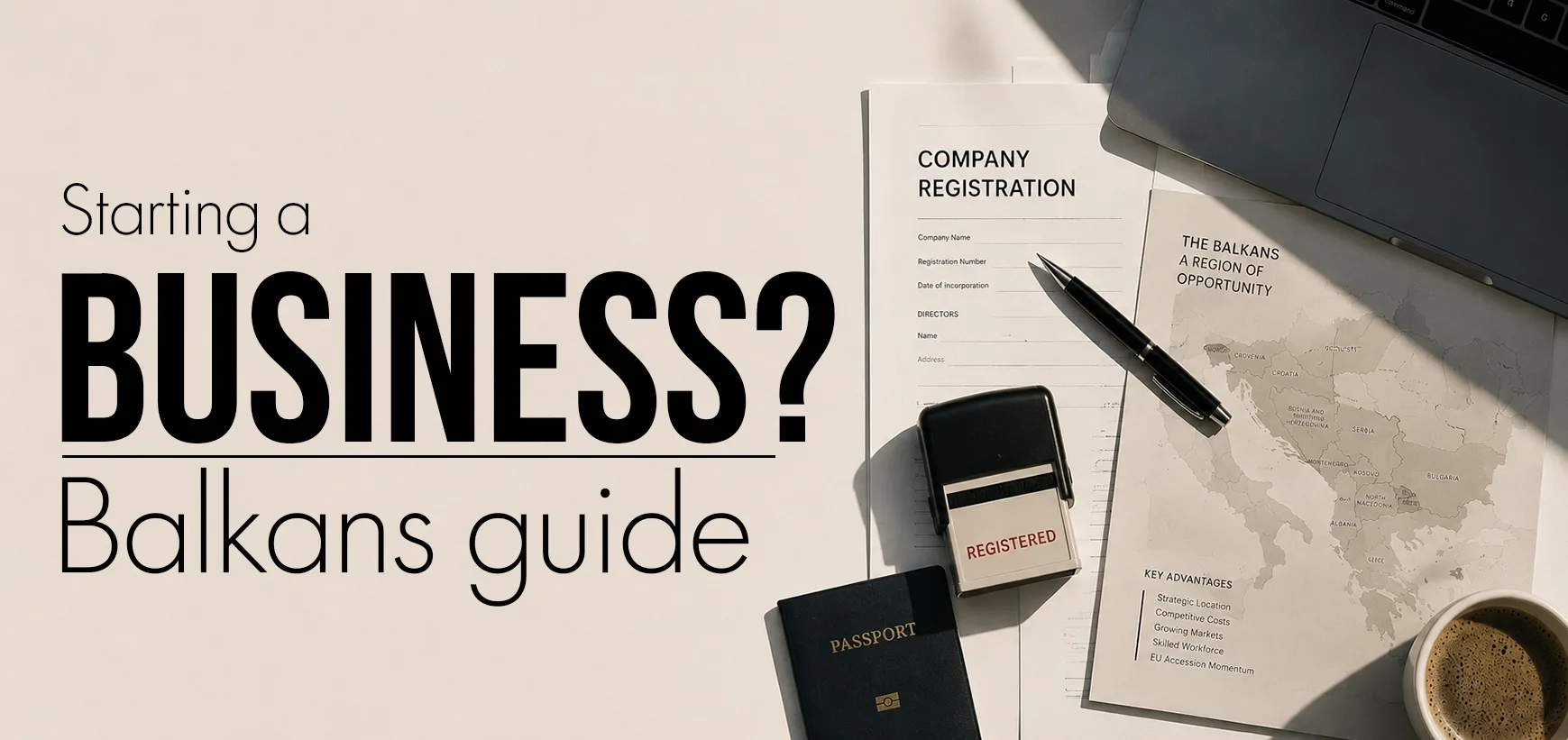
Doing Business Across the Balkan Peninsula
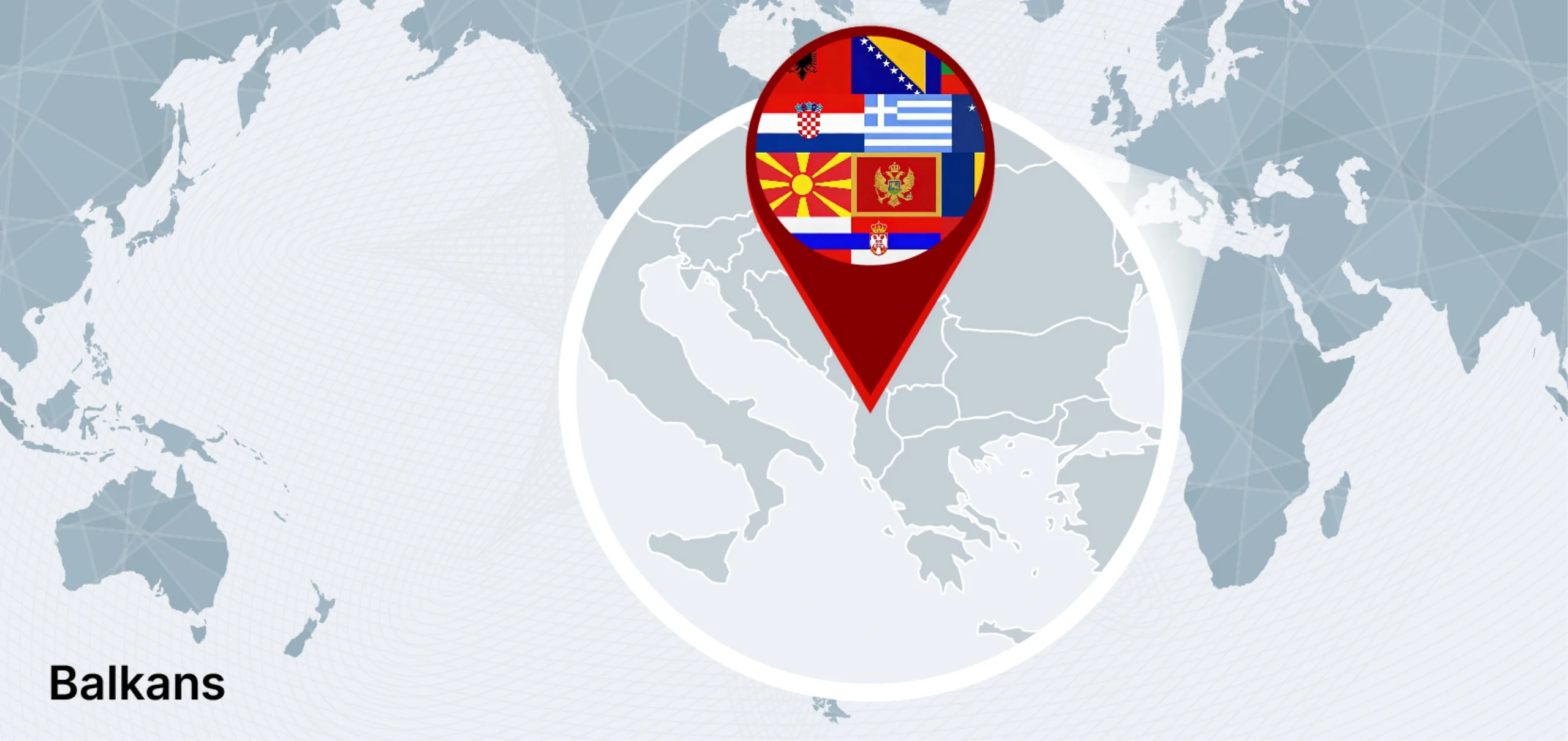
The Balkan business now draws entrepreneurs, startups, and investors looking for growth. Being located right between Western Europe, Eastern Europe, and the Mediterranean region, this place offers great access to large markets as well as relatively cheap operating expenses.
Countries from Southeastern Europe invested a lot of money in upgrading their infrastructure, technology, and foreign direct investment (FDI), so it is a perfect place for startups. If you have some interest in technology, production, real estate or other industries, certain areas of the Balkan Peninsula can work wonders for you.
However, to be really successful, you will have to familiarize yourself with laws, taxation system, labor resources, and business etiquette in the area of operation.
The Strategic Benefits of Establishing a Company in the Balkan Region
The international community is considering Southeastern Europe because of the existence of numerous strategic benefits.
1. Geographic Location Strategy
The geographical location of the Balkans region is at the crossroads between Europe, Asia, and the Middle East. As a result, enterprises gain access to significant traffic flows, large seaports, and an expanding logistics service market.
2. Competitive Operating Costs
One big draw? Running a business is cheaper than in Western Europe. Space, wages, bills, and other costs are generally lower, yet you still get access to skilled workers.
3. Growing Consumer Markets
Economic progress in countries like Albania, Serbia, North Macedonia, Montenegro, Bosnia and Herzegovina, and Kosovo is boosting buying power and demand for goods and services.
4. Increasing Foreign Investment
To boot, local governments are sweetening the deal with tax breaks, special zones for industries, startup cash, and simpler ways to register businesses.
5. Digital Economy Growth
Furthermore, technology hubs in several Balkan cities such as Belgrade, Tirana, Sofia, Zagreb, and Skopje are crowded with startups, venture capitalists, and other innovative firms. Significant progress has been made in the sphere of startups, thanks to venture capitals and innovation initiatives.
Balkan Factors Supporting Development of Regional Businesses
Balkan countries are known for their continuous economic potential caused by increasing foreign direct investment (FDI), developing digital economies, and improving infrastructure.
| Indicator | Regional Trend |
| GDP Growth | Long-term expansion is experienced in most Balkan economies |
| FDI Inflows | Foreign investments continue growing in sectors such as manufacturing, tourism, energy, and technology |
| Startup Ecosystem | There is an entrepreneurial ecosystem in Serbia, Bulgaria, Croatia, and Albania. |
| Workforce | Competitive workforce. Pay isn’t super high, but there are more really smart, well-educated folks entering the job market every day. |
Regional Breakdown: Choosing the Right Jurisdiction for Your Business Model
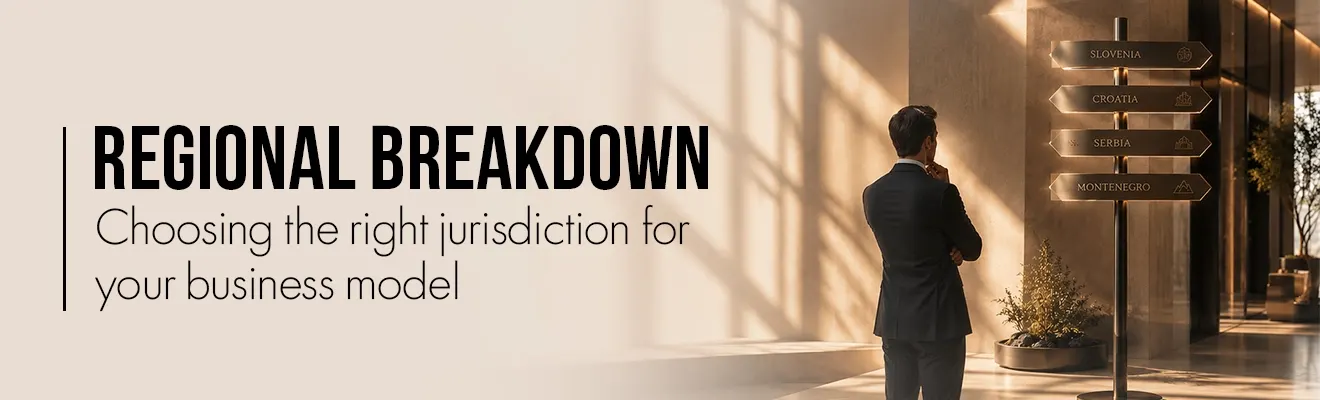
Selecting the right country for a Balkan business is crucial.
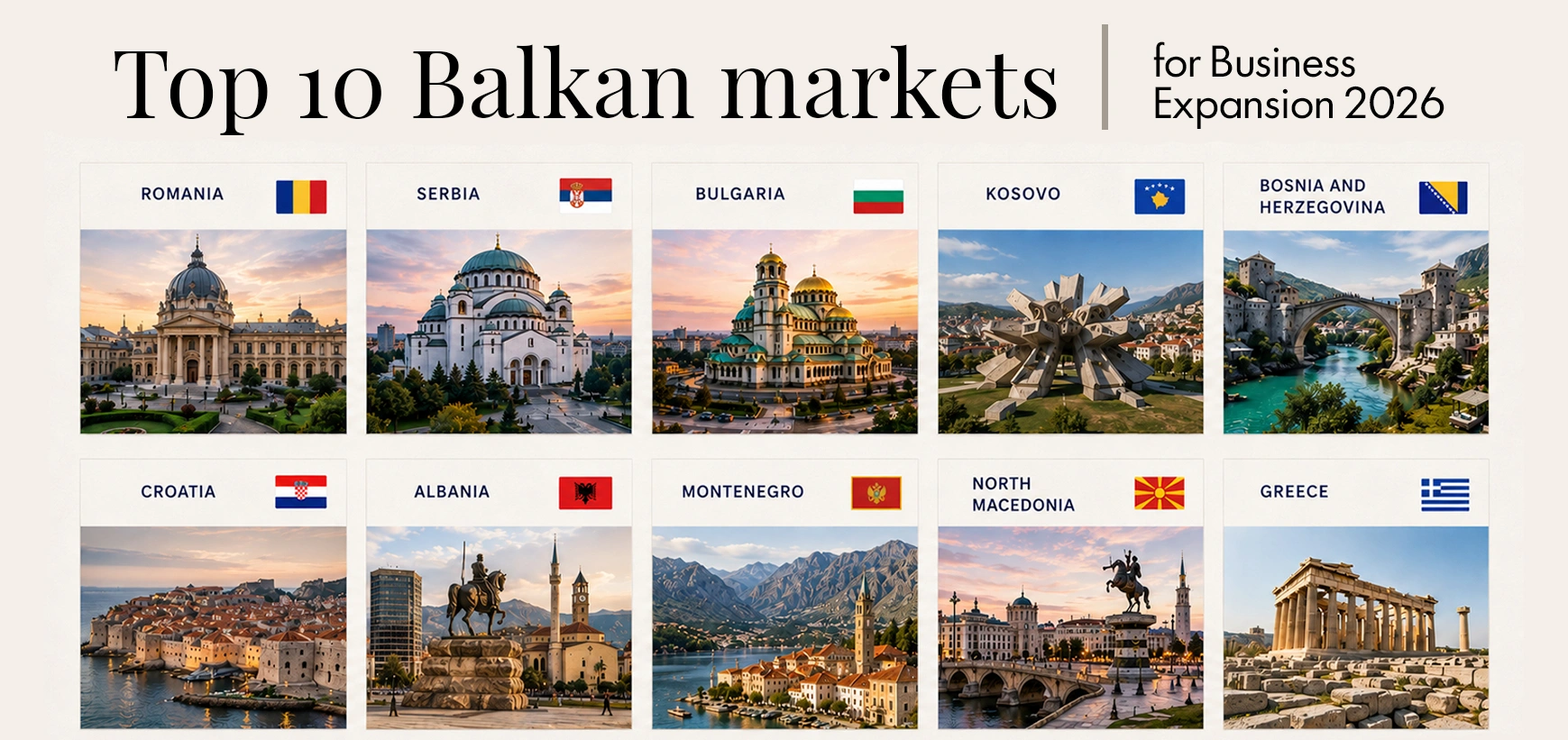
1. Albania
Albania’s got more folks interested nowadays because of simpler company sign-ups, cheaper labor, and a friendlier environment for investments. Plus, their growing tourism and active economic reforms make it even better.
2. Serbia
In Serbia, you’ll find one of the region’s top picks for business types. They’ve got lots of workers, a strong manufacturing scene, and plenty of trade deals – it’s no wonder they draw such big interest.
3. Montenegro
If you’re into tourism, Montenegro’s your spot. Montenegro attracts strong investor interest in hospitality, luxury real estate, and international service sectors.
4. North Macedonia
North Macedonia does well with startups, too. Their low taxes and business-friendly rules bring lots of factories and export companies.
5. Bosnia and Herzegovina
Over in Bosnia and Herzegovina, they’re making the most of their industry potential, like manufacturing, farming, and power-related fields.
6. Kosovo
Kosovo? They’re doing great in tech and the digital world, backed by a huge number of young people jumping into startups.
7. Croatia
Then there’s Croatia. As part of the EU, they not only offer easy entry to a massive market but still hold onto some of the more affordable Eastern European standards.
8. Bulgaria
Even Bulgaria pulls in a ton of tech and export firms. Positioned at the region’s edge but central for certain types of businesses looking to thrive in the Balkans.
Comparing Corporate Tax Rates and Incorporation Timelines
While choosing a jurisdiction, investors must assess both tax efficiency and ease of incorporation.
| Country | Corporate Tax Rate* | Typical Incorporation Time |
| Albania | 15% | 1–5 business days |
| Serbia | 15% | 3–7 business days |
| Montenegro | 9–15% | 3–5 business days |
| North Macedonia | 10% | 1–5 business days |
| Kosovo | 10% | 1–3 business days |
| Bosnia and Herzegovina | 10% | 5–10 business days |
| Bulgaria | 10% | 3–7 business days |
| Croatia | 10–18% | 5–10 business days |
Comparison of Business Environment Between EU Countries and Non-EU Balkan Countries
When making decisions regarding Balkan investments, entrepreneurs examine all available opportunities in both EU and non-EU Balkan countries.
1. EU Balkan Countries
- A single market
- Alignment in regulations
- Enhanced trade
- Greater levels of trust.
2. Non-EU Balkan Countries
- Low operating costs
- Fair tax structures
- Increasing domestic markets
- More favourable business regulations.
Therefore, this becomes a matter of whether investors seek market access or low costs alone.
Legal Background: Selecting the Right Structure for Your Balkan Business
Your choice of Balkan business structure will definitely affect your taxation, governance, liability, and reporting needs.
Many foreign businesses usually opt for limited liability structures because they protect the owners yet allow room for flexibility.
Points to remember include:
- Number of stakeholders
- Funding requirements
- Industrial regulations
- Fundraising considerations
- Expansion abroad
Limited Liability Company: The Understanding of the Concept
Among all legal forms of business organization operating in the Balkans, LLCs (Limited Liability Companies) prevail.
The advantages include:
- limited liability of the shareholders;
- simple registration process;
- less administrative burden;
- flexible ownership arrangements;
- perfect for SMEs.
Foreign investors can easily establish an LLC since all Balkan countries offer foreign ownership.
Other Types of Companies to Consider: Joint Stock Company and Branch Office
Depending on investors’ business goals, they may consider using:
1. Joint Stock Companies
If investors need to establish large enterprises and raise money publicly or from institutions, then joint stock companies should be considered.
2. Branch Offices
Branch offices will help expand into the Balkan market for large enterprises.
3. Representative Offices
Finally, representative offices are useful in establishing contacts and carrying out research in the area without making any sales themselves.
Step-by-Step Corporate Incorporation Basics
The exact procedure differs from one country to another, although Balkan countries have a very similar process of incorporating companies.
Step 1: Reserving a Unique Name for the Company
Start by registering your corporate name in the name registry database.
Step 2: Prepare Corporate Documents
You’ll need to prepare some docs like incorporation papers and shareholder agreements.
Step 3: Open a Temporary Capital Account
Some places want proof of your deposit before they register your company, though.
Step 4: Register the Company
Submit all those necessary documents to the national business registry next.
Step 5: Obtain Tax Registration
Don’t forget to sign up for corporate tax and VAT if you need to.
Step 6: Open a Corporate Bank Account
As a final step, you can conclude a banking process by opening corporate bank accounts.
Resources Regarding Registration and Investments for Legal Businesses
Before engaging in business, the investor needs to be granted the authority by government authorities that oversee investments and businesses within specific countries.
| Country | Primary Investment Authority |
| Albania | Albanian Investment Development Agency |
| Serbia | Development Agency of Serbia |
| Montenegro | Montenegrin Investment Agency |
| North Macedonia | Invest North Macedonia |
| Croatia | Agency for Investments and Competitiveness |
| Bulgaria | Invest Bulgaria Agency |
Preparation of Documents, Notarization of Documents, and Share Capital Requirements
Documents which you may require include:
- Passports of the shareholders
- Address proof
- Articles of association
- Power of attorney
- Confirmation of registered office
If your shareholders come from particular nations, then the documents will have to be notarized and translated as well.
Moreover, in each place, there will be various share capital requirements, which vary immensely.
Taxation Rules: Corporate, Individual, and Dividend Taxes
Tax planning is an essential part of each Balkan company’s policy.
1. Corporate Tax
Corporate taxes differ throughout South-East Europe, providing opportunities for tax structuring.
A lot of countries maintain competitive corporate tax rates in the Balkans to lure foreign investors and international businesses.
2. Personal Income Tax
Employee and executive taxation completely differ throughout jurisdictions and must be assessed together with corporate obligations.
3. Dividend Tax
However, investors must look at dividend withholding taxes, double-taxation treaties, and the residency status of stakeholders before setting up their investments.
Understanding VAT Thresholds and Regional Tax Requirements
VAT requirements of Balkan states comply with European regulations.
It is crucial to learn about the following things:
- Limits on registration
- Filing frequency
- Cross-border regulations
- Internet services
- Import/exports
Consultation by professionals will greatly minimize potential risks for your company.
Governments’ Motives and Subsidies for Foreign Investments
Governments try very hard to attract foreign investments.
They give many favours such as:
- Reducing tax on companies
- Giving money for job creation
- Sponsoring research work
- Sponsoring technology industries
- Industrial zones receive special treatment
- Supporting exports and infrastructure development
Thus, before selecting a destination, the investor must study the incentives offered by countries as well as regions.
Financial Compliance, Accounting Rules, and Annual Reporting
Each and every Balkan business needs to maintain precise accounting records and comply with annual reporting obligations.
A few common prerequisites include:
- Financial statements
- Tax returns
- Payroll reporting
- VAT declarations
- Audit compliance for bigger entities
Outsourcing accounting services is a very ordinary practice among foreign-owned firms operating in the region.
The Balkan Labor Market: Talent Pools, Availability, and Sourcing
The Balkan Labor Market is among the region’s most powerful and competitive benefits.
A lot of countries provide highly educated and skilled workforces:
- Software development
- Engineering
- Finance
- Customer support
- Manufacturing
- Digital marketing
- Business process outsourcing
Universities keep generating graduates packed with multilingual skills and international experience, bolstering both local and foreign employers.
Basic Labor Regulations: Contracts, Minimum Wage, and Worker Protections
Employers need to be aware of their labor laws, which include:
- Labor agreements
- Hours worked
- Vacation pay
- Contribution to social security
- Insurance
- Termination of employment
- Worker protection
Moreover, compliance with labor laws is essential for effective management of business operations.
Banking Regulations: Opening a Corporate Account & Handling International Transactions
A reputable association is needed for daily business activities.
Banks in most Balkan countries can provide the following services:
- Money transfers to other countries
- Different currency accounts
- Internet-banking services
- International business loans
- Currency exchange services
It is essential to mention that banks generally request due diligence documents.
Exchange Rates: Domestic Currency and Euro-Currency System
Firms need to understand currency risk management when running regional businesses. In Balkan nations, while some countries operate in the euro-currency system, other countries have domestic currencies.
As a result, companies should plan for handling currency risks in case of any foreign transactions.
Office Space Infrastructure: Lease Contracts, Co-working Facilities, and Telecommuting Policies
This region provides diverse office space alternatives for start-ups as well as major companies.
Options include:
- Leasing contracts
- Serviced offices
- Co-working facilities
- Hybrid arrangements
- Telecommuting arrangements
Moreover, big cities keep building commercial areas to tackle the arrival of multinational corporations.
Social Networks and Business Culture in Southeast Europe
Relationship building plays an essential role in this region.
Corporate professionals dedicate much of their time to:
- Networking events
- Professional conferences
- Professional organizations
- Establishing governmental relations
Trustworthiness and commitment go further than negotiations only; understanding culture will facilitate processes and help forge stronger business partnerships.
Balkans Business FAQs
1. How can I register my company in the Balkans?
Registering a company in the Balkans involves such actions as registering the company’s name, preparing all the legal paperwork, registering the company in the official national business register, getting tax identification numbers, and setting up a corporate bank account. Note that all these procedures have their specific peculiarities and requirements in every Balkans’ country.
2. What Balkans country has the lowest corporate tax rate?
North Macedonia, Kosovo, Bosnia and Herzegovina, and Bulgaria all stand out for having pretty low corporate tax rates compared to other spots in Europe.
3. Can foreigners own a company in the Balkans?
Sure, foreigners can own companies there. Most countries allow 100% foreign ownership in various industries. That’s true if you don’t plan to work in the regulated industry because, in this case, additional permits or licenses may be required.
4. What’s the cost of running a business in the Balkans?
The operational costs will depend on such factors as location, industry, size of the company, etc. However, it is safe to say that, compared to Western European countries, costs related to staff payments, office space, and accounting expenses will be lower.
5. What Balkans country should I go to for startups?
There are several options, but if we talk about top performers here, then Serbia, Bulgaria, Croatia, Albania, and North Macedonia can be recommended thanks to startup support from their respective incubators, zones, financial incentives, and excellent market access opportunities.
Leveraging Market Insights from Insights Kolekr
For any investment in Southeast Europe, there is a need for proper information, economic insights, and knowledge about the market regulations within the region.
Insights Kolektr provides a great deal of assistance to companies looking for professional advice with data-driven insights for the Balkan region. Information includes market insights, investment opportunities, economic insights, and industry information. By utilizing their market information, organizations will be in a position to plan effectively and be able to manage the fluctuating Balkan market.
Conclusion
The Balkans continues to develop towards becoming one of the most interesting regions for doing business within Europe. With affordable prices, a quality labor force, favourable taxation, and good international connections, this region is an ideal place to start your own venture or invest your money. In case of any plans for participating in the Balkan business environment, establishing a regional office, or entering into the manufacturing, tourism, or service sectors, careful consideration is vital.
Proper selection of the Balkan business structure, studying the Balkan local labor market, corporate tax rates, and business expenses, can become important steps in achieving the desired results. It helps to make use of the unique opportunities offered by Southeast Europe.