





For a long time now, Bulgaria has been hailed as one of the most budget-friendly destinations in Europe. More and more people are opting for it owing to affordable property prices, a good taxation system and an advantageous geographic position within the European Union.
But there’s much more to the cost of living in Bulgaria than most online articles would have you believe.
A comfortable life in Bulgaria is dependent on your chosen location, your lifestyle, how you earn and how well you know what prices are out there. If you decide to relocate to Sofia, your budget will be entirely different from a person who chooses to settle down in Plovdiv, Bansko or Veliko Tarnovo. In addition, locals whose salaries are in BGN live in the country’s economic reality in a different way compared to remote workers who receive their payment in euros or USD.
Here’s a comprehensive guide to the finances of living in Bulgaria from Kolekr Insights.
The Reality Behind the Cheap Cost of Living in Bulgaria
Bulgaria always finds itself amongst the cheapest countries in Europe. Even when it became a member of the Eurozone in 2026, Bulgaria continues to remain much cheaper than Germany, France, the Netherlands, and Ireland. Nevertheless, “cheap” must never be equated to “free.”
Expats often tend to overlook costs like utilities, healthcare, import of electronic goods, furniture, and even seasonally related expenses.
Expats typically spend their money on four main categories per month:
| Expense Category | Share of Monthly Budget |
| Housing | 30–40% |
| Food & Groceries | 20–25% |
| Utilities & Internet | 10–15% |
| Lifestyle & Transport | 20–30% |
According to the Numbeo report for 2026, the average net salary of a Bulgarian worker per month is about €1,008. (Source)
Bulgaria at a Glance (2026)
Recent economic statistics illustrate why Bulgaria remains a popular destination for expats, investors, and digital nomads who seek an economical European living experience
| Statistic | 2026 Figure |
| Population | ~6.4 Million |
| Currency | Euro (€) |
| Average Net Monthly Salary | ~€1,000 |
| Flat Personal Income Tax | 10% |
| Flat Corporate Tax | 10% |
| Inflation (Recent Trend) | Moderate |
| EU Membership | Since 2007 |
| Eurozone Membership | 2026 |
Sources
Realistic Rent Budgets and the Cost of Living in Bulgaria
Housing is still the most significant determinant of living costs in Bulgaria.
Even though rental prices in Bulgaria are comparatively lower than in other Western European countries, there are still huge differences in terms of the cost of living in different cities of Bulgaria.
The most expensive rentals are found in Sofia because of the many multinational companies and universities based there. Beach towns like Varna and Burgas become more expensive during tourist season, whereas inland towns are much cheaper.
Average Monthly Rent (2026)
| Property Type | Monthly Cost |
| Studio Apartment | €250–€400 |
| 1-Bedroom Outside Centre | €300–€450 |
| 1-Bedroom City Centre | €420–€700 |
| 3-Bedroom Apartment | €700–€1,200 |
The numbers above are consistent with the current rental costs provided by Numbeo. (Source)
Budget Hint
Living 10-20 minutes away from the centers of the cities cuts rental costs by 20-35%.
Supermarket Prices Impacting the Cost of Living in Bulgaria
The cost of food has been rising gradually in recent years, although going to the supermarket still appears to be cheaper when compared to many other countries in the European Union.
Popular international retail chains like Lidl, Kaufland, Billa and Metro control the majority of the market, and local markets provide fresher food at cheaper prices.
Average Grocery Costs
| Item | Average Price |
| Milk (1L) | €1.60 |
| Bread | €1.20 |
| Eggs (12) | €3.20 |
| Chicken Breast (1kg) | €7.50 |
| Rice (1kg) | €2.20 |
| Apples (1kg) | €1.60 |
| Potatoes (1kg) | €1.10 |
An individual working person is likely to spend from €180-€300 in groceries each month, whereas families would need to budget between €500-€800 per month for their groceries. (Source)
Groceries purchased from farmers’ markets are likely to be cheaper, as well as seasonal fruits and vegetables.
Winter Utility Bills in the True Cost of Living in Bulgaria
Utilities are often overlooked by newbies.
Costs for heating depend greatly on the quality of insulation, heating system, and the location of the property.
Mountain locations have cooler winters, which leads to increased costs for electricity and heating during November – March.
Typical Monthly Utility Costs
| Utility | Summer | Winter |
| Electricity | €30–€60 | €70–€140 |
| Water | €10–€20 | €10–€20 |
| Heating | Included/Low | €50–€120 |
| Internet | €10–€18 | €10–€18 |
Well-insulated flats help to save on energy costs, thus making them a good investment even though rent may be slightly more expensive.
Lifestyle Choices Shaping the Cost of Living in Bulgaria
Most often, it is daily life choices that decide whether Bulgaria seems particularly cheap or unexpectedly pricey to foreigners.
A person who prepares his own food, travels by means of public transport and buys local products can maintain an agreeable standard of living within reasonable expenses. In contrast, dinners out, foreign foods and entertainment abroad will make one’s budget higher very fast.
On the other hand, one cannot deny that Bulgaria is great for its good prices in all areas.

Dining Out Expenses and the Cost of Living in Bulgaria
Restaurant outings continue to be one of the greatest strengths of Bulgaria.
Typical Bulgarian restaurants offer plentiful portions at affordable rates, while there is also an expanding choice of restaurants serving international cuisine available in big cities.
Restaurant Prices
| Dining Option | Average Cost |
| Coffee | €2–€3 |
| Casual Lunch | €8–€12 |
| Dinner for Two | €35–€50 |
| Fast Food Meal | €8–€10 |
It is still quite possible for many expatriates to go out and eat multiple times every week, though, needless to say, eating in fancy restaurants raises living costs in Bulgaria significantly. (Source)
Gyms and Leisure Costs in the Cost of Living in Bulgaria
There is a very interesting ratio of affordability to the quality of life that exists in Bulgaria.
Regardless of whether you like skiing in Bansko, trekking in the Rhodopes, or sunbathing on the Black Sea Coast, recreation is quite cheap in Bulgaria.
Monthly Leisure Costs
| Activity | Typical Cost |
| Gym Membership | €25–€50 |
| Cinema Ticket | €7–€10 |
| Museum Entry | €5–€12 |
| Weekend Ski Pass | €35–€60 |
| Theatre Ticket | €15–€40 |
These two factors keep attracting professionals who are looking for a better balance between their work and living in Bulgaria.
City vs. Rural Gaps in the Cost of Living in Bulgaria
Living in Bulgaria can depend on one of the most crucial elements – your choice of place. It can make a huge difference when it comes to rent, transportation, and prices for food and entertainment.
Although Sofia provides the highest incomes and the most varied jobs to choose from, it is more expensive in terms of housing and everyday expenditures. Small cities and mountain resorts offer cheaper living costs in Bulgaria, and that is why they appeal to retirees, telecommuters and people who prefer a slower pace of life in Bulgaria.
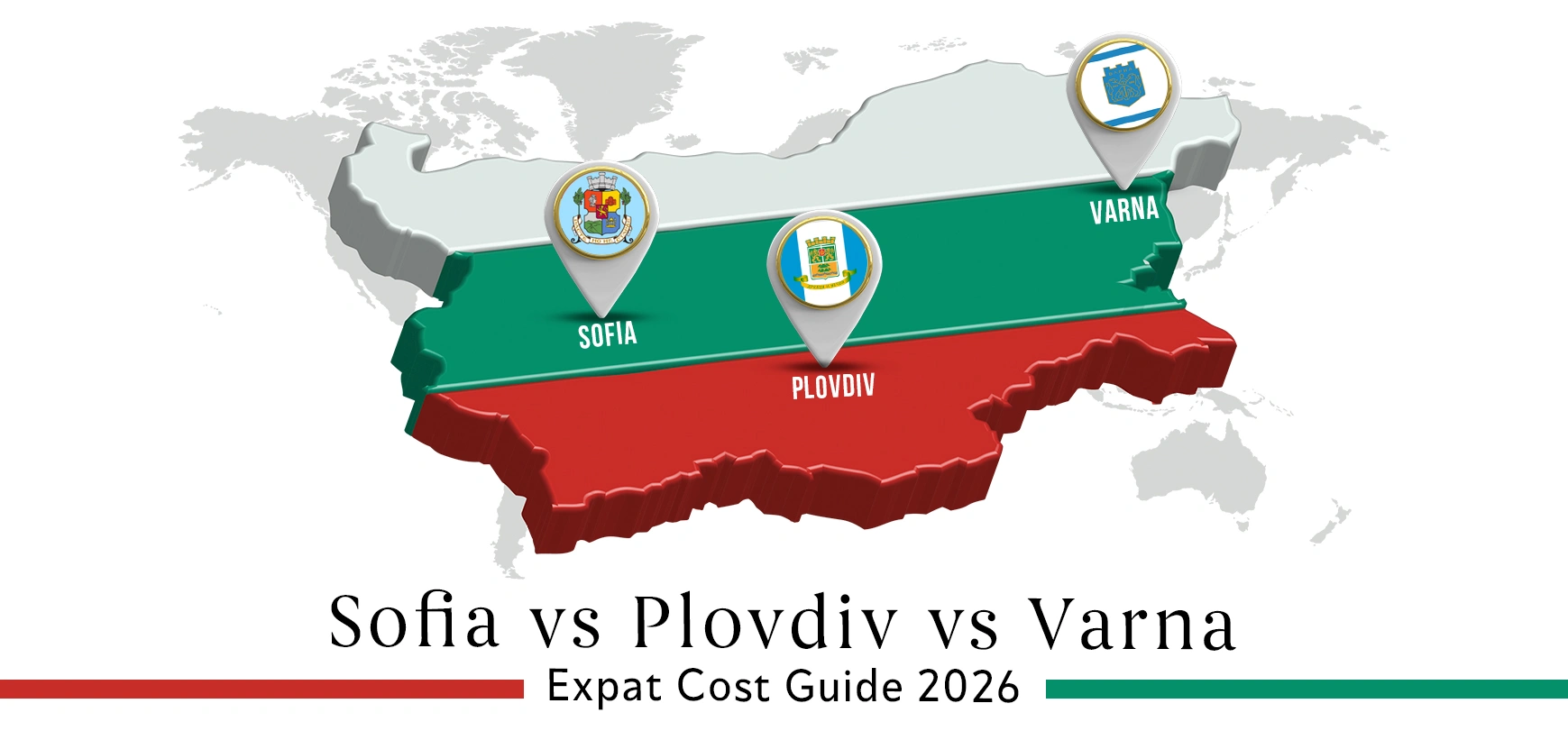
Selecting the appropriate city may be vital for your expenses, career options, and even way of life. In case you have not yet made up your mind on the city to live in, check our Sofia vs. Plovdiv vs. Varna comparison that will help you make a decision.
How Sofia Capital Inflates the Cost of Living in Bulgaria
Sofia, being the economic and administrative center of the country, is obviously where the highest Bulgarian prices can be found. The demand created by multinational companies, universities, and international expats has been steadily raising the rent.
In spite of the higher prices, Sofia still attracts many professionals due to more job opportunities, better infrastructure, and higher salaries in Sofia than in other regions.
The average cost for a single person in Sofia includes:
| Expense | Average Monthly Cost |
| Rent (1-bedroom city centre) | €500–€750 |
| Utilities | €100–€180 |
| Groceries | €220–€320 |
| Public Transport | €25–€35 |
| Dining & Entertainment | €150–€300 |
| Estimated Total | €1,050–€1,550 |
For professionals with international earnings, Sofia is quite affordable compared to most European capitals.
Coastal Beach Life and the Cost of Living in Bulgaria
Some examples of cities that provide a nice coastal life are Varna and Burgas. These places are preferred by digital nomads, pensioners, and seasonal workers.
The cost of renting rises in summertime when the number of tourists increases. In other seasons, rental costs decrease greatly.
The price of living in Bulgaria near the sea is still lower compared to many Mediterranean countries, which is why it can be a good option for those moving to Bulgaria.
| City | Overall Living Cost | Rent Level | Best For |
| Sofia | High | High | Careers, Business |
| Varna | Medium | Medium | Coastal Living |
| Burgas | Medium | Medium | Families & Retirees |
| Plovdiv | Low-Medium | Low | Digital Nomads |
Small Mountain Towns Lowering the Cost of Living in Bulgaria
Mountain resorts like Bansko, Smolyan, or other smaller towns in the region are one of the cheapest places to live in Bulgaria.
One can save about 30-50% on rent compared to Sofia; moreover, the local restaurants and other everyday services will cost much less money.
The fact is that such resorts attract those who work remotely but still want an active lifestyle outside the city.
The benefits include:
- Cheaper rent
- Less congestion
- Cheaper food locally
- Good community vibes
- Great hiking/skiing experience
However, there is a smaller labor market and not many foreign facilities here.
Surprise Fees Adding to the Cost of Living in Bulgaria
Relocation guides pay much attention to the cost of accommodation and food alone. But there are quite a few hidden expenditures that make up the real cost of living in Bulgaria.
Making a provision for them helps to avoid nasty surprises.
Private Health Insurance and the Cost of Living in Bulgaria
Although Bulgaria does have a healthcare system, many expatriates opt for the private healthcare system because of quick access and availability of English-speaking specialists.
Private insurance costs monthly can be estimated as follows:
| Insurance Type | Monthly Cost |
| Basic Cover | €35–€60 |
| Standard Cover | €60–€120 |
| Premium International Cover | €150–€300+ |
Consultations with private doctors cost between € 30 and € 80 per visit, depending on the doctor and the city.
Healthcare is still considered to be reasonably priced when compared to Western Europe.
Tech and Heavy Import Taxes in the Cost of Living in Bulgaria
Expenses that most new people do not consider are imports of electronic devices.
While other basic needs are affordable, imported electronic items can be costlier in comparison to other places in Europe owing to logistics costs and markups of the retailers.
| Product | Typical Price Range |
| Laptop | €800–€2,000 |
| Smartphone | €500–€1,500 |
| Gaming Console | €450–€650 |
| Premium Kitchen Appliances | Higher than EU average |
Most residents import electronics when they travel in Europe.
Setup and Visa Fees Raising the Cost of Living in Bulgaria
Individuals relocating to Bulgaria should budget extra for these upfront costs in addition to monthly living costs.
Common upfront costs may be as follows:
| Expense | Estimated Cost |
| Apartment Deposit | 1–2 Months Rent |
| Agency Fees | Up to 1 Month Rent |
| Residence Permit Fees | Varies by Visa Type |
| Furniture & Household Items | €800–€3,000 |
| SIM Card & Utilities Setup | €50–€150 |
Such upfront costs could greatly add to first-year expenditure, despite low monthly expenditures.
Expat Realities and the True Cost of Living in Bulgaria
Most of the online resources provide information that concerns the cost issue alone, omitting any analysis related to local income levels.
An understanding of the relationship between income and expenditures creates a more accurate view of the costs in Bulgaria.
Local Salary Standards vs. the Cost of Living in Bulgaria
As recent statistics show, average wages in Bulgaria are among the lowest in the European Union.
Nevertheless, purchasing power is growing because salaries are rising continuously.
| Category | Monthly Average |
| Average Net Salary | ~€1,000 |
| IT Professionals | €2,000–€4,000+ |
| Customer Support | €900–€1,400 |
| Teachers | €900–€1,300 |
| Hospitality | €750–€1,100 |
People who earn their salary abroad have much more purchasing power than people who work in their country.
The reason for this is that the cost of living perception in Bulgaria differs a lot.
Tax Perks That Balanced the Cost of Living in Bulgaria
| Tax & Business Advantage | Benefit | How It Helps Reduce the Cost of Living in Bulgaria |
| Flat Personal Income Tax | 10% flat rate | Keeps more take-home income compared to many European countries with progressive tax systems. |
| Flat Corporate Tax | 10% corporate tax | One of the lowest corporate tax rates in the EU, making Bulgaria attractive for entrepreneurs and businesses. |
| Competitive Labour Costs | Lower hiring and operating expenses | Businesses benefit from lower employment costs while maintaining access to a skilled workforce. |
| EU Market Access | Full access to the European Single Market | Enables businesses to trade freely across EU member states while operating from a lower-cost base. |
| Growing Technology Sector | Expanding startup and IT ecosystem | Offers increasing opportunities for freelancers, remote workers and technology companies. |
Staying Independent on the Base Cost of Living in Bulgaria
Comfortable living does not have to entail high pay.
Many expatriates manage to lower their monthly spending through:
- Renting away from tourist areas
- Shopping at local markets
- Preparation of meals at home
- Making use of public transportation
- Not buying unnecessary foreign goods
The realistic budget per month for a solitary remote worker is €1,100 – €1,600, and for families it is €2,400 – €3,500.
Salaries and Purchasing Power Concerning Cost of Living in Bulgaria
Knowledge about the cost of living will not be enough to assess the country’s affordability properly. It is crucial to compare the cost of daily life with the local income levels. Although Bulgaria still remains one of the cheapest countries within the EU, its average salaries are still relatively low compared to those in Western Europe. This makes the affordability of the country highly dependent on where your income comes from.
Average Salaries by Profession in Bulgaria (2026)
| Profession | Average Net Monthly Salary |
| IT Software Engineer | €2,200–€3,800 |
| Project Manager | €1,700–€2,700 |
| Financial Analyst | €1,500–€2,300 |
| Mechanical Engineer | €1,400–€2,200 |
| Registered Nurse | €1,100–€1,700 |
| Teacher | €1,000–€1,500 |
| Accountant | €1,200–€1,900 |
| Customer Support Specialist | €1,000–€1,600 |
| Hospitality & Tourism | €850–€1,300 |
| Retail Sales Assistant | €800–€1,200 |
Purchasing Power in Bulgaria
| Income Level | Monthly Income | Lifestyle |
| Minimum Wage Earner | €600–€700 | Covers necessities, usually outside Sofia or with shared accommodation. |
| Average Local Employee | €1,000–€1,200 | Comfortable lifestyle in smaller cities; careful budgeting required in Sofia. |
| Skilled Professional | €1,500–€2,500 | Comfortable lifestyle with savings potential and regular leisure spending. |
| IT & Tech Professional | €2,500–€4,000+ | High purchasing power, allowing premium housing and frequent travel. |
| Remote Worker / Digital Nomad | €3,000+ | Excellent purchasing power, making Bulgaria one of Europe’s most affordable destinations. |
Ways to Optimise Your Personal Cost of Living in Bulgaria
Good budgeting enables new arrivals to live a very comfortable life without having to overdo it.
Shopping Local Markets to Cut the Cost of Living in Bulgaria
Fresh vegetable and fruit markets are still among the biggest strengths that the country offers.
By purchasing fruits, vegetables, milk products and meat at local markets, one can save up to 15-30% on their food expenses.
Some more ways to save money include:
- Purchasing local brands
- Shopping for seasonal foods
- Attending weekly markets
- Not shopping in tourist supermarkets
This approach will make a difference in your living costs in Bulgaria.
Avoiding Expat Premiums to Save on Cost of Living in Bulgaria
The simple reason why many immigrants end up paying more money is that they shop in areas where there are many foreigners.
A few tips to avoid being charged the “expat premium”:
- Shop at the local supermarket and not at specialized shops
- Compare Internet/mobile operators before buying their service
- Learn basic Bulgarian for your daily activities
- Go to local cafes and restaurants and not the most popular ones
- Ask locals for advice regarding services/repairing anything
With minor changes, you can save hundreds of euros per year!
Pros and Cons of Living in Bulgaria
| Pros | Cons |
| Affordable housing compared with Western Europe | Lower local salaries |
| Flat 10% income and corporate tax | Imported electronics are relatively expensive |
| Fast internet and growing digital infrastructure | Bureaucratic procedures can take time |
| Access to the European Union market | Cold winters increase utility bills |
| Beautiful mountains and Black Sea coastline | English is less common outside major cities |
Bulgaria Compared with Other European Countries
| Country | Overall Living Cost | Average Rent | Internet Cost | Overall Affordability |
| Bulgaria | Low | Low | Very Low | ★★★★★ |
| Romania | Low | Low | Very Low | ★★★★★ |
| Hungary | Medium | Medium | Low | ★★★★☆ |
| Croatia | Medium | Medium | Medium | ★★★★☆ |
| Germany | High | High | Medium | ★★☆☆☆ |
| United Kingdom | Very High | Very High | Medium | ★☆☆☆☆ |
It is one of the cheapest places to live in the Balkan region, but not the only cheap place there. In case you want to compare prices of moving to different Balkan countries, our cost of living in Albania article can help you.
Monthly Cost of Living in Bulgaria at a Glance
| Expense | Single Person | Family of Four |
| Rent | €350–700 | €800–1,300 |
| Utilities | €90–170 | €150–250 |
| Groceries | €180–300 | €500–800 |
| Internet & Mobile | €20–35 | €35–60 |
| Transport | €20–70 | €70–150 |
| Dining & Leisure | €120–300 | €300–600 |
| Estimated Total | €1,100–1,600 | €2,400–3,500 |
Final Review of the Real Cost of Living in Bulgaria
The cost of living in Bulgaria ensures that the nation remains among Europe’s top destinations for expats, entrepreneurs, retirees, and digital nomads. Although cheap rent, cheap food, and taxation advantages can be considered as a good deal, it is crucial to understand your financial position prior to relocation.
The real cost of living in Bulgaria will depend on the particular city where you plan to settle, your accommodation options, sources of income, and lifestyle. While larger cities like Sofia have better career prospects, they have higher costs, but smaller towns and rural areas will allow you to enjoy an affordable cost of living in Bulgaria.
Regardless of whether you are moving, retiring, working from home or growing your business, knowing how much it costs to live in Bulgaria is an important step. Even though Bulgaria is still one of the cheapest countries in Europe, your expenditure will be based on where you live, what kind of lifestyle you have, and how you earn your money.
In case you are moving for work purposes or for making investments in business, it is advisable to consider Bulgaria along with other Balkan countries.
Here at Kolekr Insights, we provide guides on various business, relocation, investment, and life topics in Europe and the Balkan Peninsula.
Frequently Asked Questions About Cost of Living in Bulgaria
1. Is Bulgaria an expensive place to live in?
No. Living costs in Bulgaria remain very low in comparison to other states of the European Union, except for Sofia, which is more expensive than small towns.
2. How much money do you need to live comfortably in Bulgaria?
On average, a person needs about €1,100 – €1,600, while families need €2,400 – €3,500 per month.
3. What is the average salary in Bulgaria?
The average salaries in Bulgaria range from €1,000 to €1,200 after taxes on average per month.
4. Is Sofia more expensive than any other town in Bulgaria?
Yes. It is the most expensive place in the whole country due to the higher rent, prices in the restaurants and higher housing demand.
5. Is healthcare expensive in Bulgaria?
There is public healthcare in the state, and the prices for private healthcare are low in comparison to Western Europe.
7. Can foreigners live comfortably in Bulgaria?
Yes. Expats and digital nomads often appreciate the low cost of living in the state when getting their salaries abroad.
8. Is Bulgaria a good place for digital nomads?
Yes. Low housing costs, good internet, a favourable tax regime and availability of nature make this state increasingly popular among remote workers.
9. What is the hidden cost of relocation to Bulgaria?
It is related to the initial cost of relocation, including deposits, renting, paperwork and importing goods.