





Serbia is one of the most promising European locations in terms of entrepreneurship, remote work, retirement, and investment purposes. The strategic position of the country, low prices for goods and services, advanced infrastructure, and economic development are making it possible for people to enjoy a comfortable life at lower costs compared to other parts of Europe.
The cost of living in Serbia should be analyzed before making any decisions about relocation, investment opportunities, or even spending long holidays there.
This article will describe various aspects of everyday life in Serbia to help you estimate its suitability from your personal perspective.
Evaluating the Core Cost of Living in Serbia
The cost of living in Serbia is still cheaper compared to most of the countries that belong to the European Union. If you are a remote employee, retiree, businessman, or a family looking for an affordable yet convenient place to live, Serbia can provide all of those options.
The favourable climate in Serbia for doing business and developing its infrastructure attracts many foreign citizens.
The main benefits that affect the Cost of Living in Serbia are:
- Inexpensive housing when compared to EU capital cities
- Low prices of transport services
- Moderate health care costs
- Improving digital infrastructure
- High standard of living of expatriates
Such low prices continue to draw investors, entrepreneurs, digital nomads, and expats into Serbia.
Serbia Cost of Living Statistics for 2026
| Expense Category | Monthly Average |
| Single Person Living Costs | €800–€1,500 |
| Family of Four Living Costs | €1,500–€3,500 |
| One-Bedroom Apartment (Belgrade) | €500–€1,200 |
| Utilities | €100–€250 |
| Internet | €15–€30 |
| Public Transport Pass | €20–€40 |
| Gym Membership | €20–€50 |
| Private Healthcare Insurance | €25–€125 |
Monthly Housing and Rent Expectations for the Cost of Living in Serbia
Housing constitutes the biggest proportion of the cost of living in Serbia.
The rent prices of a modern apartment in the main urban centers, like Belgrade, would be higher than those of apartments in less populated towns. The neighborhoods favoured by expats in Belgrade will have premium rental prices.
Some average rents are:
- Modern 1-bedroom apartment in central Belgrade: €500-€1,200+
- A non-central apartment in Belgrade: €350-€700
- Apartment in Novi Sad: €350-€800
- Apartments in small regional cities: €200-€500
Anyone who intends living in Belgrade is likely to have to spend more on housing than people from other towns in Serbia.
Supermarket and Grocery Prices Shaping the Cost of Living in Serbia
One of the main strengths of Serbia is the affordability of grocery shopping. The markets in the country provide fresh fruits, vegetables, dairy products, and meat at low prices.
Examples of Serbia food prices:
- Bread: €0.70-€1.20
- Milk (1 litre): €1-€1.50
- Eggs (12 pieces): €2-€4
- Chicken breast (1 kg): €6-€9
- Local cheese (1 kg): €7-€12
Grocery shopping in the local markets can make a big difference in lowering the Serbian cost of living
Average Utility and Internet Bills Impacting the Cost of Living in Serbia
Utility bills stay low in Serbia.
Average monthly bills might be:
- Electricity, heating, water, and garbage collection: €100-€250
- Internet connection, fast: €15-€30
- Phone plan: €10-€25
Heating costs during the winter season can increase monthly utility costs, especially for large apartments. Nonetheless, total utility bills are quite affordable compared with those in other European countries.
Lifestyle Factors Affecting the Cost of Living in Serbia
The quality of life in Serbia often comes with surprises for newcomers. The residents have the opportunity to enjoy the vibrant social life, strong cafe culture, cultural events, and outdoor activities, which means that the cost of living remains reasonable.
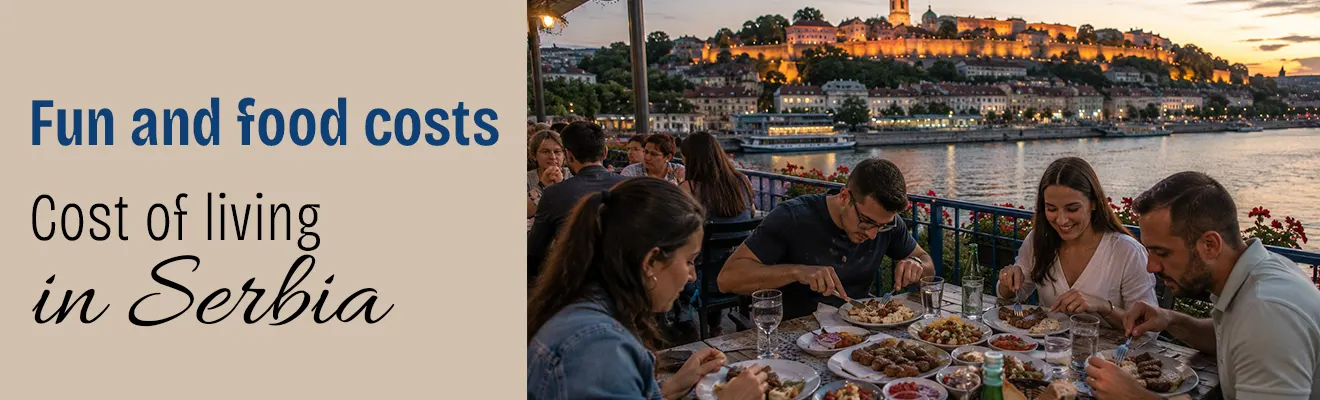
Dining Out and Entertainment Expenses Within the Cost of Living in Serbia
Eating out continues to be fairly cheap.
Some examples of prices are:
- Coffee: €2–€3
- Restaurant meal: €8–€15
- Dinner for two at a mid-range restaurant: €30–€60
- Movie ticket: €5–€8
One of the reasons why many expats in Serbia appreciate their lifestyle is the flourishing restaurant industry.
Public Transit and Fuel Prices Influencing the Cost of Living in Serbia
The cost of transportation is not high compared to the general cost of living in Serbia.
There are cheap and efficient means of public transportation:
- A monthly travel pass costs €20-40
- Bus ride costs €0.50-1
- Taxi cab charges about €2-3
at the very beginning of the journey.
Fuel cost varies but is comparatively lower than in Western Europe.
Gyms and Leisure Activities Costs and the Cost of Living in Serbia
The modern Serbian lifestyle provides ample recreation opportunities.
Average monthly expenses:
- Gym membership fee: €20-€50
- Classes at the gym: €30-€80
- Membership in sports clubs: depends on the type of activity
- Weekend getaways: relatively cheap and convenient
Such leisure activities provide a way to maintain balance in life without raising the budget significantly.
City Comparisons for the Cost of Living in Serbia
Not all Serbian cities deliver the same cost structure. Understanding regional differences helps residents choose an apt location.
How Belgrade Dominates the High-End Cost of Living in Serbia
Belgrade is the city with the highest cost of living in all of Serbia.
Because of the fact that Belgrade is the capital of Serbia, it has become a major economic center where multinationals, investors, and foreigners live. The reason for the higher cost of living lies in the need for good quality services.
There are a lot of people who find living in Belgrade, Serbia, attractive for different reasons.
Novi Sad Alternatives to Reduce the Overall Cost of Living in Serbia
Novi Sad presents an intriguing option.
The city has:
- Cheaper rent
- Good infrastructure
- Top-notch education facilities
- High standard of living
Numerous telecommuters and families have found that Novi Sad strikes the perfect balance.
Cheaper Regional Towns Dropping the Minimum Cost of Living in Serbia
Niš, Kragujevac, Subotica, and other smaller cities have considerably cheaper cost of living.
The advantages include:
- Affordable house prices
- Affordable expenses
- No traffic
- Community spirit
People can save a lot of money while living in such cities because the cost of living in Serbia is lower.
How Serbia Compares with Other European Countries
When assessing the cost of living in Serbia, many expatriates compare it with neighboring countries.
| Country | Relative Cost Level |
| Serbia | Lowest |
| Bulgaria | Slightly Higher |
| Romania | Higher |
| Hungary | Considerably Higher |
| Croatia | Highest |
Serbia tends to have lower rent prices, more affordable food, and lower transportation fees than Croatia and Hungary. The affordability of these services keeps on drawing foreign businesses to the country.
Affordability is still one of Serbia’s most competitive advantages for those looking into “Is Serbia a good place to live?”
Healthcare and Education in the Cost of Living in Serbia
Healthcare and educational costs might vary depending on individual preferences and needs.
Medical Care and Insurance Costs Added to the Cost of Living in Serbia
Serbian healthcare includes both public and private healthcare systems.
International citizens favour private healthcare due to reduced waiting times and a wide range of services offered.
Typical costs for services are:
- Private doctor’s visit: €30-€80
- Specialist visit: €50-€150
- Private health insurance plans: €300-€1,500 annually
Medical care is cheap in Serbia and improves the image of the country.
International School Fees Adjusting the Family Cost of Living in Serbia
The cost of education should be considered if one moves with children.
The cost of studying at an international school can be:
€5,000-€20,000+
The choice of school greatly affects the overall cost of living in Serbia for expats.
The Economy of Serbia and Average Income Trends
The growing economy of Serbia is a key factor that determines the level of quality of life and purchasing power in the region.
In the last ten years, there’s been a steady increase in foreign investments, construction, technology, manufacturing, and services in Serbia.
Serbia average salary keeps growing, especially in such industries as:
- Information Technology
- Engineering
- Financial Services
- Manufacturing
- Business Process Outsourcing
Although the Serbia average income is below that in many countries of Western Europe, a comparatively low cost of living in Serbia makes it possible for citizens to enjoy their lives.
This ratio of income and expenditure is good for the Serbia standard of living.
Expat and Nomad Realities Regarding the Cost of Living in Serbia
Serbia continually attracts remote workers and entrepreneurs across the world.
Local Salaries vs. the Digital Nomad Cost of Living in Serbia
The Serbia average salary and Serbia average income are still below that seen in many Western nations.
But the digital nomads who earn foreign incomes usually find themselves in a very affordable country.
The income difference presents lucrative options for foreign workers looking for an easy life with low expenses per month.
Hidden Fees and Banking Costs Raising the Cost of Living in Serbia
Moreover, new citizens need to allocate funds for:
- Bank account fees
- Foreign currency exchange fees
- Fees for residence permits
- Documentation fees
It is very important to plan since all these fees can eventually pile up.
Tax Planning and Residency Perks Modifying the Cost of Living in Serbia
Proper tax planning becomes especially important in expense management.
The Serbian economy, which provides good business opportunities, lures investors into the country. Understanding the legal and tax structure can help to improve one’s financial standing.
The economy of Serbia, which keeps growing, attracts investors who are interested in the country’s future.
Strategic Budgeting Tips to Manage the Cost of Living in Serbia
Appropriate budgeting enables residents to boost value while maintaining a standardized quality of life.
Smart Tricks to Lower Your Weekly Cost of Living in Serbia
Practical approaches are:
- Shopping at local markets
- Taking public transport
- Living in areas away from city centers
- Utilizing local entertainment
- Comparing utility companies whenever you can
It’s easy to make small changes that can greatly help reduce costs.
Avoiding Traps that Artificially Inflate the Cost of Living in Serbia
New arrivals tend to incur unnecessary costs when:
- Leasing overly expensive housing
- Dependence on only imported items
- Travelling everywhere using their own transport
- Overlooking local offers and rewards systems
It is important to understand local pricing patterns.
Final Verdict on the True Cost of Living in Serbia
Serbia is a country with special attributes regarding cost-effectiveness, opportunities, and lifestyle benefits. Regardless of whether you are an investor, an entrepreneur, a retiree, or a remote worker, this country offers you access to modern facilities at reasonable prices in comparison with other countries in Europe.
The developing infrastructure, business climate, and increased population from abroad continuously contribute to its reputation as a global resident.
Is the Value Worth the Price Tag for the Cost of Living in Serbia?
Those asking if Serbia is a good place to live would find that yes, it is.
The affordable housing, low costs of daily necessities, quality medical care, rich culture and hospitable atmosphere become the reasons for expats to move to Serbia. Even though prices differ depending on different cities and individual situations, generally, the Serbia living standards to price ratio is quite favourable.
For those planning to live in Serbia, some preparation and research into the area’s local conditions can make for an easy relocation.
How Insights Kolekr Helps International Investors and Expats
Insights Kolekr is a resource that offers a wide variety of knowledge on how to make informed decisions when investing or relocating from one nation to another for business purposes. In order to be able to make smart decisions on where to invest or relocate, Insights Kolekr provides relevant information such as market research, business intelligence, investment insight and specific guides for each country.
If you need to get more insights on how to live or invest in Serbia, you will find here the answers to all your questions.
Frequently Asked Questions About the Cost of Living in Serbia
1. What is the cost of living per month in Serbia?
Depending on the city and lifestyle, the cost of living in Serbia can range from €800 to €1,500 per month for a single person, and from €1,500 to €3,500 for families.
2. Is Belgrade more expensive than other Serbian cities?
Yes. The cost of living in Belgrade, Serbia, is usually more expensive than in Novi Sad, Niš, Kragujevac, and Subotica owing to higher demands for housing and services.
3. How much does food cost in Serbia?
Despite an increase in Serbia food prices over recent years, average food prices in Serbia still stay relatively low compared to the majority of European countries. Local agricultural products, milk and meat products, as well as restaurant food, are typically cheaper than in the capital cities of most EU member states.
4. Is Serbia suitable for expatriates to settle?
The frequent question of people interested in moving to Serbia is, ” Is Serbia a good place to live? The combination of cheap accommodation, modern infrastructure, fast internet connection, as well as rich culture makes Serbia a more and more appealing destination for international citizens.
5. How does Serbia compare to neighboring countries?
While being cheaper than Croatia, Hungary, and Romania, the Serbian cost of living remains competitive with that of Bulgaria.
6. What is life like for expats in Serbia?
Expats living in Serbia appreciate the relaxed environment, affordable living conditions, emerging business opportunities, as well as both urban and natural sights.