

Presented as a transparency exercise, a draft European Parliament report would curb the Court of Justice’s power to defend judicial independence across the Union and with it the legal infrastructure on which the EU’s citizens, companies and rights depend, warns Alberto Alemanno.
 Alberto Alemanno



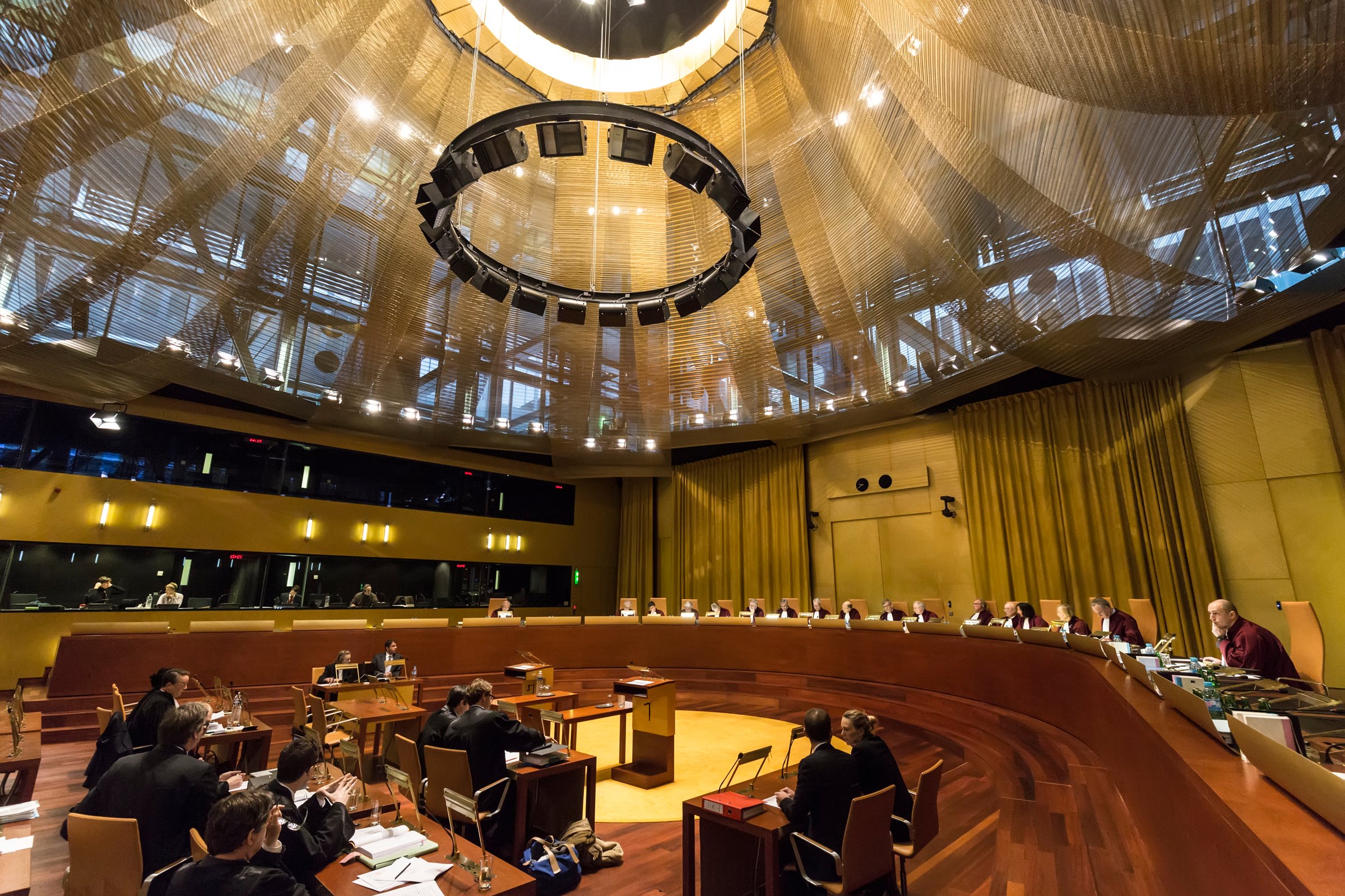
The European Parliament’s constitutional affairs committee is holding hearings this week on a draft report that, at first sight, appears to concern the internal workings of the Court of Justice of the European Union.
It speaks the language of transparency, accountability and institutional balance. It looks technical. It is not.
It is an unprecedented attack on the Court’s authority and legitimacy, targeting one of the last EU institutions that answers to no political majority and, with it, on the legal infrastructure on which the EU’s citizens, companies and rights depend.
Drafted by rightwing European Conservatives and Reformists MEP Charlie Weimers with European People’s Party backing, the report targets the Court of Justice’s most important recent achievement: its power to declare that a national body captured by political power is no longer a court capable of applying EU law.

That power matters more in the EU than anywhere else, because the Union, unlike the United States or any federal state, has no courts of its own to enforce its laws on the ground.
It has one central court in Luxembourg and then relies entirely on national courts to act, simultaneously, as EU courts.
This was the design from the start. As early as 1951, the Treaty of Paris establishing the Coal and Steel Community charged the court with ensuring “respect for the law” in the interpretation and application of the treaty, language carried almost unchanged into the Treaties of Rome.
The point was never simply to arbitrate disputes between states, which remain an exceptional event. It was to make Europe a “community of law,” one whose rules would mean the same thing everywhere and be enforceable against governments themselves.
The entire Union has been built and works on that foundation.
Companies trade, workers move, judgments circulate thanks to EU rights being invoked across borders, all resting on one assumption: that courts in each member state are independent enough to apply EU law and protect individuals against abuses of power.
Remove that, and the Union stops functioning as a Union.
A company investing abroad must trust an impartial judge will enforce its contract. In case of doubt, a national judge must be able to refer a question to Luxembourg without fear of retaliation. Mutual recognition, the quiet engine of European integration, depends on mutual confidence in courts. Judicial independence is Europe’s operating system.
Undermined from within
Over the past decade, that system has been attacked from within.
Poland, under the Law & Justice party (PiS), and Hungary under Viktor Orban, discovered that capturing courts is the most efficient way to capture the state.
The Court of Justice responded by turning Article 19 TEU, which requires member states to “provide remedies sufficient to ensure effective legal protection” in the fields covered by EU law into an actionable rule-of-law guarantee.
In December 2025, its Grand Chamber ruled that Poland’s Constitutional Tribunal no longer met the standard of an independent tribunal, given irregular appointments to its bench and presidency.
This was not judicial activism, but the court doing exactly what the Treaties have asked of it since 1951.
Enter Weimers
The Weimers Report would set that power aside.
Under its proposed “reciprocal dialogue mechanism”, it would require the court, before ruling on a national court’s independence, to invite that very court to submit observations.
That is like asking the player accused of fixing the match to advise the referee before the whistle. Had this mechanism existed earlier, some of the EU’s most important rule-of-law interventions against Poland and Hungary might never have happened.
What makes this report different from ordinary criticism of the court is what it targets. The Court of Justice is the rare EU body whose composition and function are meant to sit outside that logic entirely, untouched by shifting majorities, unanswerable to any single political family.
That is why a report reshaping how it can rule on judicial independence, rather than merely disagreeing with a ruling, marks a break with how the parliament has treated the court since its inception.
It also matters who is authoring this.
Weimers is a Swedish conservative known for anti-migration campaigns, opposition to a larger EU budget, and support for Brexit.
That the EPP entrusted him with the pen is itself telling, an instance of what’s been called Manfred Weber’s ‘two-ovens’ strategy this legislature, leaning on the far-right for work the centre-right would rather not sign alone.
Tabled in committee on 29 June 2026, the report’s 25 recitals and 25 paragraphs reflect a broader push, shared across ECR, Patriots for Europe and the Europe of Sovereign Nations, to scale back the court’s role in the name of national sovereignty and “constitutional identity”.
The hearing’s own guest list reinforces the concern.
Among the experts invited: a former German Constitutional Court judge and author of the most Court-of-Justice-sceptic ruling in recent memory, and Eleanor Sharpston, a former advocate general at the court who separately and unsuccessfully sued the institution over her own Brexit-triggered removal – a plain conflict of interest.
There is no clear voice from the Polish or Hungarian judiciary or civil society, and no one tasked with defending the Article 19 case law under attack.
But the court is not without responsibility here: its longstanding resistance to internal transparency reforms, from the absence of clear objective criteria governing the allocation of cases among its members to the lack of publicity of its public hearings, has made it vulnerable to external and politically motivated attacks.

But the fix is to make the court more transparent and accountable so its independence becomes harder to attack, not to strip it of the discretion it needs to operate.
MEPs should reject this report and prepare a substitute resolution. It should demand real transparency from the court – clearer case-allocation rules, streaming of hearings to stronger administrative accountability – while defending Article 19 TEU as the legal foundation that keeps EU rights enforceable before independent courts across the Union.
Anything else lets captured courts decide, unsupervised, whether EU law still applies to them.
.