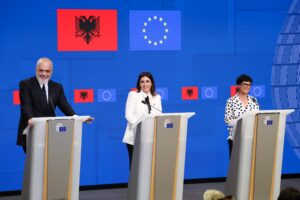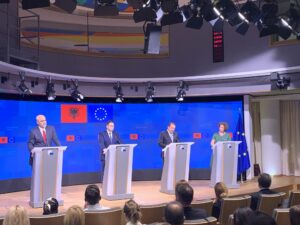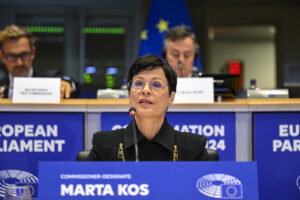

Even the relevant EU commissioner, Dubravka Šuica, acknowledged the central obstacle: “To be open, the key problem is access to Gaza,” she said.
 Nikolaj Nielsen



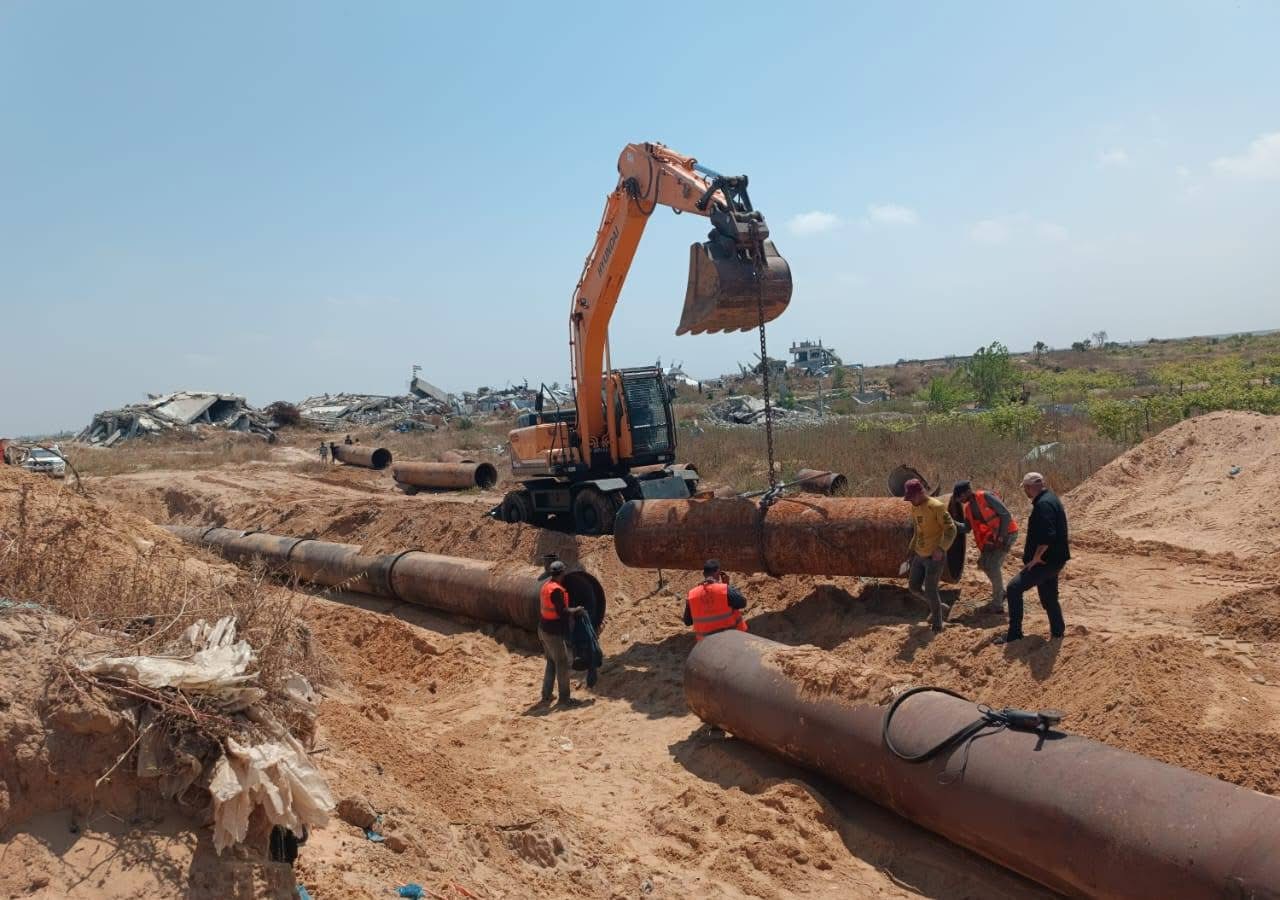
Without any clear Israeli guarantees on access to Gaza, the EU’s nearly €900m reconstruction announcement earlier this week risks falling short of its intended goals.
Although some aid may be trickling into Gaza, the conditions remain dire – despite a ‘ceasefire’ that has seen over 1,100 people killed by near-daily Israeli airstrikes and artillery attacks. Meanwhile, Israeli ground forces continue to squeeze the population into smaller and smaller areas.
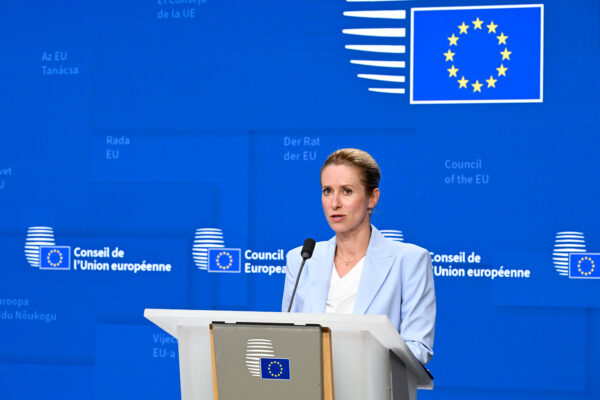
Dubravka Šuica, the EU commissioner for the Mediterranean, announced the funds in Brussels on Monday (13 July), following a second meeting of the Palestine Donor Group co-chaired by Palestine prime minister Mohammad Mustafa.
The money is intended to restore social services, critical infrastructure, and strengthening governance in Gaza, an enclave which needs at least €70bn to rebuild.
James Moran, an associate senior research fellow at the Brussels-based Centre for European Policy Studies, an independent think-tank, says it all depends on Israel.
“It’s not about the money. It’s about access, primarily. And at the moment, there is very little access being allowed by the Israelis,” he says.
“Frankly speaking, you’re making a pretty empty announcement, and there is no sign, as far as I can see at the moment, that any such arrangement has been made with the Israelis,” he added.
The sentiment was broadly echoed by prime minister Mustafa.
“Not much will happen until Israeli withdrawal from Palestinian areas. If that doesn’t happen, the problem will remain. And even when if the money is there. Not much will progress,” he told reporters.
Even Šuica acknowledged the central obstacle. “To be open, the key problem is access to Gaza,” she said.
By way of an example, she cited the National Committee for the Administration of Gaza, a Palestinian technocratic body intended to oversee reconstruction in the enclave.
They are based in Cairo – because Israel won’t allow them into Gaza. “They should be in Gaza. This is the key problem,” Šuica added.
In other words: make the grand announcement, hope Israel agrees, and head off for the summer break. Admittedly, that may be a somewhat cynical reading.
Business-as-usual
But with the EU still unable to agree on trade restrictions, including measures targeting goods from illegal settlements, the political message to Israel appears to be one of business-as-usual.
While member states discussed a full ban on Israeli settler imports on Monday, any decision has slipped to October, with Israeli elections later that month adding another layer of complications that risks upending any help for Gaza.
EU states have already imposed sanctions on violent settlers, in a move backed by Germany, but stopped short of extending the same measures to far-right Israeli ministers. By contrast, the UK has banned Itamar Ben-Gvir and Bezalel Smotrich from entering the country.
Perhaps a better option would have been slapping sanctions on Israel and linking it directly to allowing in humanitarian aid and reconstruction in Gaza.