Motoring journalists have probably lavished more praise on the Porsche 911 GT3 than any other new car this millennium. It has slain supercars, won comparison tests and consistently been hailed as a benchmark for driving dynamics. Over 28 years and eight generations, it has rarely put a semi-slick tyre wrong.
 Tim Pitt



Tuesday 07 July 2026 12:58 pm | Updated: Tuesday 07 July 2026 12:08 pm
Motoring journalists have probably lavished more praise on the Porsche 911 GT3 than any other new car this millennium. It has slain supercars, won comparison tests and consistently been hailed as a benchmark for driving dynamics. Over 28 years and eight generations, it has rarely put a semi-slick tyre wrong.
Every new GT3 thus far has been a careful evolution of the existing DNA, However, Porsche is about to plunge a mutation into the gene pool: the first ever GT3 convertible. The S/C – it stands for ‘Sport Cabriolet’ – uses the same naturally aspirated flat-six as the coupe, combined with a six-speed manual transmission. It also cherry-picks various lightweight components from the limited edition 911 S/T.
What’s not to like? Well, for a car that has always been so single-minded, the idea of an easy-breezy soft-top, a GT3 for road trips rather than track days, might seem to miss the point. Factor in an asking price of £200,500 – nearly £40,000 more than its fixed-roof sibling – and the S/C suddenly has a lot to prove. To Stuttgart, then…
The first GT3 Cabriolet
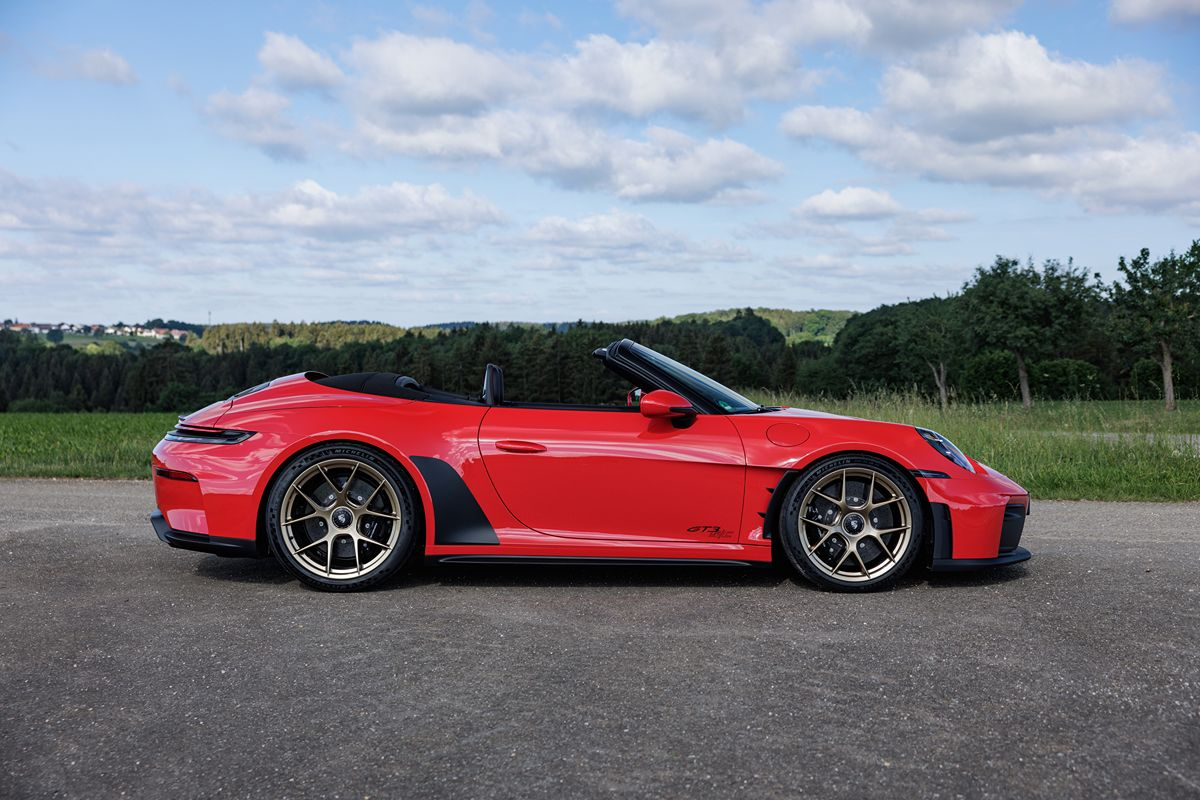 Porsche 911 GT3 S/C convertible
The last time Porsche’s GT division went topless, so to speak, the result was the 718 Spyder RS. With a six-cylinder 911 GT3 engine shoehorned into a Boxster body, it was a riot to drive and seriously quick across country. Assembling its basic, bivouac-style roof, though, was a much slower process.
The GT3 S/C is based on the regular 911 Cabriolet, which means no faffing about with straps, toggles and an instruction manual. Simply hold down a button on the centre console and the roof folds away electrically in 12 seconds, at speeds of up to 31 mph. The price of such convenience is added weight, but Weissach’s engineers have designed new magnesium ribs to make the fabric top as light as possible.
#mc_embed_signup { background: #fff; clear: left; font: 14px Helvetica, Arial,sans-serif; width: 100%; max-width: 600px; margin: 20px 0; } #mc-embedded-subscribe-form { margin: 20px 0 !important; } .newsletter-form-flex { display: flex; gap: 0; align-items: center; margin-top: -10px; } .newsletter-form-flex input[type=”email”] { flex: 1; padding: 2px 10px; border: 1px solid rgb(18, 22, 23) !important; border-radius: 12px 0 0 12px !important; } .newsletter-form-flex input[type=”submit”] { padding: 4px 10px !important; margin: 0 !important; background-color: rgb(18, 22, 23) !important; color: rgb(255, 255, 255) !important; border: 1px solid rgb(18, 22, 23) !important; border-radius: 0 12px 12px 0 !important; } .newsletter-banner-content { margin-bottom: 15px; } .newsletter-banner-content h2 { margin: 0 0 10px 0; font-size: 18px; font-weight: 600; } .newsletter-banner-content p { margin: 0 0 10px 0; line-height: 1.5; } .newsletter-banner-content ul, .newsletter-banner-content ol { margin: 0 0 10px 20px; } .newsletter-banner-content a { color: #0073aa; text-decoration: none; } .newsletter-banner-content a:hover { text-decoration: underline; } .newsletter-banner-content img { max-width: 100%; height: auto; margin: 10px 0; } #mc_embed_signup #mce-success-response { color: #0356a5; display: none; margin: 0 0 10px; width: 100%; } #mc_embed_signup div#mce-responses { float: left; top: -1.4em; padding: 0; overflow: hidden; width: 100%; margin: 0; clear: both; }
More magnesium is used for the forged centre-lock wheels – 20 inches in diameter at the front, 21s at the rear – which are carried over from the 911 S/T. Wrapped in gooey Michelin Pilot Cup 2 tyres, they save a combined 9kg in unsprung weight.
Additional parts shared with the S/T include the ventilated front wings, door skins, anti-roll bars and chassis-strengthening shear plate, all of which are constructed from carbon fibre. Tot everything up and the S/C weighs in at 1,497kg (DIN): only 35kg heavier than a 911 GT3 Touring with a manual gearbox.
Make mine a manual
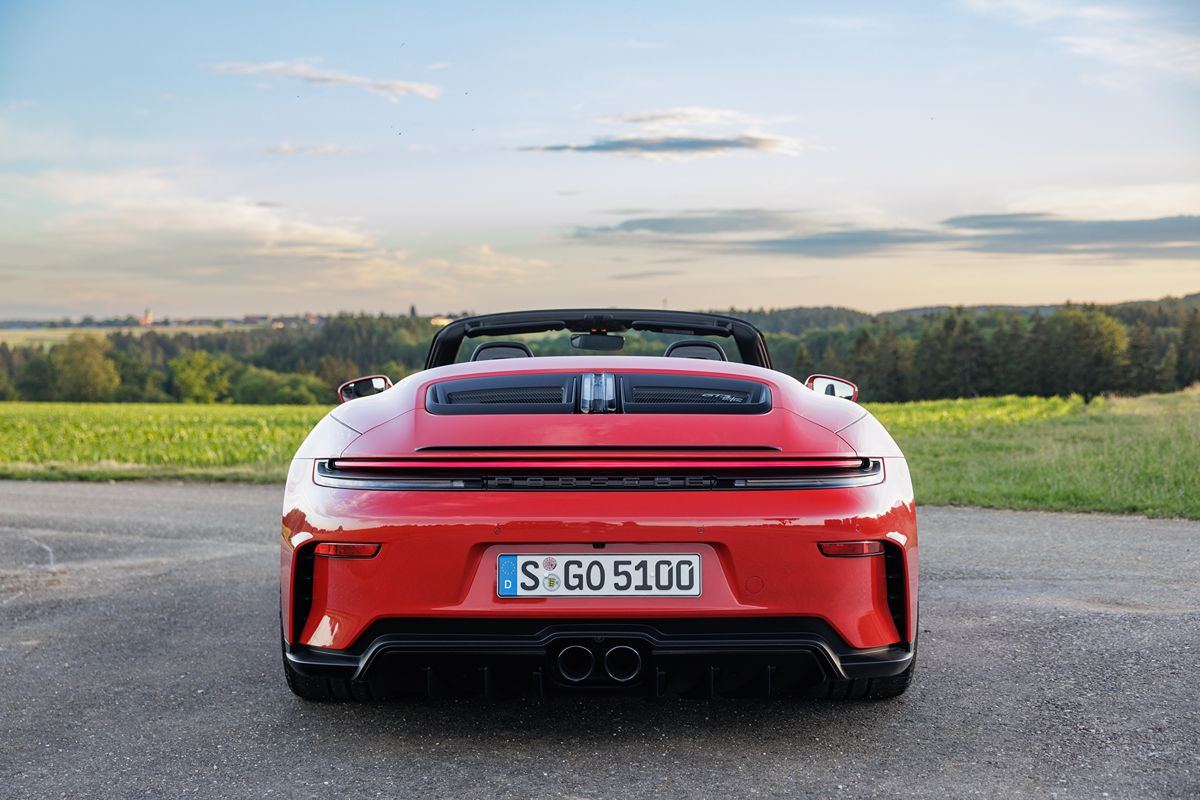 The rear of the Porsche 911 GT3 S/C convertible
Behind the S/C’s back axle lurks essentially the same engine found in Porsche’s Carrera Cup race cars: 4.0 litres, six horizontally opposed cylinders, individual throttle bodies, forged pistons, titanium conrods and a dry sump. Maximum power of 510hp arrives at a giddy 8,400rpm, and the limiter doesn’t call time until 9,000rpm. There are shift lights within the driver’s display and you can configure the electronic rev counter so the redline is positioned at 12 o’clock – both features inspired by motorsport.
The gearbox is a short-ratio six-speed manual, rather than the oft-criticised seven-speeder used in previous 911s. It sends drive to the rear wheels via a mechanical limited-slip differential. Want the speed and convenience of a dual-clutch PDK auto transmission instead? Configurator says nein. The GT3 coupe is your only option if you prefer paddles to a stick.
Being GT3-derived, this is the first 911 Cabriolet with double wishbone front suspension rather than MacPherson struts. Its geometry and adaptive damper settings are identical to Touring-spec cars, including an anti-dive system that counteracts pitch during heavy braking. However, PCCB carbon-ceramic brake discs, optional on the coupe, are fitted as standard here.
‘Street Style’ is subjective
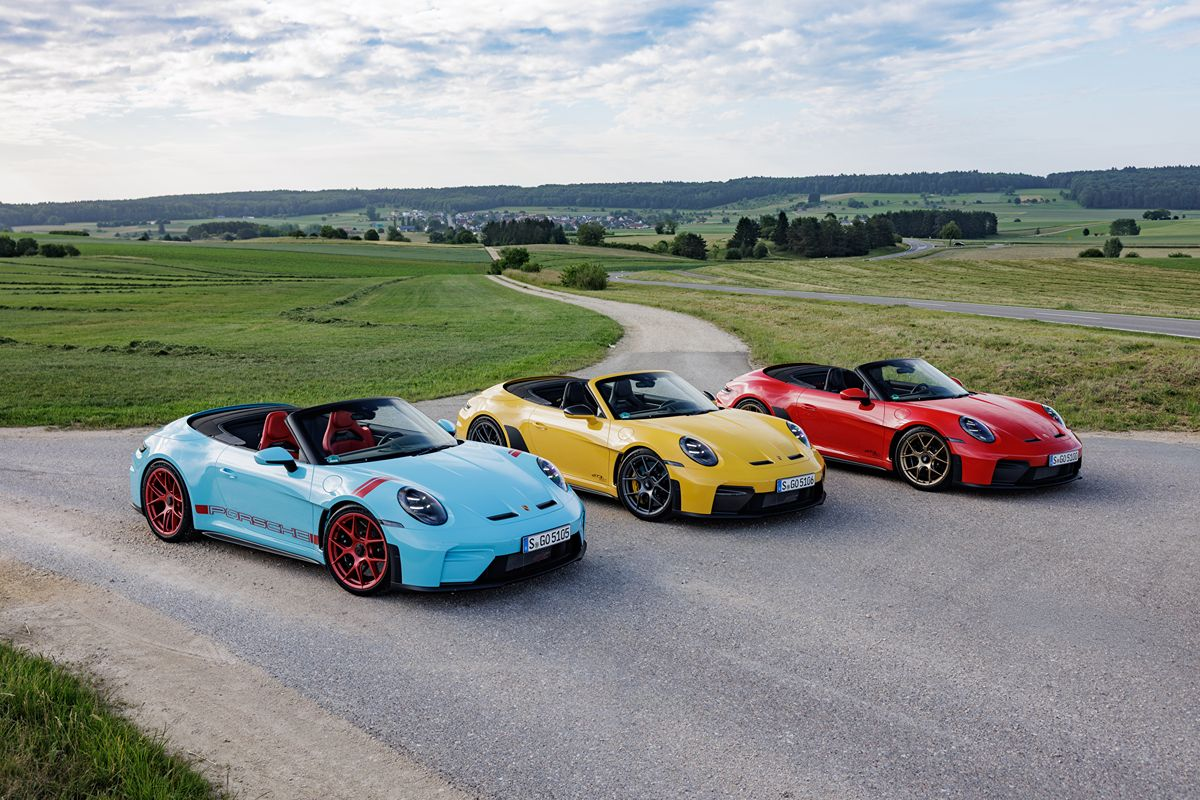 A gaggle of Porsche 911 GT3 S/C convertibles
My rendez-vous with the 911 GT3 S/C takes place in the village of Hohenstein, near Stuttgart – the same place where the 718 Spyder RS was launched three years ago. Jörg Jünger, project manager for Porsche GT models, shows me around the car before insurance forms are signed and keys are handed over.
“It’s one thing to have an idea,” explains Jünger, “but quite another to talk the company board into giving you enough money to build it. So we put together a prototype of the GT3 S/C in secret, then showed them a physical car. After that, it was much easier to convince them.”
The sight of ‘my’ S/C outside, gleaming in classic Guards Red on Neodyme Gold rims, has near-enough convinced me, too. So much for journalistic impartiality. That said, while the cognoscenti will spot details like the GT3-specific bonnet nostrils and centre-exit tailpipes, the Porsche is less ostentatious than most rival supercars. Go for a subtle spec and many people won’t know it from a Carrera Cabriolet.
Alternatively, if you want everyone to know you have an S/C, Porsche offers the £24,110 Street Style Package. Pictured on the blue car above, this adds Pyro Red graphics to the front wings and ‘PORSCHE’ lettering along the doors, plus darkened headlights and Victory Gold brake calipers. Inside, you will discover four-colour braided leather that looks vaguely like Christmas wrapping paper, a laminated wood gear knob and (oh yes) leather-trimmed air vents. Sorry Jörg, you had me, now you’ve lost me again.
Read more Where to see the world’s most beautiful limited-run Porsche 911 Inside the Porsche 911 GT3 S/C
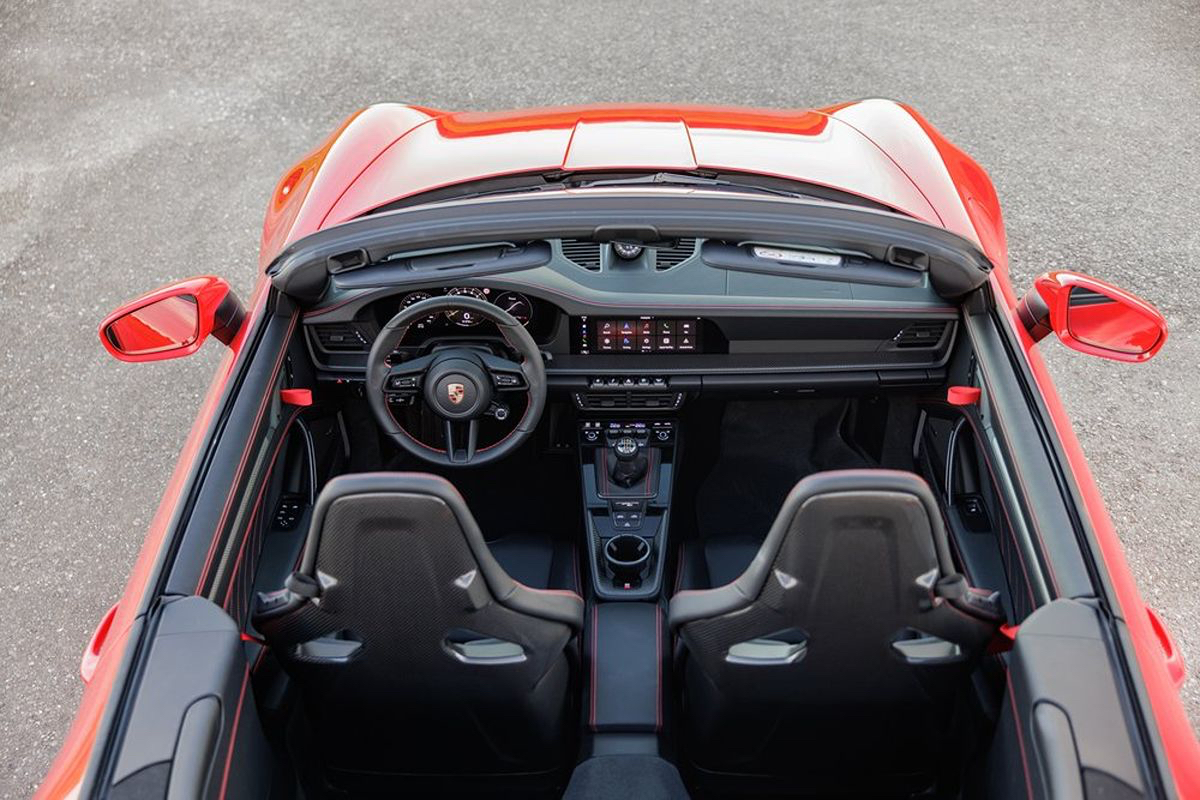
Climbing aboard the S/C, the most obvious thing to note is the absence of rear seats. Indeed, this is the first series production two-seat 911 Cabriolet in the model’s long history. To make use of the empty space, Porsche has developed a lockable 80-litre storage box (shown in prototype guise at the launch), which supplements the 132 litres of luggage capacity in the ‘frunk’.
You sit low in four-way-adjustable Sport Plus seats (carbon fibre buckets with folding backrests are an option), ahead of a crisp digital screen that evokes the 911’s traditional five-dial display. As with other GT3s, the engine is started via a twist toggle, rather than by prodding a button, the throaty flat-six waking up with a curt and businesslike bark.
Manual transmissions are now a rarity on new car launches – confined to budget superminis or dedicated sports cars – but the 911’s weighty clutch and notchy, rapid-fire shift instantly feel like something I had stored in my muscle memory. Switch into Sport mode and the software can even ‘heel and toe’ for you, blipping the throttle on downshifts to match the engine revs – and occasionally on upshifts, too, if you don’t snatch the next cog quickly enough. It sounds like cheating, but works so perfectly I’m not sure even Walter Röhrl could do better. Yours truly definitely can’t.
Racing to the redline
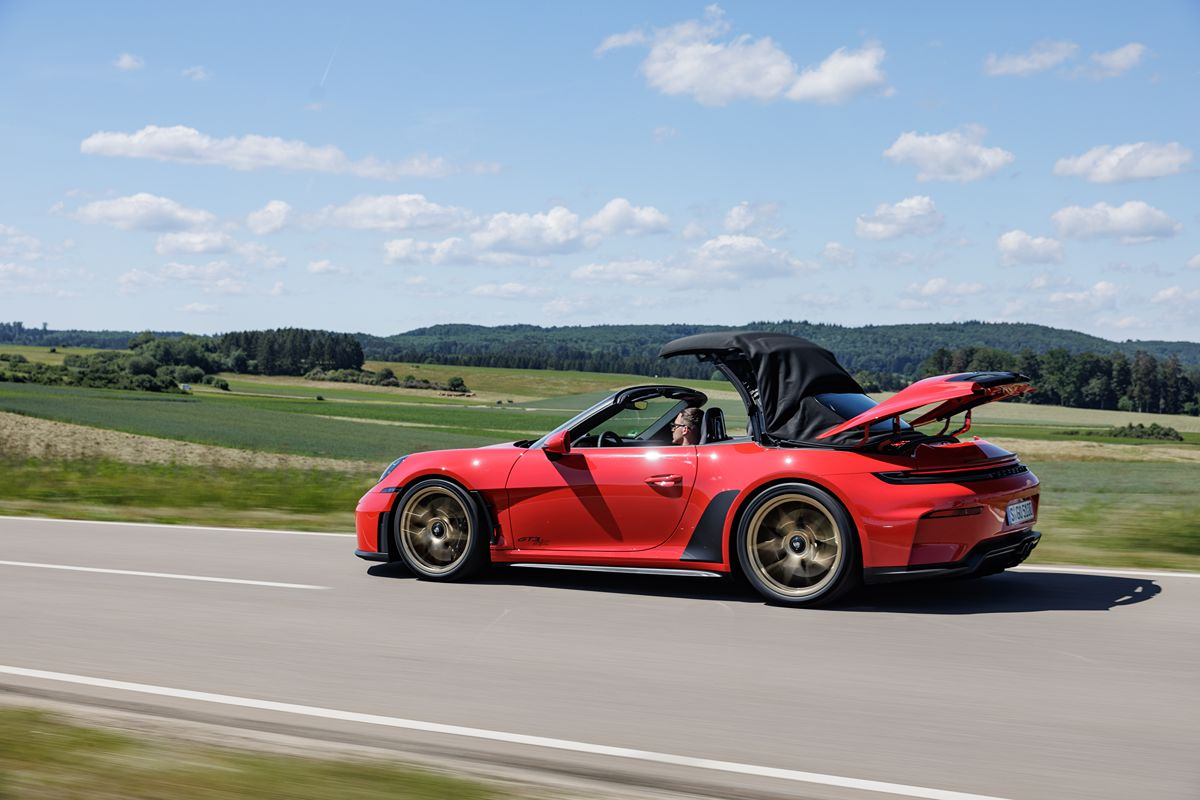 Poetry in motion: The Porsche 911 GT3 S/C convertible
A 510hp output looks quite modest in 2026, when a ‘junior’ supercar such as the Lamborghini Temerario can corral 920 horses. A 0-62mph time of 3.9 seconds won’t win any drag races either. The PDK-equipped 911 GT3 coupe, for reference, is half-a-second quicker.
Still, no GT3 has ever been about ultimate firepower; Porsche has the 911 Turbo S to satiate the speed freaks. Instead, that 9,000rpm vocal range is what defines this engine; a soaring, hammering crescendo that is all-consuming and utterly addictive. And unlike a Temerario or Turbo S, the S/C isn’t so intergalactically rapid that you risk passing ‘Go to jail’ every time you flex your right foot.
Having the roof down only heightens the drama, amplifying the guttural roar of the flat-six as you indulgently drop down a couple of gears, then race back to the redline. I catch sight of myself in the mirror and realise I’m grinning like a lunatic. The finest engines will do that to you.
A no-compromise Cabriolet
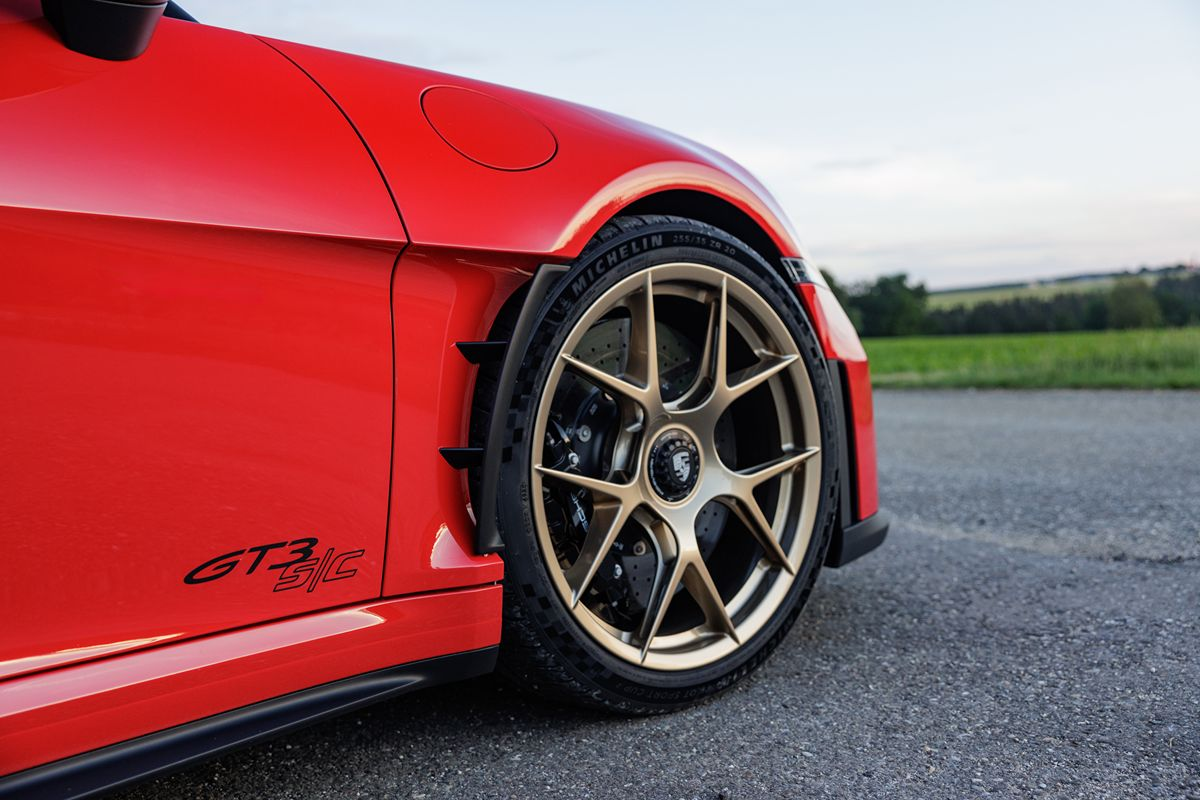
If you drove the S/C and a regular 911 GT3 back-to-back around a racetrack, you might detect some small differences. With someone of Walter Röhrl’s calibre at the wheel, no doubt the latter would post fractionally faster lap times, too.
On the road, though, I struggled to sense any meaningful disparity between the cars. The S/C feels every bit as fast and focused as the coupe, with gorgeously tactile steering – the nicest this side of a hydraulic-helmed McLaren – and a chassis that feels totally dependable under duress. The 992-generation 911 was designed to spawn a Cabriolet from the outset, and it shows.
German roads are less peppered with potholes than ours in the UK (hard to believe, right?), but over occasional bumps and ridges the Porsche resolutely keeps its composure. The initial response of its dampers is firm, and rather jittery at city speeds, but the rebound is rounded off nicely, with no hint of the wobbliness that sometimes afflicts convertible cars.
Later, I ask Oliver Hilger, spokesperson for the 911, if the S/C will follow the example of other GT3s and set a Nurburgring lap-time. “We have no plans,” he says. “That isn’t the point of this car.” Instead, adds GT division boss Andreas Preuninger, what matters most is “driving pleasure on winding roads”. In that regard, this wonderfully immersive al fresco GT3 is arguably the best you can buy.
Verdict: Porsche 911 GT3 S/C
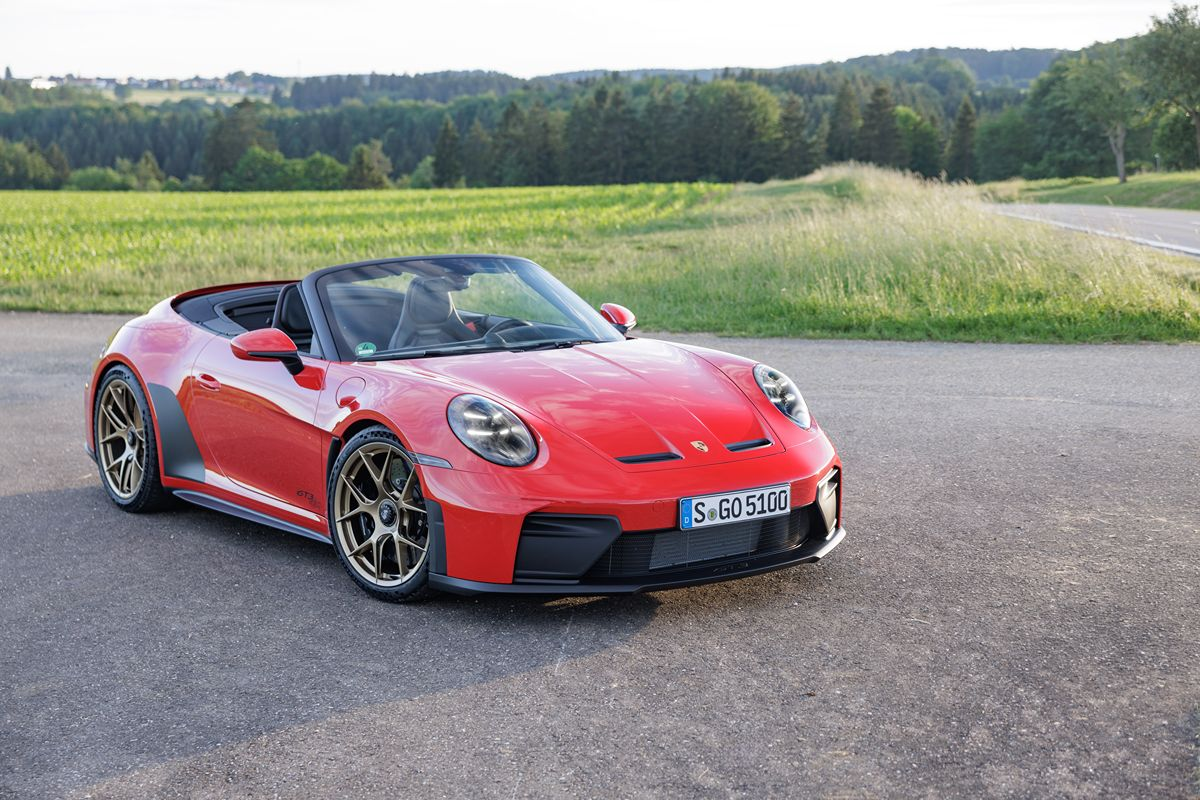
I was cynical about the idea of a drop-top GT3, but the S/C kicked my purist snobbery to the kerb. Granted, its charms will be more effusive on a sunny afternoon in July than a damp morning in December, yet this feels like a sports car you could enjoy year-round – not a high-days toy like the 718 Spyder RS. Just be sure to swap the Cup 2 tyres for something more suitable during the winter months.
The S/C is expensive, and the fact that it won’t be built in limited numbers – unlike the previous, GT3-powered 911 Speedster – means this isn’t a Porsche with serious investment potential. Then again, adding equivalent options to a GT3 Touring, including PCCB brakes and the Leichtbau Package, could soon see you break the £200k barrier. And high-end 911s, while no longer conspicuously good value, are less stratospherically priced than many supercars.
Another journalist lavishing praise on the 911 GT3, then? Guilty as charged. While Porsche has its problems at present, the company’s record when it comes to building brilliant GT3s is unblemished. The S/C may have modified the usual DNA, yet the verdict is the same: five stars.
• Tim Pitt writes for Motoring Research
Read more Is this £430k hyper-customised Porsche 911 the GOAT?
Similarly tagged content: Sections Categories People & Organisations