Italy holidays: Positano is about to appear for its close-up. Here’s how to do it well Coco Chanel needed only a suntan and a scandalous pair of beach pyjamas to turn the French Riviera from a winter health resort into Europe’s most coveted summer address. A generation later, Positano stole
 Julia Khamissa



Tuesday 30 June 2026 4:45 am | Updated: Monday 29 June 2026 4:57 pm
Italy holidays: Positano is about to appear for its close-up. Here’s how to do it well
Coco Chanel needed only a suntan and a scandalous pair of beach pyjamas to turn the French Riviera from a winter health resort into Europe’s most coveted summer address. A generation later, Positano stole the crown. All it took was a warning from John Steinbeck: “The cliffs are all taken,” he wrote in 1953 – the town was too steep and secluded for the “honky tonk” to ever arrive.
His verdict was published in Harper’s Bazaar, and the circus promptly packed their linen. The fishing village turned almost overnight into a lodestar for the global glitterati, drawing presidents’ wives and princesses who told all of their friends, proving no cliff is steep enough to deter a socialite. Seventy years on, it’s still a faff to get here, unless you arrive by yacht, as Positano has always implied one should.
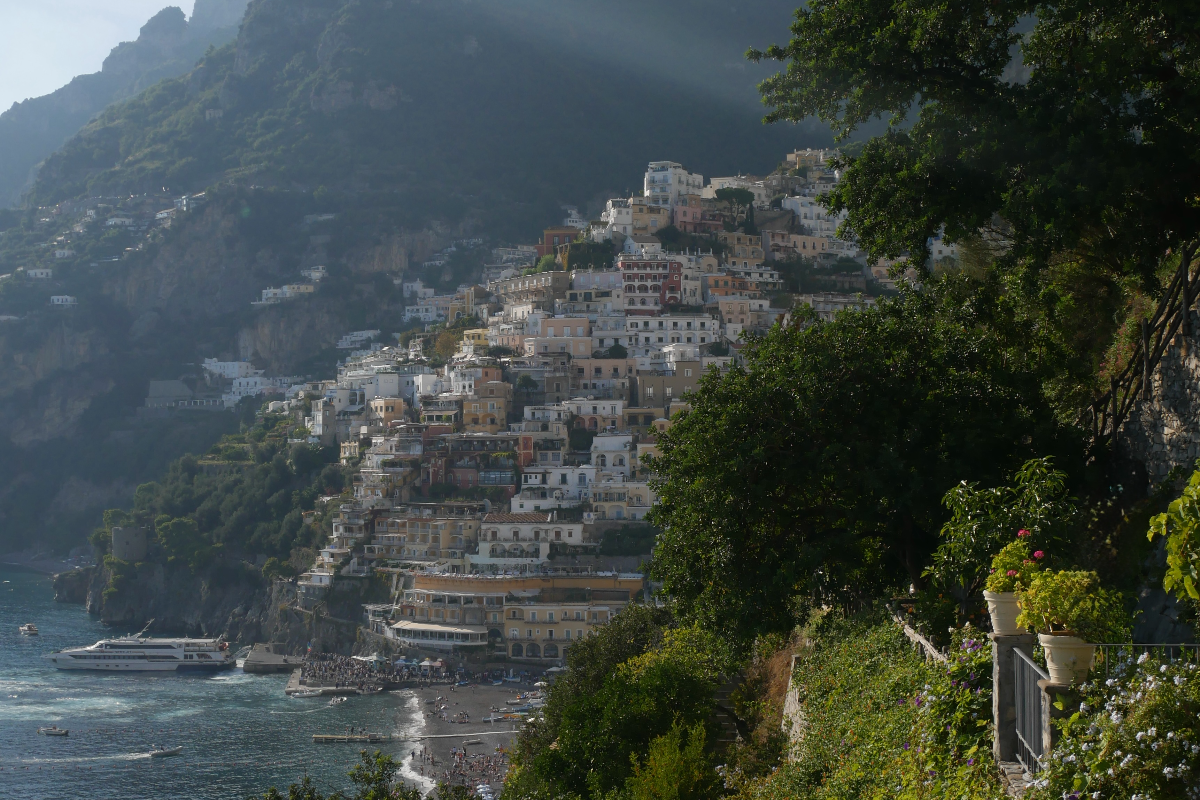
A drive from Naples snakes past Pompeii and Vesuvius onto the SS163, a cliff-edge road that corkscrews between rock and the Tyrrhenian Sea. A Vespa remains the entirely appropriate option to navigate the hairpin bends. Most visitors arrive by ferry or bus, released into the vertiginous streets stacked with peaches-and-cream buildings that cascade precariously towards the sea. The town is permanently inhabited by just 4,000 souls. Each summer that figure becomes increasingly difficult to process as day-trippers swarm, in pursuit of their own la dolce vita: an Aperol Spritz and inevitable “wish you were here” broadcast.
Italy holidays: the glamour of Positano
Yet, the irony at the heart of la dolce vita — the sweet life — is that it was never really about spectacle. It was about savouring the present: a long lunch, a slow passeggiata. That part can be tricky. The lanes brim with sorbet-stuffed lemons and lemony trinkets, and boutiques spill out lemon-print dresses onto stone walls. I watched a toddler wipe gelato fingers on a lemon-print kaftan that I discovered cost €500. In his defence, the artisan and the tat can be hard to tell apart. Four-fifths of Positanesi work in tourism and have embraced the folly with Mediterranean pragmatism and seasonal crowd-control measures.
The success rate is debatable as you shuffle down pathways designed for goats. It’s fair to say that generational wealth has been squeezed from the humble citrus fruit, and from the town’s gift for monetising the legend it has so successfully exported. But the danger, when speaking about Positano, is sounding too pleased with one’s own cynicism. The crowds are real. The commerce is relentless. And yet the beauty is, genuinely, of cosmic proportions. No international hotel brand has managed to set up shop.
Home-grown icons like Le Sirenuse and Villa Treville still set the classic, polished standard, selling the old-money mirage of striped awnings and white-jacketed waiters. But there is a cooler Italian fantasy now – you can feel it in London’s sudden glut of candlelit trattorias and the satirical bite of Real Housewives of Clapton, ribbing those who worship at the altar of the San Marzano tomato.
Cinema captures the mood in its purest form: no longer Fellini’s paparazzi-lit La Dolce Vita, or Sophia Loren melodrama, but the sun-struck, sensual, undone world of Luca Guadagnino (Call Me by Your Name, A Bigger Splash.) Nectarines from Nonna’s bowl. An espresso taken with wet, salty hair. Or the euphoria of swimming in dreamy briny blues with nobody else in sight.
The standout is Casa Grande, a five-bedroom residence with vaulted ceilings and a balcony for every day of the week.
#mc_embed_signup { background: #fff; clear: left; font: 14px Helvetica, Arial,sans-serif; width: 100%; max-width: 600px; margin: 20px 0; } #mc-embedded-subscribe-form { margin: 20px 0 !important; } .newsletter-form-flex { display: flex; gap: 0; align-items: center; margin-top: -10px; } .newsletter-form-flex input[type=”email”] { flex: 1; padding: 2px 10px; border: 1px solid rgb(18, 22, 23) !important; border-radius: 12px 0 0 12px !important; } .newsletter-form-flex input[type=”submit”] { padding: 4px 10px !important; margin: 0 !important; background-color: rgb(18, 22, 23) !important; color: rgb(255, 255, 255) !important; border: 1px solid rgb(18, 22, 23) !important; border-radius: 0 12px 12px 0 !important; } .newsletter-banner-content { margin-bottom: 15px; } .newsletter-banner-content h2 { margin: 0 0 10px 0; font-size: 18px; font-weight: 600; } .newsletter-banner-content p { margin: 0 0 10px 0; line-height: 1.5; } .newsletter-banner-content ul, .newsletter-banner-content ol { margin: 0 0 10px 20px; } .newsletter-banner-content a { color: #0073aa; text-decoration: none; } .newsletter-banner-content a:hover { text-decoration: underline; } .newsletter-banner-content img { max-width: 100%; height: auto; margin: 10px 0; } #mc_embed_signup #mce-success-response { color: #0356a5; display: none; margin: 0 0 10px; width: 100%; } #mc_embed_signup div#mce-responses { float: left; top: -1.4em; padding: 0; overflow: hidden; width: 100%; margin: 0; clear: both; }
At Torre Sponda, that’s exactly what happens. This private gated estate is Positano at its most improbable. Folded into the southern cliffs, fifty metres down from one of the busiest viewpoints, the surface noise of scooters and suitcase wheels falls away.
The entrance could very well be a dead end. Behind the gate, five cliff-hung villas and apartments are stitched together by hundreds of stone steps and gardens of vegetal wonders. The modern chapter of Torre Sponda began in 1905, when the grandfather of its current custodians, renowned designers Raimonda and Fausta Gaetani, purchased the estate. It was a family home, and its charm lies in interiors accumulated over a century of summers, not spewed out in a single renovation.
From Murano chandeliers and seahorse-shaped lights to terrace railings polished by heat and time: it has been properly and happily lived in. When Gruppo Ginobbi began managing in 2025, rather than beige-wash it into submission, they had the good sense to leave the Gaetani imprint intact. Your keys jangle in your pocket, and there’s not a QR code in sight. Hallelujah.
At one of the estate’s photographic corners, you half expect to find Timothée Chalamet
At the centre of the estate stands Torre, a 13th century Saracen watchtower that gives the property its name. Part of a defensive network to warn of raiders arriving by sea, each tower was linked to the next by fire and smoke signals running the length of the Amalfi coastline. Most of its kind have since become restaurants or ruins, but here, you can still sleep on a four-poster bed inside the watch itself.
The wraparound terrace has one of the best private views of Spiaggia Grande. The standout is Casa Grande, a five-bedroom residence with vaulted ceilings and a balcony for every day of the week. Inside you’ll find villa host Serena whipping up a breakfast of buttery cornetti and ripe fruit to be enjoyed al fresco. Casa Grande’s pool is inside a Cycladic-style cave, with the main pool further down.
It’s one of the estate’s most photogenic corners, jutting off the cliff edge, the sun glittering off the water’s hammered surface: somewhere you’d half expect to find Timothée Chalamet, sulking. The undefeated jewel lies 180 steps below: a private charcoal-shingle beach, accessible only to guests, tucked beneath cliffs riddled with cracks and shallow caves.
Swimming here, after a glimpse of the local beach clubs, feels like a stolen privilege. I had a friend film my swim from one of Casa Grande’s terraces; swallowed by the sun, you can barely see me. Beyond the gate, a visit to Valentini reveals the genuine simplicity of the limoncello-making, just peel, alcohol, sugar and water. The irrepressible Valentino, and his lovely wife Lala, have found countless ways to deploy the lemon – ask for a taster session to try their spreads and marmalades. The promenade restaurants are touristy, but we are in Italy, so they’re decent regardless.
Osteria Le Tre Sorelle opened in 1953 by three sisters who served little more than pizza and house wine, it still makes its own wine and serves fresh seafood today. Elizabeth Taylor ate here; Stanley Tucci, more recently. For drinks, try the spritz at Chic Mama, a local riff on Aperol. One unexpected pleasure is Positano MAR, the Roman Archaeological Museum that opened in 2018. Until the early 2000s, no one knew a Roman villa, crypts, and the remnants of a fascinating system of monk death rituals lay beneath the famed Santa Maria Assunta. The town is preparing to be discovered all over again.
Zoe Saldaña and Matthew McConaughey have been spotted in town filming upcoming romantic caper, Positano. Italy is no stranger to the genre, with Venice supplying the backdrop for some of cinema’s most celebrated heists, but this is the town’s first turn at being imagined for the binge watchers. Will we see McConaughey wedged into a Vespa sidecar, lemon-print bandana flapping in the wind? What seems certain is that the film will be sunlit and seductive: those folks at Netflix needn’t work too hard to sell this rather charming place, after all.
Italy holidays: book Positano
Rates at Torre Sponda start from €6750 for a week’s stay for two people in Torre. All bookings are a minimum of 7x nights. For more information visit torresponda-positano.it/en
Read more: Italy holidays: the Lake Garda hotel you must book this spring
Read more: The Italy coastline adored by the A-List (no, it’s not Amalfi)
Read more Top Summer Destinations 2026 Revealed by Leading Travel Agent Opodo
Similarly tagged content: Sections Categories People & Organisations