As speculation over the Labour leadership grips Westminster, Maurício Alencar looks at the possible candidates for the next Chancellor – an appointment that will face heavy scrutiny by the markets. Andy Burnham’s journey toward Downing Street so far has featured scores of polls outlining his popularity among Labour members and
 Mauricio Alencar



Monday 22 June 2026 8:28 am
As speculation over the Labour leadership grips Westminster, Maurício Alencar looks at the possible candidates for the next Chancellor – an appointment that will face heavy scrutiny by the markets.
Andy Burnham’s journey toward Downing Street so far has featured scores of polls outlining his popularity among Labour members and the public, Labour MPs travelling to Greater Manchester to “kiss the ring”, and a growing assumption that he is the de-facto Prime Minister in waiting.
But as expectation has built over the past few months, one question has niggled time and time again. Is Burnham a credible figure to investors?
Burnham’s comments that Labour leaders cannot be “in hock” the bond market sparked fear and derision in the City when he uttered them last year. Combined with pledges to cut taxes and nationalise major companies, the former Manchester Mayor has been a figure of suspicion to economists, opposition groups and the Labour government.
Upon walking into Downing Street, the economic pressures facing a Prime Minister Burnham could come home to roost.
#mc_embed_signup { background: #fff; clear: left; font: 14px Helvetica, Arial,sans-serif; width: 100%; max-width: 600px; margin: 20px 0; } #mc-embedded-subscribe-form { margin: 20px 0 !important; } .newsletter-form-flex { display: flex; gap: 0; align-items: center; margin-top: -10px; } .newsletter-form-flex input[type=”email”] { flex: 1; padding: 2px 10px; border: 1px solid rgb(18, 22, 23) !important; border-radius: 12px 0 0 12px !important; } .newsletter-form-flex input[type=”submit”] { padding: 4px 10px !important; margin: 0 !important; background-color: rgb(18, 22, 23) !important; color: rgb(255, 255, 255) !important; border: 1px solid rgb(18, 22, 23) !important; border-radius: 0 12px 12px 0 !important; } .newsletter-banner-content { margin-bottom: 15px; } .newsletter-banner-content h2 { margin: 0 0 10px 0; font-size: 18px; font-weight: 600; } .newsletter-banner-content p { margin: 0 0 10px 0; line-height: 1.5; } .newsletter-banner-content ul, .newsletter-banner-content ol { margin: 0 0 10px 20px; } .newsletter-banner-content a { color: #0073aa; text-decoration: none; } .newsletter-banner-content a:hover { text-decoration: underline; } .newsletter-banner-content img { max-width: 100%; height: auto; margin: 10px 0; } #mc_embed_signup #mce-success-response { color: #0356a5; display: none; margin: 0 0 10px; width: 100%; } #mc_embed_signup div#mce-responses { float: left; top: -1.4em; padding: 0; overflow: hidden; width: 100%; margin: 0; clear: both; }
It makes his Chancellor pick one of the most essential decisions he will make.
Whoever enters Number 11 will have a bulging in-tray. They will have to face down calls for greater spending on defence; manage expectations that employment taxes will be eased; aim to lower forecasts that predict debt interest costs will jump to over £120bn by 2030; decide whether to back the triple lock on pensions and risk infuriating investors with new wealth taxes.
Alongside that is the potential nationalisation of major utility firms such as Thames Water and the continuing fallout of the war in Iran.
So who could Burnham turn to?
Rachel Reeves
Chancellor Rachel Reeves would represent the smallest fiscal risk from City traders’ perspective. Her team have been briefing newspapers on her ability to keep bond markets on-side and stave off the threat of a debt crisis.
Her fiscal rules, which include cutting net financial debt and balancing day-to-day spending and tax receipts over three years, have largely won the support of top economists, with the International Monetary Fund claiming they represented a “good balance between deficit reduction and growth-friendly spending”.
Burnham’s team has had to pledge his allegiance to Reeves’ fiscal rules during his campaign in Makerfield in order to ease tensions among traders. At one point, Burnham had suggested creating a carve-out for defence spending before he appeared to row back on the comments.
However, reports have suggested that Reeves would lose her job if Burnham became Prime Minister.
A recent quarrel with John Healey over defence investment has once again put the current Chancellor at the centre of a major fiscal row. It may remind Burnham that it’s some of Reeves’s own decisions that have cost Labour so dearly in national favourability.
Ed Miliband
Ed Miliband has long yearned for a big role in government. His bid to become Prime Minister fell apart in 2015 despite spending months at the top of the polls.
His return to the Cabinet after 14 years under Starmer’s government gave him a big brief: get the UK to race to net zero by making 95 per cent of the national grid carbon-free.
Miliband was one of Starmer’s keenest supporters but quickly became frustrated by a poor sense of judgment, particularly around the appointment of Lord Peter Mandelson as Washington ambassador. He was reportedly one of the first Cabinet ministers to privately tell Starmer to resign.
In the meantime, Miliband has appeared to build close ties with Burnham, with one of his special advisers working with the former Manchester mayor during the by-election campaign. The energy secretary, who is also popular among Labour party members, looked destined to be given the top job under Burnham.
But the former Labour leader has come under fire for not budging on net zero policies. He has stalled giving the green-light to fossil fuel exploration projects by Shell and Equinor at Jackdaw and Rosebank respectively, refused to ease stringent North Sea exploration policies and reportedly refused to allow cutbacks in his budget during defence spending negotiations.
His staunchest critics include Sharon Graham, the general secretary of the influential Labour-affiliated union Unite, who fears Miliband’s net-zero push will decimate industrial jobs. Burnham’s pledge to re-industrialise the UK could also jar with Miliband’s scepticism towards factories letting out black smoke.
City traders have also warned against a Miliband chancellorship. Quilter’s Lindsay James also said Miliband would be viewed as a dangerous Chancellor selection for investors as he “would come with a reputation of having priorities other than maximising growth within existing fiscal constraint”.
It would be a controversial selection but Burnham or another leader may not be able to ignore the power of party politics.
Wes Streeting
Wes Streeting has made no secret of his ambitions to rise to the top of the Labour Party and become Prime Minister. Burnham’s political ascendancy is a hindrance to those dreams.
Read more City investors raise alarm on Burnham’s Chancellor pick
But Streeting could easily make things awkward for Burnham. Should he also wish to throw his hat in the ring, he may force an intense party debate that sheds light on thinking by the former Manchester mayor previously unknown to members.
A bitter, closely-fought battle between two long-time Prime Minister hopefuls for the leadership could also damage the party’s image in the eyes of voters.
That’s unless a deal is struck between Streeting and Burnham to align the competing wings of the party.
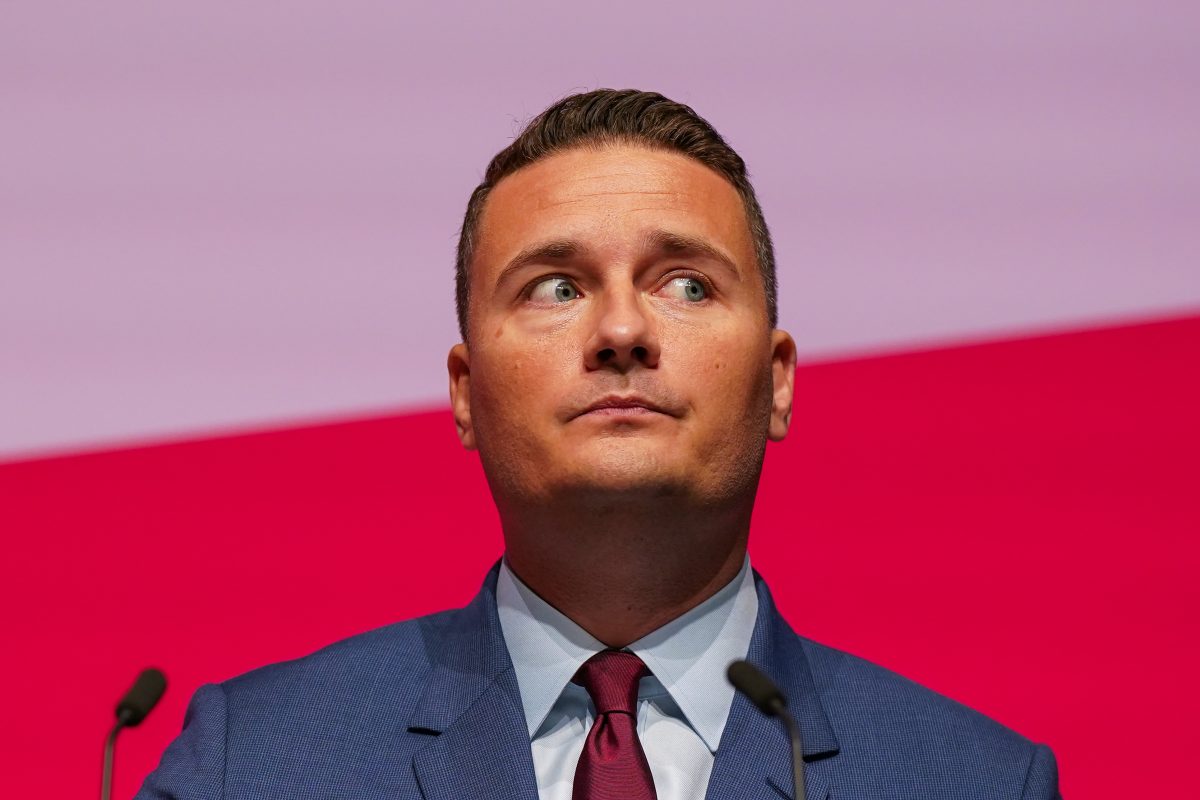 Wes Streeting has been clear he will challenge for the leadership.
Streeting’s appointment as Chancellor could show – or at least give the impression – that Labour is more united than voters think.
The former health secretary, widely seen as a Blairite, has already set out his economic vision. Streeting has endorsed a growth report written by Mark McVitie for the Labour Growth Group, which calls for capital gains taxes to be equalised with income taxes while an “investment allowance” would be offered to boost start-ups.
Streeting also made the case for “progressive capitalism” last week by promising to increase high-skilled immigration, using emergency laws to fast-track the construction of data centres and critical infrastructure, and allowing North Sea oil and gas projects to go ahead.
Could Burnham really put aside Streeting’s stinging critique of him for “appeal[ing] to the party faithful at the expense of the British people”?
John Healey
John Healey’s resignation from the Cabinet uncovered the friction between several government departments and the Treasury.
In a speech before MPs, Healey blamed officials for failing to set out how the UK would lift defence spending from 2.6 per cent of GDP next year to three per cent by 2030 and the Nato target of 3.5 per cent by 2035.
He blamed the Treasury for only giving the defence budget a rise of 0.08 per cent in funding by 2030 despite fears of resources drying up for the armed forces.
“Our adversaries do not follow timetables set by the Treasury,” he said. The former defence secretary even won the support of one of Starmer’s closest allies across the backbenches, Luke Akehurst, for his comments.
As Burnham has also made re-industrialisation key to his economic vision, Healey’s focus on defence manufacturing may help to drive that in practice.
Bond markets and businesses may raise an eyebrow at Healey as a prospective Chancellor given his limited credentials in political economy and calls for more borrowing. But he might benefit from a honeymoon period as economists work out how he would approach boosting growth and easing inflation.
 John Healey resigned as defence secretary in a row over defence spending.
Dark Horses
Burnham may not have been speaking solely about the Prime Minister when he talked up the need to “change” Labour.
In a radical break from Starmer’s premiership, he could choose to appoint a rising star as Chancellor almost immediately.
Miatta Fahnbulleh, the MP for Peckham and former chief of the New Economics Foundation, a leftwing think tank, was one of the first MPs to directly call for Burnham’s return to parliament. She was the first government minister to call for Starmer to resign in May.
Fahnbulleh has thrown her weight behind a number of highly controversial economic policies including imposing a wealth tax, nationalising several public companies across water and transport, rolling out further green financing and taxing other streams of income more.
She also backed Southwark Council for blocking the development of 867 homes at a supermarket in Peckham despite being a housing minister for eight months.
Another possible candidate could be Yvette Cooper, who reportedly told Starmer to resign over the weekend. She served as chief secretary to the Treasury and then welfare secretary Gordon Brown’s government in 2008 to 2010. Mizuho Group analyst Jordan Rochester suggested she would be a safe pair of hands in markets’ view.
A wildcard pick may be the sacked Transport secretary Louise Haigh, who has emerged as a key Burnham ally on the by-election campaign trail.
Her main target of attack when speaking about economics has been the Office for Budget Responsibility (OBR), the fiscal watchdog, and the Bank of England for its bond-selling programme. She urged Reeves to “rewrite the rules” and “confront the economic straitjacket” at the heart of the establishment.
She has also endorsed taxing banks more and lengthening the fiscal forecast window to a period of around 10 years in order for the OBR to take account of long-term investments on infrastructure as well as tackling child poverty.
Having helped Burnham rise to success, she may feel that she should be rewarded with a senior job in government. Her divisiveness amongst the electorate and controversial background may be setbacks that stop her from getting into Number 11.
Read more Starmer will resign, Trump says
Similarly tagged content: Sections Categories People & Organisations