Retail and autocentre giant Halfords will deliver its full-year results next week, hoping to deliver sustained growth after a Covid-era bike boom. Felix Armstrong profiles the FTSE stalwart Head to the very back of a Halfords store, snaking your way round the air fresheners, tents, brake fluid and torches, and
 Felix Armstrong



Thursday 18 June 2026 10:13 am
Retail and autocentre giant Halfords will deliver its full-year results next week, hoping to deliver sustained growth after a Covid-era bike boom. Felix Armstrong profiles the FTSE stalwart
Head to the very back of a Halfords store, snaking your way round the air fresheners, tents, brake fluid and torches, and you will find the bike section, almost hidden from view. The retailer’s modest placement of this part of its business, which provided its rocket boost during the Covid-19 pandemic, points to a slightly awkward relationship with its cycling arm.
The company hailed a cycling sales boom during Covid when Brits flooded to one of the only activities permitted under lockdown rules. As early as May 2020, just months after the first lockdown began in March, Halfords noted “a strong performance in cycling, as the public explored alternatives to public transport and looked for ways to stay healthy”.
They sold a ton of bikes during lockdown, and then they absolutely plummeted
Graham Stapleton, then chief executive, said in September that year that his firm was “moving quickly” to meet soaring demand for bikes, with e-bike and scooter sales in particular booming by 230 per cent year on year. By June 2021, Halfords reported 54 per cent growth in total cycling retail sales to £563m.
#mc_embed_signup { background: #fff; clear: left; font: 14px Helvetica, Arial,sans-serif; width: 100%; max-width: 600px; margin: 20px 0; } #mc-embedded-subscribe-form { margin: 20px 0 !important; } .newsletter-form-flex { display: flex; gap: 0; align-items: center; margin-top: -10px; } .newsletter-form-flex input[type=”email”] { flex: 1; padding: 2px 10px; border: 1px solid rgb(18, 22, 23) !important; border-radius: 12px 0 0 12px !important; } .newsletter-form-flex input[type=”submit”] { padding: 4px 10px !important; margin: 0 !important; background-color: rgb(18, 22, 23) !important; color: rgb(255, 255, 255) !important; border: 1px solid rgb(18, 22, 23) !important; border-radius: 0 12px 12px 0 !important; } .newsletter-banner-content { margin-bottom: 15px; } .newsletter-banner-content h2 { margin: 0 0 10px 0; font-size: 18px; font-weight: 600; } .newsletter-banner-content p { margin: 0 0 10px 0; line-height: 1.5; } .newsletter-banner-content ul, .newsletter-banner-content ol { margin: 0 0 10px 20px; } .newsletter-banner-content a { color: #0073aa; text-decoration: none; } .newsletter-banner-content a:hover { text-decoration: underline; } .newsletter-banner-content img { max-width: 100%; height: auto; margin: 10px 0; } #mc_embed_signup #mce-success-response { color: #0356a5; display: none; margin: 0 0 10px; width: 100%; } #mc_embed_signup div#mce-responses { float: left; top: -1.4em; padding: 0; overflow: hidden; width: 100%; margin: 0; clear: both; }
But because consumers only need to buy bikes every few years, Halfords effectively pinched its own future sales – with comparatively low demand in the following years reflected in the firm’s subdued share price.
Halfords has struggled in the aftermath of the Covid-era cycling boom not only because this sudden demand fell away, but because of its eagerness to import extra stock to feed this appetite. In the time that many of these extra bikes took to arrive at Halfords’s stores, many Brits had returned to work after the lockdown and parked their penchant for cycling.
Bike boom and bust
Halfords then faced a battle to offload this extra stock, contending with more nimble independent retailers who managed to undercut the bigger players by aggressively discounting their surplus.
This hurt Halfords, which typically sells at the lower end of bike price points. Dan Coatsworth, AJ Bell’s head of markets, told City AM: “They sold a ton of bikes, and then there were a load of supply chain problems that they just couldn’t stock enough. Then they had a massive hard crash on cycling sales, and they just absolutely plummeted.”
The firm’s shares have gained momentum over the last year. The stock weathered a slight dip in April before climbing in recent months, to an 11 per cent gain on the year at around 190p.
But a longer review reveals an almost unmitigated slump in the company’s share price, having shed more than half of its value since its pandemic-era highs, where it soared above 430p in June 2021.
Though Halfords’s cycling arm is to blame for its share price chaos in recent years, bicycles have always been at the centre of the retailer’s identity.
Trundling around 1890s Leicester on his penny-farthing, founder Frederick Rushbrooke dreamed of combining his love for cycling with the ironmonger business he had just launched with a loan from his father.
Eventually, Rushbrooke got his way – expanding the business into hardware retail and later stocking bike frames, chains and inner tubes. In 1902, he opened a branch of his nascent business on Halford Street, Leicester, giving the now ubiquitous cycling and motoring retailer its name.
Halfords expanded rapidly into the 20th century, opening its two hundredth store in 1931 and its three hundredth in 1968. The firm adopted its well-known black and orange logo in 2003 and floated on the London Stock Exchange in the following year.
 Halford’s giant retail estate is “a bit of a shambles,” according to one analyst
It launched an abortive expansion into central Europe in the noughties, targeting the ageing car stock owned by Czechian and Polish motorists, before returning its focus to the UK with a number of autocentre and cycling acquisitions in the lead up to 2020.
Read more Not just for lockdown: Pets at Home adapts to life after pet-buying boom
Halfords now counts 370 retail stores, along with around 500 garages, and its huge presence on the outskirts of the UK’s towns and cities is undeniable. The firm places among the country’s most-known retail brands – with 97 per cent recognition, according to YouGov – and has locations within a 15-minute drive of 85 per cent of the population.
Rushbrooke would have been overjoyed to have seen the Covid-era cycling boom which powered Halfords to an unprecedented level of demand for its bikes and services.
But – as with the pets, dumbbells and banana breads coveted during lockdown – these bikes were tossed to the side when the pandemic receded, leaving Halfords in a tailspin.
In April the firm suddenly replaced its chief executive with former Very boss Henry Birch. The new chief launched a strategic overhaul in November and will be hoping Halfords’ full-year results next month deliver solid proof that his new vehicle is shifting up the gears.
Retail offering: Halfords, not Harrods
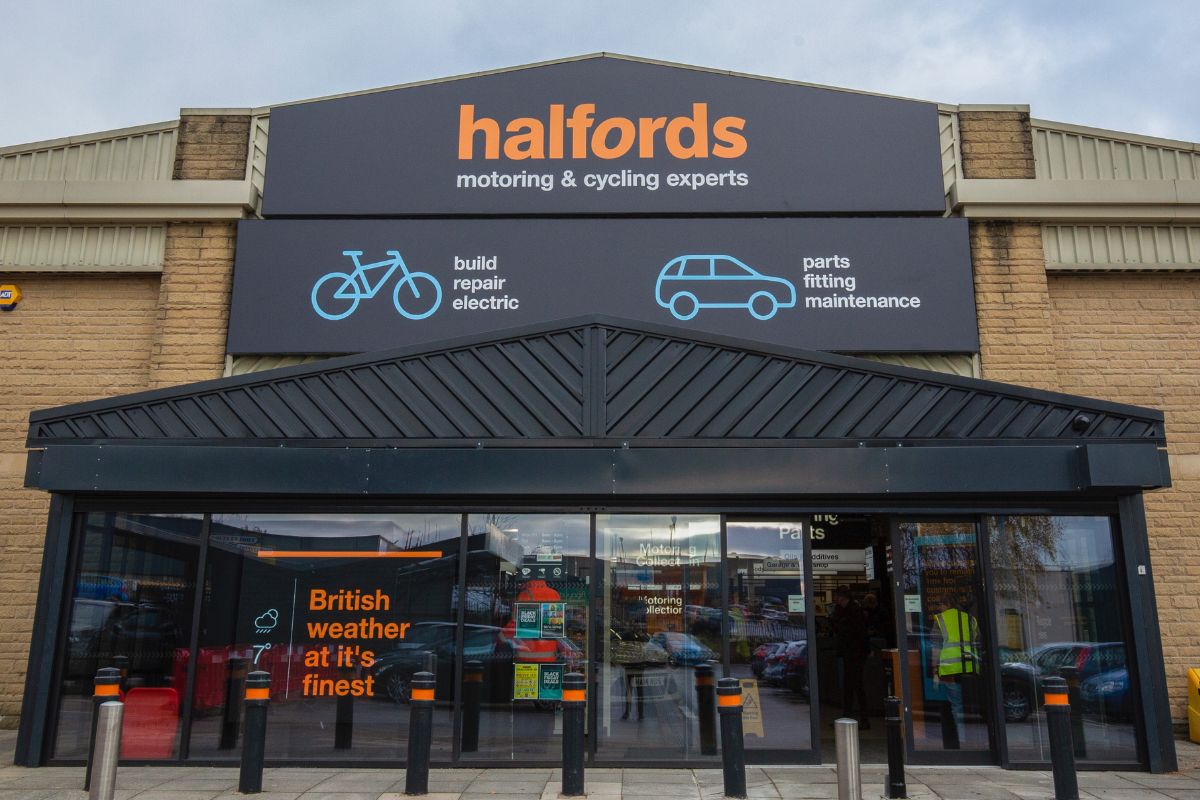
Halfords’ walk-in estate is far from the jewel in its crown, argues Coatsworth. “If you were to build that business now, you wouldn’t have the stores looking the way they do. They’ve got air fresheners here, and stuff to clean your car with [there]. It’s all a bit of a shambles,” he says.
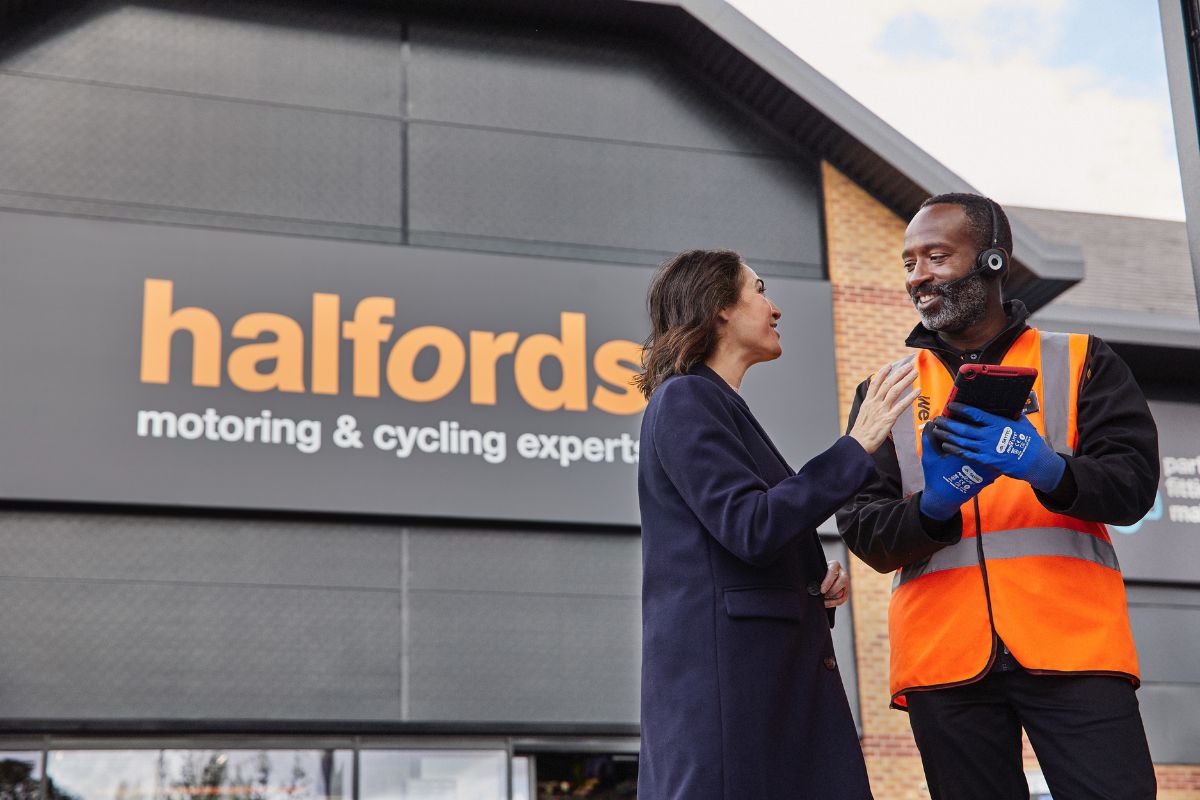
While the business’s retail offering is far from glitzy, Halfords argues that the expertise of its staff is the main attraction. Despite operating hundreds of dedicated garages, 80 per cent of the company’s servicing transactions occur in the large car parks which flank its stores, rather than in its dedicated workshops. The items the retailer is willing to fit for its customers ranges from the mundane – including its “three Bs”, which are bulbs, blades and batteries – to the obscure, such as dog cage barriers at its store in Wallasey, Merseyside.
Cycling is no longer Halford’s growth engine, but there’s no reason they can’t keep their market share
Matthew Grimson, a fund manager at NFU Mutual, which holds a two per cent stake in Halfords, tells City AM that the retailer is “disproportionately” known for its bike business. This is despite this part of the company having been rapidly outweighed by the company’s motoring revenue in recent years. But the biking boom of the Covid years is a crucial part in the retailer’s story, which still marks its share price movements to this day.
Grimson says there are signs that the firm is getting a handle on its previously unpredictable cycling arm. Halfords’s most recent trading update revealed a six per cent jump in year-on-year cycling sales, suggesting this awkward imbalance in the market has since “washed out,” he said.
 Halfords appointed chief executive Henry Birch in April 2025
As the company looks to normalise its relationship with its cycling arm and pursue dependable growth, four wheels good, two wheels bad has been its mantra. New chief executive Henry Birch, announcing his strategy overhaul in November, pinpointed motoring services as a key area of growth.
This £17bn market is particularly fragmented, he said, because of the predominance of local, independent garages which Halfords can challenge as the only “scaled, professional operator with the capability and credibility to meet the growing complexity of modern motoring”. Consumers want people to “do it for them” more than ever, he said.
Halfords looks to new garage design
David Hughes, a research analyst at Shore Capital, said: “In motoring, Halfords benefits from a fragmented market, lower market share and a greater weighting to needs-based demand, while the ageing UK car [stock] provides a supportive structural tailwind”.
Motoring services has been making up a growing share of Halfords’ revenue since the start of this decade, and Halfords is aiming to accelerate this shift by expanding its range of “fusion” garages, which integrates its retail and garage operations within towns. The firm will operate more than 100 of these new garages by the time it announces its full-year results on June 25, it has said.
While the increasing take-up of electric vehicles could be a cause for concern – because they require fewer repairs and have fewer parts – a spokesperson for Halfords emphasised that EVs still make up a comparably small proportion of the UK’s car stock. While electric vehicles make up 24 per cent of the new car market, according to the RAC, they accounted for only around four per cent of all cars registered at the start of 2026, according to Heycar.
Grimson said that the UK’s ageing car stock, with 43 per cent of cars now more than 10 years old, is a reason for optimism for Halfords, bringing with it more demand for repair and maintenance.
While cycling will not “necessarily be the growth engine of Halfords” going forwards, the firm has a large market share of bike retail and “there’s no reason why they can’t maintain it,” Grimson said. While Halfords no longer stocks penny-farthings, the firm is not yet ready to disassemble the bikes business its founder cherished.
Read more Nocturne London dazzles as riders take in Square Mile
Similarly tagged content: Sections Categories People & Organisations