Russia’s attacks on Ukraine’s gas and coal plants are driving Kyiv’s shift to cleaner energy sources. But a lack of access to Europe’s capital markets is severely restricting the country’s transition.
 Wester van Gaal



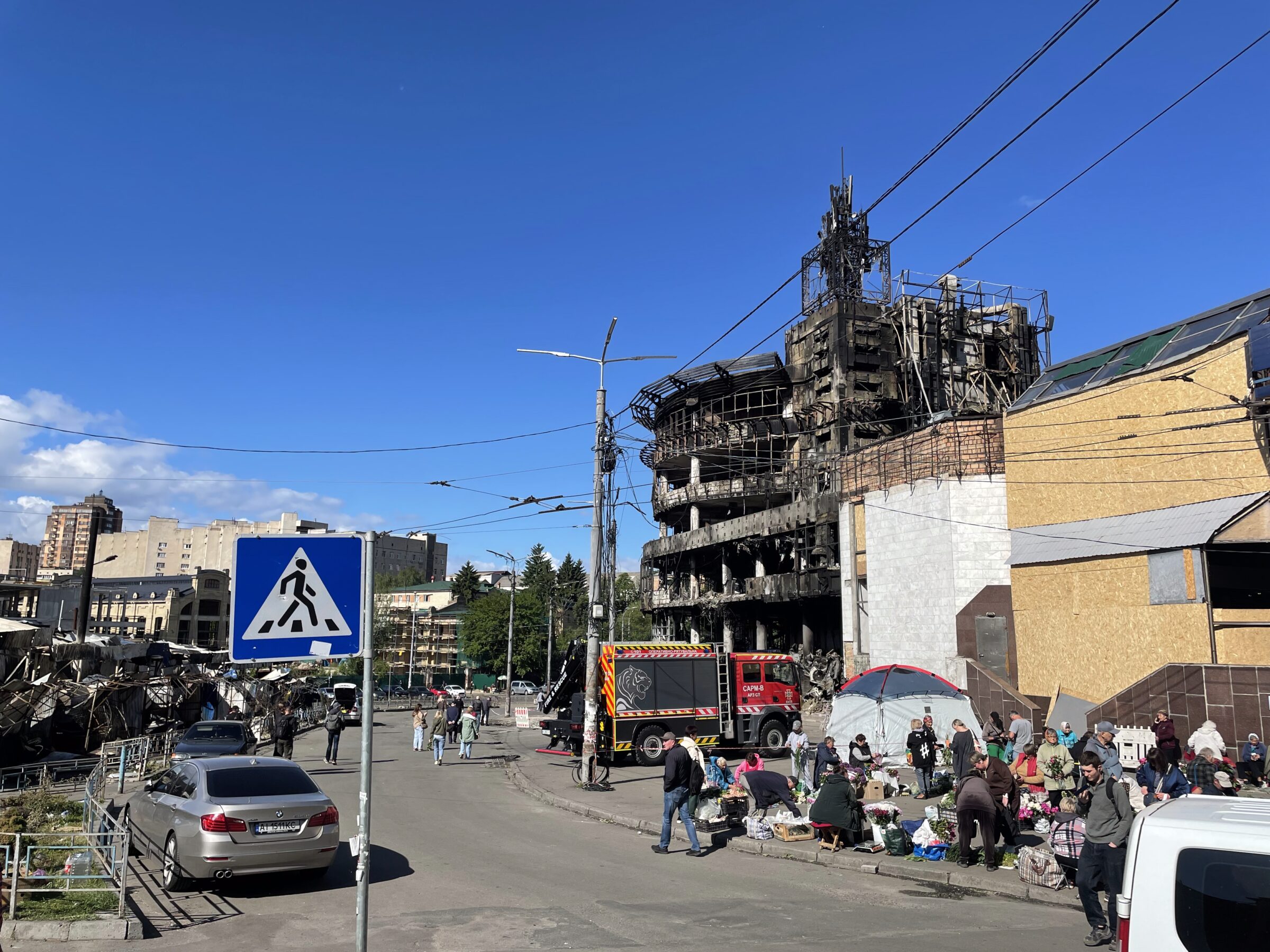
Last winter, millions of Ukrainians endured weeks without heating and hours without power every day.
Russian strikes have systematically targeted the country’s gas and coal plants since the full-scale invasion began in February 2022.
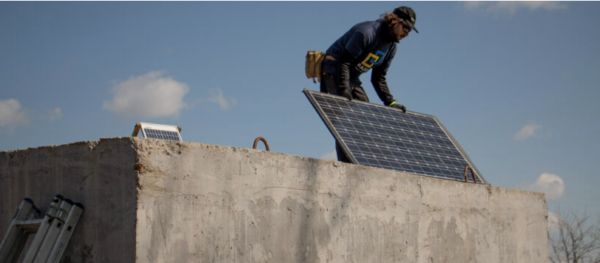
The lesson Ukraine has drawn is that wind turbines, solar panels, and batteries are harder to destroy, cheaper to build, and faster to replace than thermal power plants.
But investors’ reluctance to take on risk in the country at war is making energy investment harder than ever.
Building turbines under fire
Driving up a dirt road in hilly western Ukraine, 10 giant wind turbines appear over the ridge.
The site belongs to Eco Optima, a Ukrainian-Czech joint venture. Development started at the end of 2021 but was interrupted by the invasion, and so all of the turbines were actually built during the war, in 2023 and 2024.
Below the turbines, four white shipping container-sized batteries sit on a concrete pad. They house a 20 megawatt-hour (MWh) storage system, the first stage of a planned 60 MWh expansion.
The project is a success — but the list of things that could have stopped it is long.
“We had to train the entire team ourselves,” said Yurii Fedak, deputy director of the company, as he looked out over the turbines on the surrounding hills. “It took us more than two years to complete. Without the war, it would have taken six months.”
After the invasion, European crews refused to come to Ukraine to build the turbines.
Transport companies would not move turbine components into the country, and the contracted crane operator also pulled out, forcing the company to buy its own equipment. Insuring the cargo, Fedak said, “was impossible.”
Wind farms are rarely targeted directly. But the night before our visit, Russia launched one of the heaviest attacks on civilian infrastructure since the start of the war.
Most of the 600 drones and 90 missiles were aimed at Kyiv, but strikes were reported across the country, including in western Ukraine and air raid alarms go off constantly, making construction more difficult.
“We had 296 air raid alarms during the construction of our first wartime wind farm,” Oleksandr Selishchev, CEO of DTEK Renewables, told EUobserver.
Workers spent “40 percent of their time in bomb shelters,” he said.
DTEK, Ukraine’s largest energy company and operator of the Tyligulska wind farm in the Mykolaiv region, which will be the country’s biggest when completed at the end of this year, faced similar constraints. Like Eco Optima, it had to train its own workforce.
“We use gabions [cages filled with rubble] to protect our sites, and we have mobile shelters for people and equipment. We store underground what we can,” said Selishchev. “Unfortunately, we now have a lot of experience with this.”
Wind farm design has also evolved. Transformers are now placed kilometres apart, making them harder to destroy in a single strike.