The Liberal Democrat leader’s call for more ambitious reintegration with Europe brings a necessary focus on economic and strategic realityMembership of the European single market was at stake when the UK voted on Brexit, but it was not the decisive question in the campaign. The leave campaign dishonestly promised a
 Editorial



Membership of the European single market was at stake when the UK voted on Brexit, but it was not the decisive question in the campaign. The leave campaign dishonestly promised a cost-free severance of ties with Britain’s largest trading partner. As immigration came to dominate the debate, the requirement to allow free movement of people as a condition of seamless integration with European markets undermined the remainers’ most compelling argument.
Reluctance to advocate a liberal migration regime imposed a taboo on calls to reconsider the Brexit settlement, even as warnings about the cost of rupture were vindicated. Now, after a decade of forsaken growth, the mood is finally changing.
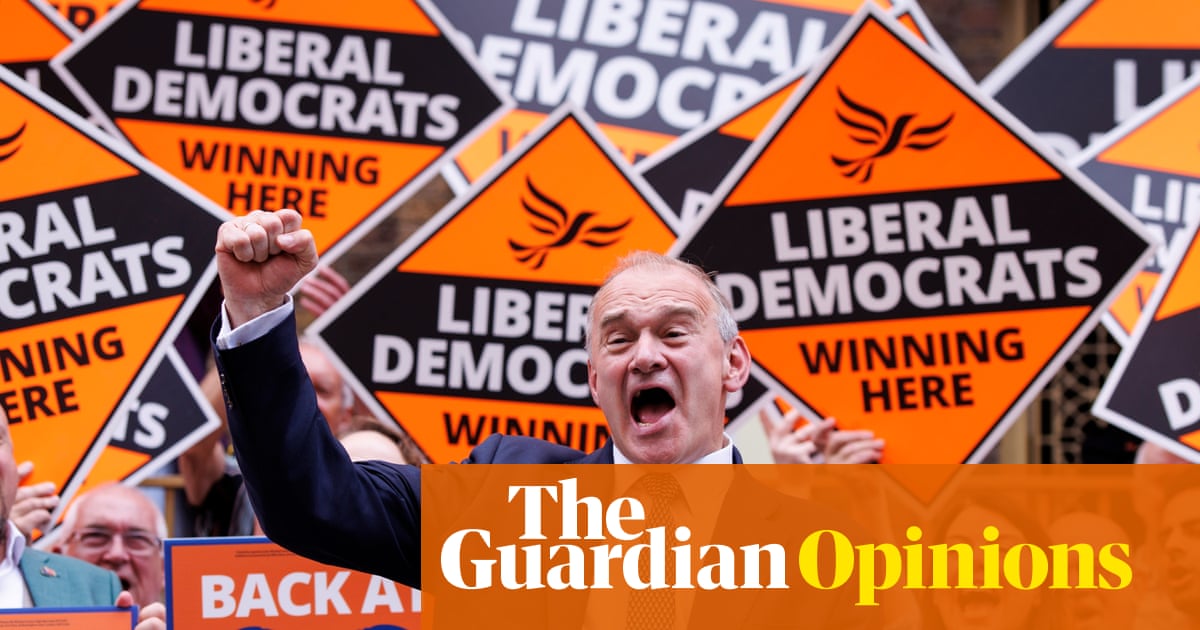
On Wednesday, Sir Ed Davey used a speech marking the referendum anniversary to call for Britain to rejoin the single market. The Liberal Democrat leader describes Brexit as an experiment that has failed. He observes that the world has changed since 2016. These things are self-evidently true and public opinion has shifted accordingly. Opinion polls regularly show a majority would vote to reverse the referendum outcome.
The idea that Britain needed liberation from Brussels to enjoy competitive advantages was misguided already at a time when the US was a reliable ally, upholding a rules-based global economic order. It looks catastrophically mistaken with Donald Trump in the White House, using tariffs as a weapon of economic coercion, and with Russia waging a brutal war on Europe’s eastern frontier, while supporting acts of sabotage to destabilise democratic politics in countries that support Ukraine.
Although the Lib Dem position is supported by strategic and economic logic, those factors do not easily rival the forces of domestic politics that mobilise anti-immigration sentiment to shut down discussion of Britain’s need to reconnect with the European project. That resistance can be challenged. It can be argued that Brexit failed to deliver the control that the leavers promised; that Eurosceptic diplomatic vandalism made the task of border management harder. It could also be noted that freedom of movement was a reciprocal benefit, not a one-way street – an opportunity denied to the generation that lives with the consequences of a ballot in which they were too young to participate.
That perspective deserved greater salience in the debate 10 years ago. Whether it would have swayed public opinion then, or can move the dial now, is unknown. Anxiety around appearing to support “open-door” immigration is not unfounded. It explains why Sir Keir Starmer ruled out single-market membership in his 2024 manifesto, why that red line still limits the ambition of Labour’s “reset” in EU relations and why it has taken the Lib Dems two years to get from their own caution on these matters at the last general election to their current, more assertive stance. It is easier to set out a theory of better UK-EU relations from opposition than it is to negotiate a better deal in government.
Lib Dem plans for Britain to rejoin the single market are not going to be enacted any time soon, but that doesn’t invalidate the call to reconsider. The challenges are formidable, especially when it comes to changing political narratives around migration. But a lesson from the past decade is that arguments for integration with Europe will only gain ground when politicians show the courage to make them in the first place.
Do you have an opinion on the issues raised in this article? If you would like to submit a response of up to 300 words by email to be considered for publication in our letters section, please click here.