



By racing ahead of the currently stalled EU process, Sweden joins a small group of member states using national bans on ‘forever chemicals’.
 Petra Pavlovičová



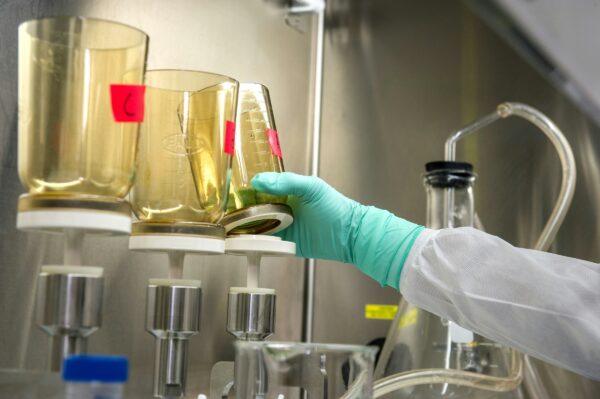
Sweden said that it plans to ban so-called “forever chemicals”, technically known as PFAS, in consumer products such as clothing and kitchenware from 2028.
“Sweden has no intention of standing by while ‘forever chemicals’ continue to spread in our homes, in nature and in our bodies,” environment and climate minister Romina Pourmokhtari said in a statement, quoted by Le Monde.
The Swedish government aims to reduce the spread of PFAS to protect the environment and human health, according to its official website.
But the restriction only comes after decades of warnings from campaigners, health organisations, and investors, given the growing problem across Europe and the knock-on costs for society.
The announcement comes as the European Chemicals Agency (ECHA) advances work on EU-wide restrictions. At the end of March, the agency published a scientific opinion recommending a broad restriction on PFAS across the EU.
This follows the work of five countries — Germany, the Netherlands, Sweden, Denmark and non-EU Norway — that came together in 2023 to submit to ECHA a joint proposal for a general PFAS ban.
A final opinion by ECHA is expected at the end of the year, when the political fight will move over to the European Commission and all EU member states.
When ECHA opened its public consultation on the five-country proposal, it received over 5,600 submissions, becoming one of the highest volumes the agency has ever handled. A significant part came directly from corporations, law firms, trade groups, and foreign industry coalitions.
Chemical giants (like Chemours, 3M, and Solvay) and major industry bodies (such as Cefic and PlasticsEurope) drastically ramped up their EU lobbying budgets following the 2023 submission.