
In this edition, we track how officials are burying EU funding audits on Gaza, shielding judges’ financial interests and limiting access to ownership data, while watchdogs and civil society push back against weakened transparency laws and chronic delays that undermine scrutiny and journalists’ work.
 EUobserver




Dear readers,
We are back with a new issue of the Secrecy Tracker – your regular update on what the EU institutions prefer to keep under wraps.
I am Nikolaj Nielsen, a reporter at EUobserver, who has for years struggled to gain access to EU documents. I wrote this newsletter with the help of EUobserver’s Elena Sánchez Nicolás, Alexander Fanta from Follow the Money, and Pascal Hansens from Investigate Europe.
But this introduction is less a rant about the European Commission’s poor record on accountability and transparency than a warning about a worrying pattern: a powerful institution appears to let political alignments shape whether it releases even the most basic information it holds.
In public, the commission likes to say it is the largest donor of external assistance to the Palestinians, with more than €1bn pledged between 2021 and 2024, and that it supports a two-state solution.
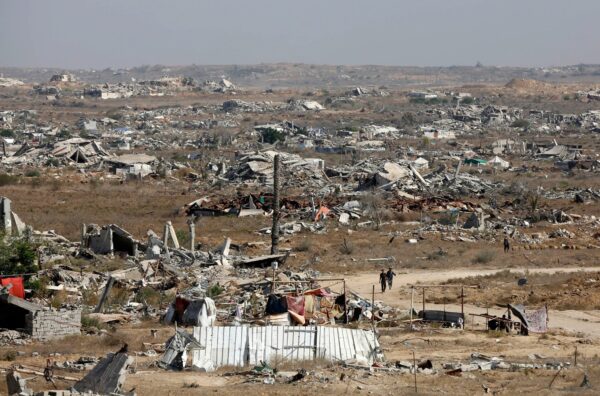
But getting access to how that money was spent, even on basic physical infrastructure projects in Gaza before the Hamas attacks in October 2023, has proved near impossible.
The source of that frustration leads back to Michael Karnitschnig, the acting director general of the commission branch dealing with the Middle East (DG MENA).
We don’t know Austrian Karnitschnig’s personal views on Gaza or Israel. But his paymaster, German commission president Ursula von der Leyen, has clearly been reluctant to take steps that would seriously upset Israel.
Last year, she proposed a partial suspension of the trade-related provisions of the EU-Israel Association Agreement, but later said (and will be confirmed following Monday’s foreign affairs ministers’ meeting in Brussels) such a move would require unanimous approval from all 27 member states, effectively making it impossible even though other options would only have needed a qualified majority.
That kind of procedural railroading trickles down to her subordinates, and likely colours their decisions when it comes to transparency on anything related to Gaza or the West Bank.
Karnitschnig holds 17 documents, many of them audit reports, on EU funding used to finance physical infrastructure projects in Gaza, including water supply, stormwater management, sanitation and renewable energy.
I saw some of these projects in Gaza years ago, and they genuinely improved daily life.
It is reasonable to assume that many, if not most, have since been destroyed during Israel’s military campaign, which has killed more than 70,000 people in the enclave. Despite the reporting gaps, that added up to a probable Gaza-EU price tag well north of €155m, according to a recent investigation by EUobserver.
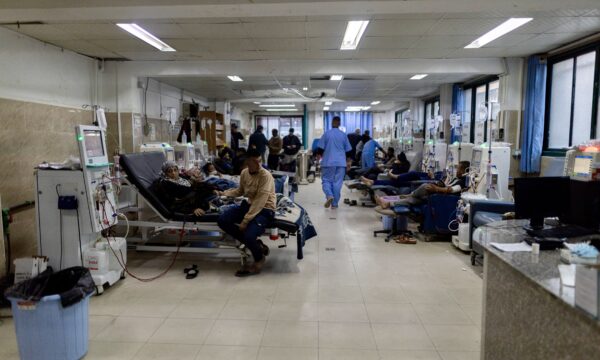
Karnitschnig refuses to release anything to the public, citing no overriding public interest — in comments he made the very same day the UN human rights office called out a genocide in Gaza.
But notably he also claims that releasing information about critical infrastructure in Gaza “could undermine the bilateral relations of the European Union with Palestine.”
Never mind the usual questions that follow such arguments. But if Karnitschnig was sitting with me now, I’d ask him to explain how disclosing information about infrastructure that is already demolished can pose a foreseeable security or diplomatic risk.
The argument is even sillier given that Karnitschnig points to public URLs describing each project, its location and purpose. One of them sought to help treat water in Khan Younis, a city in the southern Gaza Strip. It has been wiped from the map, following the Israeli ground invasion in 2023.
The only plausible explanation is politics. And that is a dangerous precedent for an EU institution that likes to label itself as a torchbearer of democratic principles and impartiality.
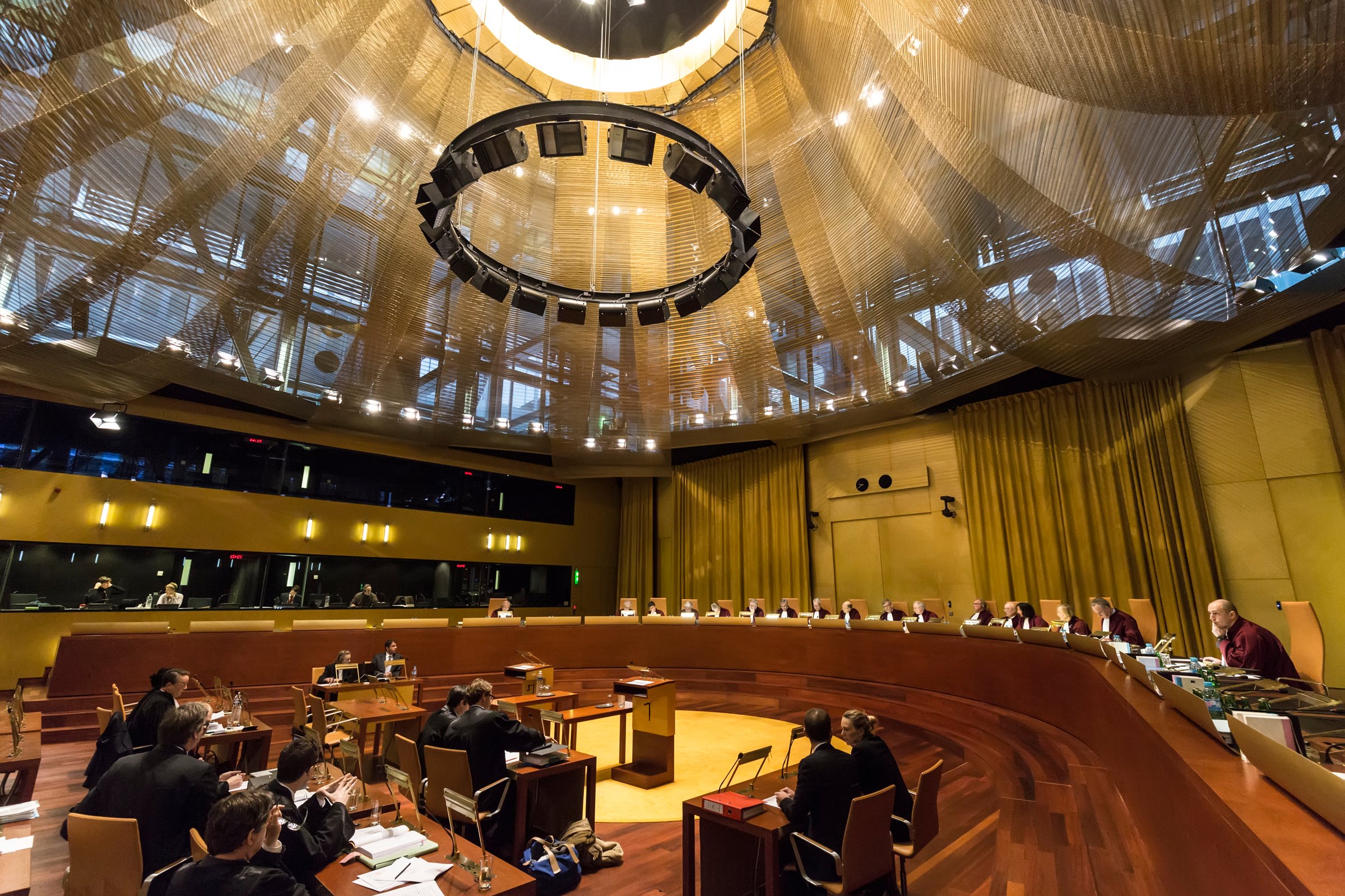 A hearing at the European Court of Justice (Photo: Court of Justice of the European Union)
EU ombudswoman challenges EU’s top court over lack of transparency
The Court of Justice of the European Union is not exactly an institution that would win a prize for transparency. It is an observer of the inter-institutional ethics body, not a full member.
It is not subject to our beloved regulation 1049/2001 on public access to documents, has no transparency register, and operates according to its own rules. MEPs cannot submit parliamentary questions, whether on judicial documents or administrative matters.
So, this intrigued us and after several months of research, Investigate Europe published on 30 June an investigation, with Follow The Money, EUobserver and four other national media outlets, revealing that around 40 percent of court members held financial interests in private sector companies, including Total, Airbus, and AstraZeneca.

In several dozens of cases, we showed a close connection, if not potentially an apparent conflict of interest, between a judge or advocate general, their financial interests, and the case on which they were working.
We also found a paradox at the heart of the court’s transparency regime: declarations of interests are public while they are current. But once updated, their previous versions are classified as judicial documents and disappear from public view.
The EU ombudswoman, Teresa Anjinho, opened an inquiry into the EU top court’s refusal to grant public access to past declarations of interest filed by its judges and advocates general. She questioned why declarations of interest by court members should be treated as entirely exempt “judicial documents”, pointing out that the jurisdiction itself had previously “published on its website such documents proactively”, meaning they had “already entered the public domain”. Compared with other EU institutions, whose declarations of interests are under public-access rules, Anjinho argued that the court must explain why its members’ declarations, once made public, should now be shielded from disclosure.
The investigation has already triggered some impact: more than 30 declarations of interests were updated by judges and advocates general after our demands. The president of the General Court, Marc van der Woude, confirmed plans to strengthen the system of declaring and monitoring interests, including through AI tools. On top of that, a parliamentary question was asked to the Council to clarify the safeguards when appointing an EU court member.
Pushback against Germany’s plans to curb transparency law
The German coalition government of Conservatives and Social Democrats is facing fierce pushback from journalists and civil society against plans, first revealed in July, to severely limit the country’s transparency legislation
Informationsfreiheitsgesetz, Germany’s 20-year-old freedom of information law, was never the strongest to begin with. People using the law face administrative fees of up to €500, and authorities often take months to respond to requests.
Yet, the coalition government presented a political agreement that would largely neuter the law as a tool for journalists.
According to the draft plans, future applicants must be German legal residents who can demonstrate a “legitimate interest” in the information they seek. Names of all officials shall be redacted from documents for their protection, and any information related to critical infrastructure, counter-espionage and the fight against terrorism, or scientific research shall be placed under additional protection from disclosure. Lastly, fees shall be raised to cover administrative costs – which could easily run into the thousands of euros for every request.
These changes “amount to the abolition of the freedom of information that has been in place for 20 years”, said Louisa Specht-Riemenschneider, the Federal Commissioner for Data Protection and Freedom of Information, an official watchdog. Arne Semsrott of the transparency NGO FragDenStaat called the plans the “the most serious attack on government transparency in the history of the Federal Republic.” Journalists, press freedom advocates and opposition parties joined in defending the existing law.
In the wake of the pushback, social democratic MPs in the German parliament signalled their opposition to the changes. “There must be no reduction in the existing rights to information for citizens, the press, and civil society”, a part of the party group in the Bundestag said in a public statement. An online petition against the plan has already collected more than 400,000 signatures.
Alas, so far the government shows no sign of backing down. The reform, once presented to parliament, is expected to turn into a messy political fight – with much at stake for the German press and civil society.
EU ombudswoman investigates von der Leyen’s texts – again
The EU ombudswoman has opened a new inquiry into the texting habits of EU Commission president Ursula von der Leyen. This time, the probe will check whether the commission mishandled Follow the Money’s access request for messages from a group chat between von der Leyen and leaders including France’s Emanuel Macron, the UK’s Keir Starmer and Ukrainian president Volodymyr Zelensky.
The existence of the group chat, which is called “Washington Group” and allegedly used by around 35 world leaders to discuss how to deal with the whims of US president Donald Trump, was first revealed by Politico in January.
The commission denied the request, citing the need to protect the EU’s external relations, but refused to state whether it kept the texts. A previous inquiry, also following a complaint by Follow the Money, blasted the commission for auto-deleting a message from Macron to von der Leyen about the Mercosur trade deal. The ombudswoman told the commission it needs to keep “for a reasonable period”, all text and instant messages exchanged between heads of state or government, or ministers, and members of the commission.
More transparency on beneficial ownership across the EU
The Court of Justice of the European Union (CJEU) delivered a landmark ruling in May to clarify that financial transparency over beneficial ownership (information showing who ultimately owns or controls a company or asset) is compatible with the EU. This information is key in the fight against corruption and money laundering.
The dispute dates back to 2022, when the CJEU struck down a provision of the EU’s anti-money laundering directive (AMLD5) that required beneficial ownership registers to be completely open to the general public. Back then, the top court found that unlimited public access created a disproportionate interference with privacy and data protection rights.
Following that decision, several EU member states restricted access to their beneficial ownership databases, hindering the work of investigative journalists, civil society organisations, researchers, and others who use ownership data to expose corruption, hidden assets, shell companies, and sanctions evasion.
The 2026 ruling establishes a sort of middle ground: unrestricted public access is not permitted, but access based on a demonstrated “legitimate interest” is legally valid.
The case covered Italy’s use of the fiduciary mandate. Under this arrangement, a trust company manages assets on behalf of a beneficiary without formally becoming the legal owner. Several Italian fiduciary companies argued that because ownership was never transferred, these arrangements should not be treated like trusts under EU transparency rules.
But the EU’s top court rejected this argument. The court found that fiduciary mandates create an “interposition effect,” allowing individuals to conceal their control over assets behind another legal entity. As a result, these structures must face the same transparency requirements as comparable trust arrangements.
The decision comes as the EU implements its updated anti-money laundering rules, providing clarity for authorities on reopening beneficial ownership registers while maintaining privacy safeguards.
70% of Brussels reporters say EU institutions’ access-to-documents bad practices limit their work
According to 35 responses we received to a home-grown survey on journalists’ experiences with access-to-documents requests to EU institutions, more than 70 percent of respondents said they had often or always experienced deadline extensions by EU institutions, mainly with the European Commission. A total of 80 percent said replies took between one and three months, while seven percent reported waiting more than six months.
“The fact that it takes a very long time before documents are sent through makes it less interesting in terms of coverage. Sometimes the timing of the publication matters,” one respondent explained.
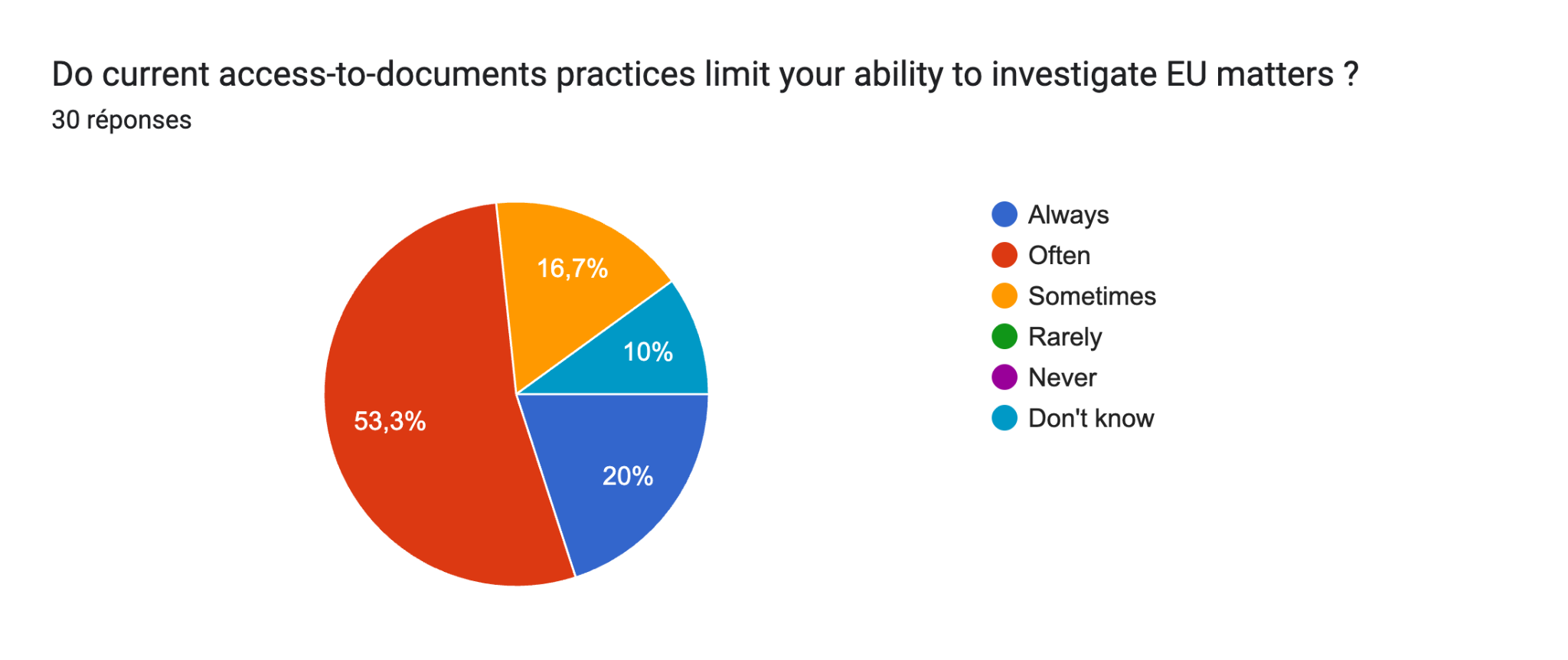
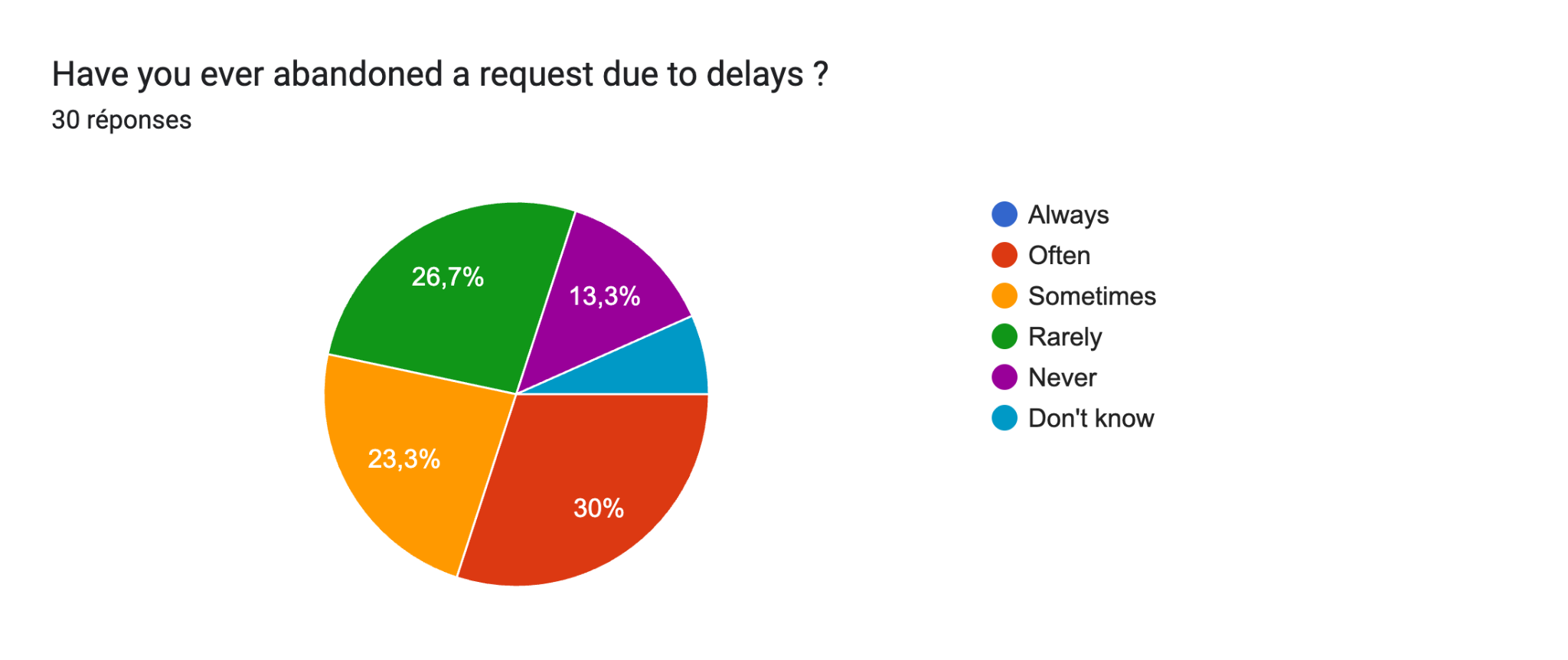
Indeed, 53 percent of respondents said they had sometimes or often abandoned a request process. When asked whether current access-to-documents institutional practices limit their ability to investigate EU matters, 73 percent said this happened often or always. This figure rose to 89 percent when including those who said it happened sometimes.
The quality of the documents shared was also frequently criticised. “The access-to-documents service has deteriorated dramatically under the current European Commission president. I no longer see applications as worth pursuing because newsworthy information will simply not be released, in case it leads to a news story, which defeats the purpose of such an application in the first place,” one respondent told us.
Refusals are also problematic. The three main grounds for refusal cited were international relations, the protection of commercial interests, and ongoing proceedings. Some responses suggest that the European Commission does not always reply in good faith. One respondent, for instance, said that a trusted European Commission source had shared a document that was declared non-existent in response to their access-to-documents request.
If you come across any good examples of EU institutions dealing with transparency (or failing to!), let us know! And stay tuned for our next newsletter coming in September.
For any suggestions, examples, or complaints, email: nn@euobserver.com, esn@euobserver.com, alexander.fanta@ftm.nl, maggiore@investigate-europe.org, schumann@investigate-europe.eu, hansens@investigate-europe.org