As Nato brands Russia a long‑term threat and lines up a $70bn [€61bn] Ukraine support package, Kyiv’s first F‑16‑Patriot “kill” sends a blunt message that Western kit is already reshaping the military map far beyond the front line.
 Mirek Tóda



Every day, the Ukraine Battlefield update newsletter offers a clear look at how the war is unfolding on the ground. Subscribe for free here to get the full text delivered to your inbox.
Successful air battle: starring the F-16, Patriot and Su-35. How Russia lost a heavy fighter: Russia admits losing its own aircraft and praises Ukrainians for an entertaining operation. What the Su-35 can do. Three big Ukrainian victories at the Nato summit. Trump trolls Putin and wants to give Kyiv a licence for Patriots: when could they produce the first missile? Map of the day: on average, Ukrainians destroy 34 Russian vehicles a day in the occupied territories. Videos of the day: more Russian oil depots are burning.
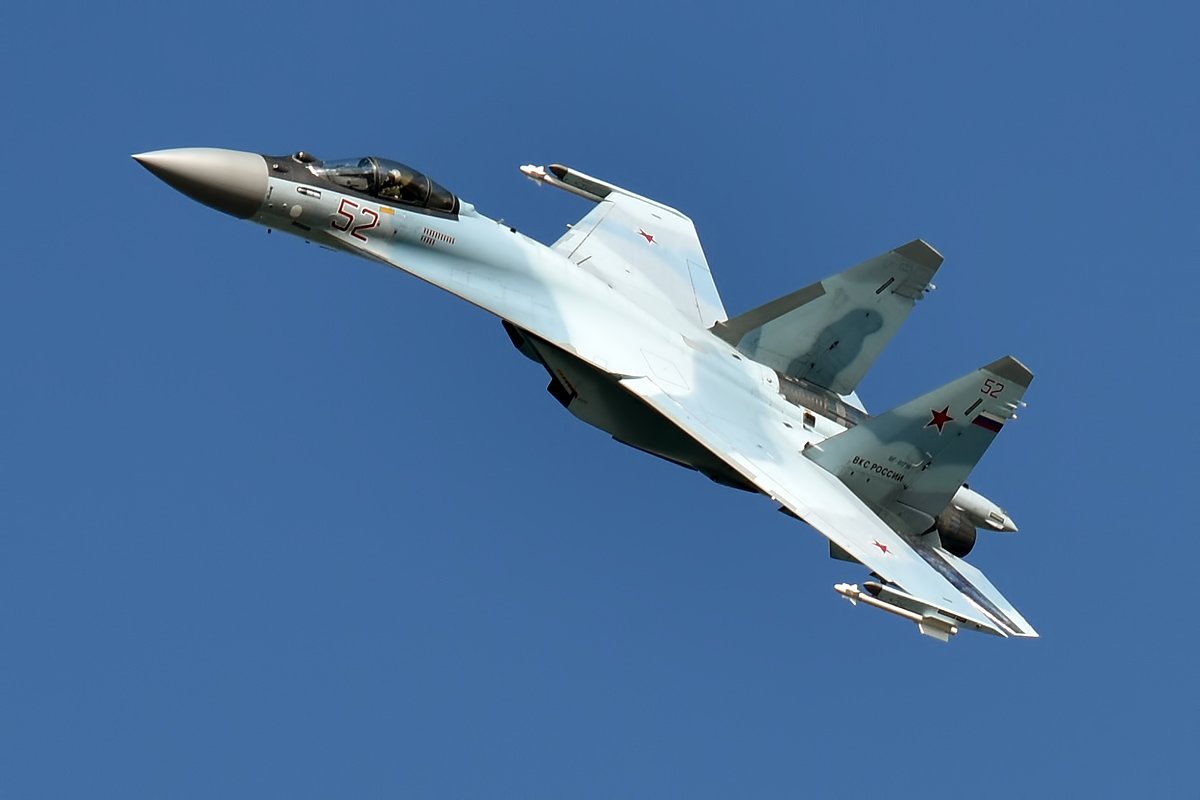
Successful air battle: starring the F-16, Patriot and Su-35. Operations of this kind are extremely risky, with aircraft worth more than one hundred million US dollars in total and their pilots at stake, which is one of the reasons why they are seen very rarely, if at all. At the beginning of this week, however, according to the Russian side (!), Ukrainians managed to win an extremely interesting air duel between an American F-16 fighter and a Russian Su-35 heavy fighter.
The pilot, who had been getting on Ukrainians’ nerves for awhile, ultimately had to eject before his aircraft went down. According to the General Staff of the Armed Forces of Ukraine, Russia has already lost 437 aircraft and 353 helicopters. The independent Oryx project gives significantly lower figures – 186 aircraft and 179 helicopters.
The video of the burning fighter jet was published by Ukraine’s Third Army Corps.
[embedded content]
Russians describe how Ukrainians lured them into a trap. According to the Ukrainian In Factum channel, this could be only the second F-16 victory over a Su-35. The first was said to have taken place already last summer over Kursk, although this remains officially unconfirmed information.
So how, according to Russian military bloggers, did Ukrainians win this rare aerial battle somewhere over the eastern part of the Ukrainian front?
Since the Ukrainian side has remained silent about how exactly the Russian fighter was destroyed, we only know the version from the Russian war blogosphere, and it should therefore be treated with caution. It is, however, worth noting: they describe the loss of the aircraft as an entertaining and meticulously planned Ukrainian operation.
According to the Z-channel Vojevoda, as many as three F-16 fighters and a Patriot air defence system took part in the operation. One Ukrainian aircraft, he said, simulated dropping guided bombs and the other two provided cover. In his version, the target was “illuminated” for them by Patriot surface-to-air missile system radars, which was deployed just 60 km from the line of contact.
Another blogger, Ilia Tumanov, known as Fighterbomber, described the same version (three F-16s and a Patriot versus a Su-35). He called the battle interesting and expressed regret that, unlike the Ukrainians, the Russian side had “acted stereotypically”.
It sounds simple, but if Ukrainians really used a Patriot to guide the F-16s, they could have risked losing it, because once the radar was switched on it could have become a visible and highly valuable target for Russia. The opposite version is therefore also on the table – that the F-16s guided the Patriot onto the target and it only switched on its radar shortly before hitting the Russian aircraft.
Ukraine’s successful campaign to destroy critical military infrastructure – such as air defence systems – is undoubtedly making it increasingly difficult for the Russian occupiers to control the airspace and is progressively blinding them during combat operations.
The Su-35 is a heavy multirole fighter aircraft of the 4++ generation, often armed with R-37M air-to-air missiles with a range of up to 320 km. Blogger Vojevoda tried to play down its destruction by saying that Russia had many such aircraft and many such pilots, and that it would not affect the intensity of combat operations in any way.
What the Su-35 can do. Back in February, Business Insider wrote that these fighters posed a threat even to Nato, noting that Russia had further expanded its fleet during the war against Ukraine and that it was estimated to number 135 to 140 aircraft.
In the first half of the 1990s, only twelve prototypes were produced, according to TSN.UA, but in 2005 a decision was taken to resume development and the fighter was then designated the Su-35BM. As Zerkalo nedeli wrote, the Su-35 was developed by the Sukhoi company as part of a broad modernisation of the Su-27.
“It combines exceptional manoeuvrability, active and passive detection systems, high supersonic speed and long range. It can carry up to eight long- and medium-range air-to-air missiles. In addition, the Su-35 can be equipped with a wide arsenal of guided bombs and air-to-ground missiles,” the Ukrainian website wrote.
According to Ukrainian Pravda, the Russian army often uses them to escort Su-34 bombers, which are dropping plenty of aerial bombs on Ukrainian defender positions and on frontline cities. Ukrainians estimate that Russia is dropping 100 to 130 guided bombs a day, that is, three to four thousand a month. During the record month (January 2026), they dropped as many as 5,700 bombs.
Their long range and the integration of R-37M air defence missiles make them, according to experts, a serious factor in potential conflicts with Nato. As analyst Justin Bronk from the RUSI think tank told Business Insider, the Su-35 fighter is “the main aircraft of the Russian air force for securing air superiority”, and its pilots are selected very carefully.
From the Ukrainian point of view, this is clearly a major notch on the belt – they managed to destroy the aircraft of a pilot who, by their own account, had been harassing them for a long period.
Three Ukrainian victories at the Nato summit. Despite the fact that the two-day summit in Ankara was overshadowed by Trump’s attacks on European allies and the end of the truce with Iran, the meeting went extremely well for Kyiv, for three reasons.
1. Nato clearly designated Russia as the aggressor: In its final declaration, the Alliance confirmed that Russia represented a long-term threat to Euro-Atlantic security and stability, as well as an increased risk of terrorism. It was signed even by Slovak president Peter Pellegrini. What the Slovak intelligence service SIS under Pavol Gašpar tried to avoid stating in its report was reminded to it by the Alliance’s partners in the very first point.
2. A coalition of countries will support Ukraine militarily with investments worth 70 billion dollars. Slovakia, and for the first time also Czechia under the leadership of Andrej Babiš, did not join this.
3. Trump will give Kyiv a licence to manufacture Patriots, which are crucial for protection against Russian ballistic attacks.
The American president’s accommodating stance is, given his frequent attacks on Ukraine, surprising to say the least. Instead of going on the offensive against Zelensky, he is now praising his campaign against energy infrastructure on the territory of the Russian Federation and even wants to share the technology of a highly effective air defence system, whose PAC-3 missiles are among the most advanced in the world.
At the same time, he is trolling Putin’s regime by saying that this escalation could help bring this war to an end.
At their joint press conference, Trump asked Zelensky whether he would go to Moscow. “It is difficult. There are too many Ukrainian drones there, it is dangerous,” the Ukrainian president said, making the reporters in the room burst out laughing.
Trump: Would you go to Moscow?
Zelensky: It’s difficult. There are a lot of Ukrainian drones there. It’s dangerous
Absolute banger, it’s legendary to be speaking with former BEST Ukrainian commedian 🤣🤣🤣 pic.twitter.com/lXKI83UpCU
— Dimko Zhluktenko 🇺🇦⚔️ (@dim0kq) July 8, 2026
Trump’s new tone, according to the Financial Times, sparked cautious optimism among European allies that the unpredictable American leader had made a significant shift in Kyiv’s favour. One Alliance diplomat had a simple explanation: “Trump likes winners. And Ukraine has started winning recently.”
It will not be that simple with the Patriots. If the US gives Ukraine a licence to produce its most effective air defence systems, it will indeed be a big deal. Given their shortage, Kyiv over the past week was unable to defend itself against Russian attacks that killed more than 60 people in the space of several days.
Before that happens, however, a very long time will probably pass, measured in years, and in the meantime Ukrainians will likely come up with their own version of surface-to-air missiles, which are being developed by the company Fire Point. It is estimated that they could be put into mass production as early as this August.
When it will be ready for operational use is still unclear, according to the FT.
The fact that this will be a lengthy process was also highlighted by Bloomberg, which noted that political approval for the production of Patriots is only the easier part, to be followed by technical, manufacturing and security challenges.
According to an expert quoted by the UNIAN agency, in the fastest scenario Ukrainians could produce their first Patriot missile within a year and a half. It is also unclear whether it would be the older PAC-2 version of the missiles, or the more modern and technologically demanding PAC-3. Their production moreover requires rare earths, which Ukraine will most likely have to source from China.
There is also the option that Patriots would be manufactured in one of the European countries, where they would be better protected against possible Russian attacks.
Map of the day
In addition to deepening the energy isolation of the Crimean peninsula, Ukrainian units are increasingly managing to complicate the transport logistics of the Russian army in the occupied part of Ukraine. French blogger Clément Molin illustrated this clearly when he calculated that in the first week of July Ukrainians managed to hit 240 vehicles, that is, 34 a day.
During the first week of July, Ukraine 🇺🇦 continued to target Russian 🇷🇺 trucks and logistics, hitting more than 240 vehicles, 34 per day.
Despite fewer coverage, these strikes continue to be a very big problem for Russian forces across occupied territories.
🧵THREAD🧵1/8 ⬇️ pic.twitter.com/4XwHVOB08S
— Clément Molin (@clement_molin) July 8, 2026
Videos of the day
Ukrainians are meanwhile continuing their drone campaign on the territory of the Russian Federation with the aim of deepening the fuel crisis. On Wednesday night to Thursday they hit an oil depot in Tver and another near the town of Mikhaylovsk in Stavropol Krai. The situation has gone so far that Russia has banned the export of diesel from the country.
[embedded content]
[embedded content]
What are the losses
No update on Thursday.
By Tuesday (7 July), Russia had demonstrably lost 23,806 pieces of heavy equipment (on Tuesday (23 June) it was 23,668). Of these, 18,785 (18,686) pieces were destroyed by Ukrainians, 992 (988) were damaged, 1,199 (1,199) were abandoned by their crews and 2,830 (2,830) were captured by the Ukrainian army. This includes 4,424 (4,404) tanks, of which 3,327 (3,310) were destroyed in combat. Ukraine has lost 11,683 (11,546) pieces of equipment, of which 9,068 (9,011) were destroyed, 687 (687) damaged, 683 (677) abandoned and 1,191 (1,189) captured. This includes 1,440 (1,437) tanks, of which 1,101 (1,099) were destroyed in combat.
Note: Neither side regularly reports on its own dead or on destroyed equipment. Ukraine publishes daily figures for Russian casualties and destroyed equipment, which cannot be independently verified. In this overview, we use data from the Oryx project which, since the start of the war, has been compiling a list of equipment losses documented exclusively by photographic evidence.