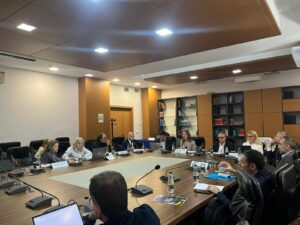
Late-night Brussels summit exposes splits between leaders over how and when to negotiate with Russia over Ukraine ― and who should do it.
 Nette Nöstlinger, Gabriel Gavin, Jacopo Barigazzi, Camille Gijs



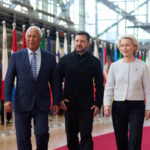
Leaders from some of the most staunchly anti-Russia countries, as well as Denmark and the Netherlands, rallied behind Macron and Merz, with some displaying unprecedented fury with Costa, three of the officials said.
“The European Union cannot assume the role of mediator in these negotiations,” Estonia’s Prime Minister Kristen Michal told POLITICO. “Suggestions that alternative channels or backdoor diplomatic tracks are needed are misguided … History offers a clear warning about attempts to pursue alternative negotiating frameworks with dictators.”
The EU has been discussing for months what sort, if any, communication it should have with Putin, and if so, who should lead it. The urgency has increased since U.S. President Donald Trump struck his provisional peace deal with Iran and signaled at the G7 summit in France earlier this week that his attention was turning back to Ukraine.
Costa’s chief of staff, Pedro Lourtie, contacted officials in Moscow twice over the past few weeks, five officials said. With U.S.-led attempts to end Russia’s war against Ukraine appearing deadlocked, European capitals have been divided over how much to prioritize diplomacy over helping Ukraine to win on the battlefield.
Setting record straight
Thursday night’s discussion on Russia and Ukraine ― held without aides or even cellphones because of the sensitivity, and which lasted two hours longer than scheduled ― revealed the emergence of two main camps.
The position of Macron and Merz is that the time is not right to talk to Putin, and when that moment comes, the “E3” of France, Germany and the U.K. should take the lead.