

As EU Commission president Ursula von der Leyen pushes to curb what experts call “addictive” online environments for under-13s, EU capitals are already split over how tough to be — and how to police it.
 Léa Marchal



Production: By Europod, in co-production with Sphera Network.
EUobserver is proud to have an editorial partnership with Europod to co-publish the podcast series “Briefed” hosted by Léa Marchal. The podcast is available on all major platforms.
Find the full transcript below:
Most Europeans are worried about the risks social media poses to children. That’s according to a new Eurobarometer survey published on Monday, 13 July.
On the same day, a panel of experts recommended banning social media for children under the age of 13.
Will the EU introduce such a measure, and how would it work?
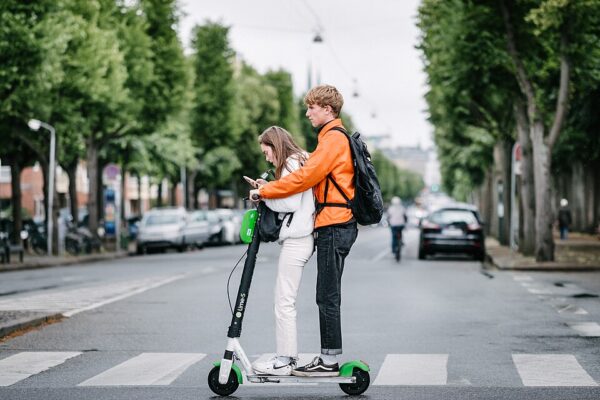
In France, you have to be at least 16 years old to use social media. The same applies in Spain. In Greece, the minimum age is 15. Elsewhere in Europe, there are no restrictions yet, but several countries are beginning to draft legislation.
The most straightforward solution would be to set a single minimum age across the entire European Union. That’s what several member states are calling for, along with the European Parliament.
Social media and other addictive platforms play a huge role in young people’s lives. Teenagers spend between four and six hours a day on these platforms, and more than half say they have experienced psychological or emotional harm online.
That’s what a panel of experts convened by the European Commission explained as they presented a report recommending a minimum age of 13 for social media. And not just social media, but also other platforms that offer addictive or age-inappropriate content for younger children, such as YouTube.
The report also stresses that platforms should be designed from the outset to minimise their negative impact on young users. That could include limiting features such as infinite scrolling.
So when could such a ban become reality?

Following the publication of the report, European Commission president Ursula von der Leyen could unveil legislation as early as September, during her annual State of the Union address. That’s what many people here in Brussels are expecting.
What we do know is that Ursula von der Leyen already supports the idea. She has been making that clear for several months, including yesterday during the press conference presenting the experts’ report:
“Just as we do not give our children keys to the car before they have their licence or let them buy alcohol until they are legally allowed, we need to set the age at which they can legally access social media.”
But the road ahead won’t be entirely smooth.

A large majority of member states support the idea, but some remain unconvinced, including Estonia.
Others, such as Italy, are not opposed in principle, but would prefer the minimum age to be set as low as possible.
What this means is that the proposal is likely to move forward, as there appears to be a majority of member states in favour. But they will still have to agree on the age threshold. Most likely, negotiations will settle on the lowest age acceptable to the more reluctant countries.
At the same time, the final legislation could leave room for countries that wish to adopt a higher minimum age. That remains to be decided.
Before we wrap up, one final point: how could such a ban actually be enforced?
It would require reliable age verification tools. Until now, the EU couldn’t realistically require member states to introduce such restrictions because it had no common solution for verifying users’ ages. But that has now changed. Over the past few months, the European Commission has developed an age and identity verification app.
The app works as a trusted third party. Users verify their age with an identity card or passport and take a selfie. The app then simply tells the social media platform whether the user meets the required age — for example, whether they are over 16 — without revealing any additional personal information.
The app is designed to protect users’ privacy. It doesn’t store personal data and only sends a simple “yes” or “no” response to the platform.
So the technology is now available. It’s not perfect yet — just hours after it was unveiled, security researchers had already identified vulnerabilities. But between now and the time any legislation is proposed, negotiated and adopted, the EU still has time to improve the system.