
As the EU finalises its 21st sanctions package, two sanctioned vessels carrying critical oil and gas infrastructure are sailing towards Russia. Europe still has time to act.
 Svitlana Romanko



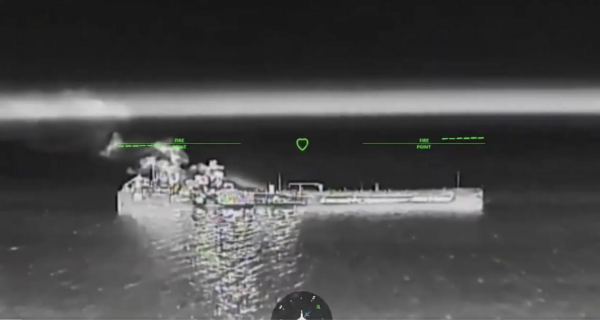
Two tankers entering through EU and UK waters are nearing the end of their long journey from China to the Russian port of Belokamenka.
For months, these ships, Glory Ocean and Bright Ocean, have traversed their way across the globe, avoiding the Suez Canal as sanctioned vessels under EU law, sailing around most of continental Africa.
Onboard are not weapons of military arms or munitions but critical module pieces for Russia’s Arctic gas projects.
At this moment, as they cross through Europe, Brussels is negotiating its 21st sanctions package to further sanction vessels and tighten the vice of Russia’s economic ambitions within the energy sector – a sector that has long given momentum to its war economy.
The exact location of Glory and Bright Ocean is easy to track. As of now, based on their known route and timeline, they are passing through Norwegian waters after sailing through Irish, British, and Danish waters.
Shadow fleet tactics
Both vessels have already shown signs of ‘shadow fleet’ behaviour by sailing under a false Malian flag while remaining registered with the Russian maritime register of shipping, a familiar tactic used to circumvent sanctions and frustrate enforcement.
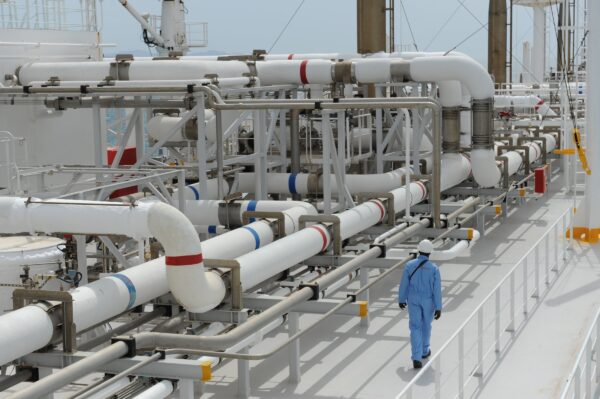
The modules on board are destined for Novatek’s Arctic LNG expansion, most likely Arctic LNG 2 or the Murmansk LNG project in Kola Bay – which cannot be completed without delivery of this cargo.
Appearing to be little more than oversized pieces of steel, they are critical components of infrastructure intended to secure Russia’s future gas exports.
Unlike Arctic LNG 2, whose exports depend on a limited fleet of specialised Arc7 ice-class tankers, Murmansk LNG would be served by an ice-free port connected to new pipeline infrastructure, allowing Russia to expand LNG exports with far fewer logistical constraints.
In other words, these ships are not delivering cargo for today’s war alone, they are helping build the revenues that could sustain the Kremlin’s aggression for years to come.
Sanctions need enforcement
This is the contradiction at the heart of Europe’s Russia policy. While European leaders prepare another round of sanctions, sanctioned vessels are still able to transport critical infrastructure through European waters for projects that will strengthen Russia’s fossil fuel industry for decades.
Sanctions only work if they are enforced. Otherwise, they become little more than political theatre.
We know that coordinated action can work. In 2024, a previous shipment of similar modules bound for Arctic LNG 2 was forced to turn back before reaching Russia after sanctions pressure made the voyage commercially and politically untenable.
The same determination is needed now. Once these modules arrive in Belokamenka and are incorporated into Russia’s LNG infrastructure, the opportunity to stop them is gone.
Europe has a narrowing window to act.
The stakes extend far beyond two ships. Russia’s Arctic LNG projects are central to the Kremlin’s long-term strategy to preserve fossil-fuel revenues despite years of sanctions.
As Russia’s oil production shows signs of decline under sustained economic pressure, Moscow is investing heavily in new export infrastructure that can keep gas flowing to global markets and money flowing into the war economy. Every new terminal, pipeline and processing facility is designed to prolong that revenue stream and prolong the war.
Yet Europe continues to send mixed signals. Research from Urgewald estimates that in just the first four months of 2026, EU member states imported 91 cargoes from Russia’s Yamal LNG project, worth an estimated €3.88bn.
Those purchases continue to finance a regime that launches daily missile and drone attacks against Ukrainian cities while simultaneously investing in the next generation of Arctic fossil fuel exports.
Through the 21st sanctions package, Europe should grab the opportunity to not simply expand the list of designated vessels, but to close the loopholes that continue to undermine Europe’s own objectives.
That means moving towards a comprehensive ban on maritime services supporting Russian fossil fuel exports, strengthening enforcement against sanctions circumvention, targeting the engineering companies and infrastructure that enable new LNG projects, and working with partners including the United Kingdom, Norway and the United States to ensure sanctions are applied consistently.
Europe should also recognise the strategic importance of Russia’s Arctic export system.
Ice-class LNG carriers, specialised shipping technology, Arctic logistics hubs and the industrial infrastructure that supports them remain among the Kremlin’s greatest vulnerabilities. Russia has struggled to replace Western technology and expertise in these areas.
That dependence gives Europe leverage, but only if it chooses to use it.
These two vessels present a test of Europe’s political resolve. If sanctioned ships carrying sanctioned cargo are permitted to pass unchallenged through European waters while leaders negotiate a tougher sanctions package, the message to the Russian government is unmistakable: Europe’s red lines remain negotiable.
The Ukrainian people cannot afford symbolic sanctions. Every loophole left open, every cargo delivered and every delay in enforcement strengthens the machinery that finances Russia’s war against them.
Europe still has time to stop these shipments, close the gaps in its sanctions regime and demonstrate that its commitment to ending the Kremlin’s fossil-fuel war economy extends beyond words. The choice must be made before these ships reach port