Europe can celebrate a landmark trans rights judgment in Luxembourg one week, yet still leave trans people fearing rising hate and legal limbo in countries just a short flight away. But what is actually the state of transgender rights in Europe?
 Léa Marchal




Production: By Europod, in co-production with Sphera Network.
EUobserver is proud to have an editorial partnership with Europod to co-publish the podcast series “Briefed” hosted by Léa Marchal. The podcast is available on all major platforms.
Find the full transcript below:
In March, the EU’s top court ruled in favour of a Bulgarian transgender woman who wanted to correct the gender and name recorded in her civil registry.
Some say this is a landmark decision for trans rights in Europe.
But what is actually the state of transgender rights in Europe?
Hi, I’m Léa, and this is Briefed, your daily European podcast.
The case is now known as the Shipova case. On 12 March, a Bulgarian transgender woman who had built a life in Italy won a major legal victory.
After undergoing a gender transition in Italy, she asked the Bulgarian authorities to correct the gender and name recorded in the country’s civil registry so that they would match her gender identity.
The Bulgarian courts refused because the country’s civil registry still listed the sex assigned at birth.
The case eventually made its way to the Court of Justice of the European Union, with the following result: EU judges ruled that member states must allow such changes to civil information relating to gender for citizens living elsewhere in the bloc.
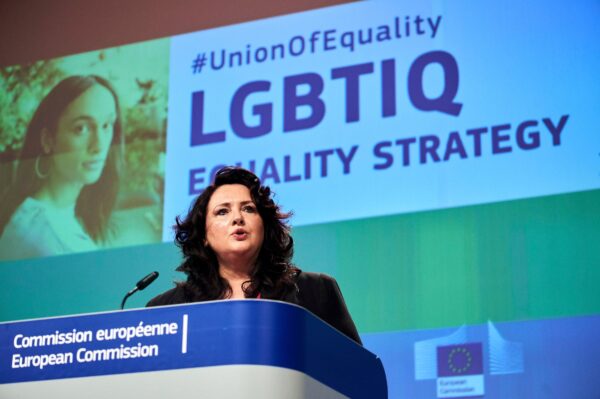
According to the judges, a discrepancy between a person’s gender identity and their legal documents hinders freedom of movement across the continent and creates day-to-day difficulties.
As a result of the ruling, EU member states should provide clear, accessible and effective procedures for the legal recognition of an individual’s gender identity.
Legal scholars and rights advocates say the decision could have broad implications for transgender rights across the EU.
But is it part of a broader recognition of transgender rights in the EU?
Yes and no.
There have indeed been some small victories.
In February, LGBTQ advocates celebrated the adoption by the European Parliament of non-binding recommendations emphasising the importance of the full recognition of trans women as women.
The text not only received support from all left-leaning parties, it was also backed by a large part of the conservative European People’s Party — much to the dismay of far-right parties, which unsuccessfully opposed it.
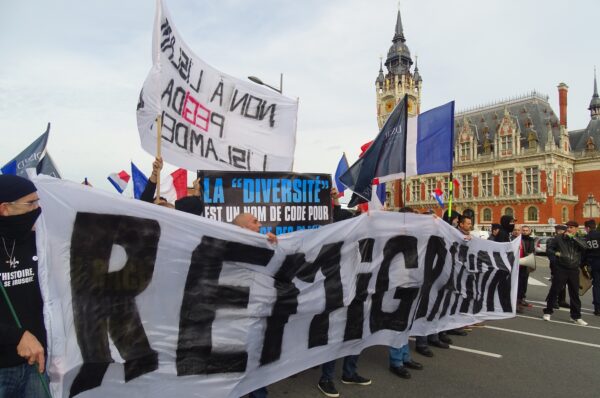
But while trans people are slowly gaining rights, they are also facing growing transphobic rhetoric from the far right inside European institutions.
Just a few months ago, MCC Brussels, a think tank linked to the previous Hungarian government, co-hosted a panel entitled “The Trans Ideology Threat.”
Inside the European Parliament, far-right MEPs frequently use speaking time to portray transgender people as threats to women’s rights and to society more broadly.
What about the rest of Europe? How progressive is the continent when it comes to trans rights?
Well, transgender people across Europe face widely different legal realities.
Legal gender recognition is based on self-determination in only 12 European countries. These are mostly countries in Northern and Western Europe, with the exception of Italy and the Netherlands.
Non-binary identities are recognised only in Germany, Malta and Iceland.
In contrast, Bulgaria and Hungary prohibit legal gender recognition altogether, meaning that people cannot change the gender marker on their identity documents.
The Rainbow Map annually ranks European countries based on their legal and policy practices regarding LGBTI rights. Romania sits at the bottom of the EU ranking, followed by Poland and Bulgaria. Malta ranks first, followed since 2025 by Belgium and Denmark.
To sum up the situation, far-right movements have politicised the question of transgender rights, and even in countries with more inclusive legal frameworks, anti-LGBTQ violence persists — and in some cases is increasing.
Still, on a continent where the rule of law prevails, the Shipova case represents a legal cornerstone that could help build a more inclusive future for transgender rights.