


The EU executive wants to use progress on Serbia’s accession to keep it from disengaging with the bloc. Some governments aren’t convinced.
 Gabriel Gavin



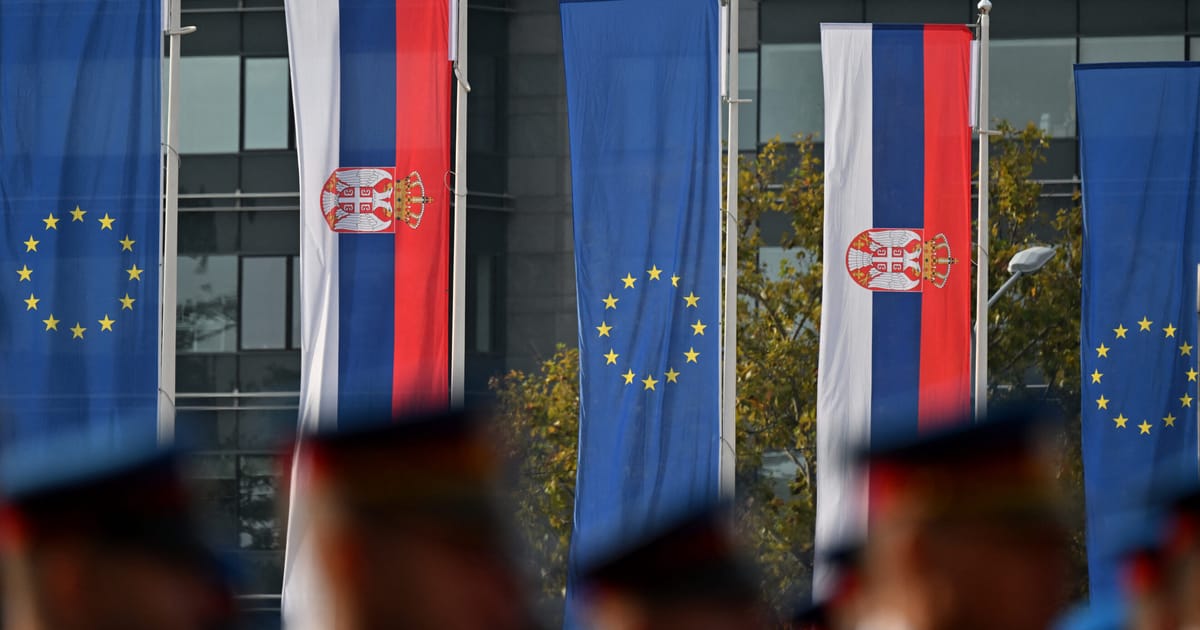
Belgrade’s parliament last month voted through a series of amendments relaxing controversial laws passed at the start of the year by the governing party, which legal experts said would undermine the independence of the judiciary and the fight against corruption. On top of that, officials point to almost two dozen legislative changes that have been passed to comply with EU rules, including strengthening the management of EU funds and aligning with the bloc’s internal market.
Yet the Commission’s own assessments appear to point in different directions. In an internal briefing paper circulated amongst ambassadors ahead of Wednesday’s meeting and seen by POLITICO, the Commission said that “Serbia has recently implemented substantial elements of the commitments” it has made to Brussels. In summary, “following these actions the Commission assesses that Serbia has remedied the backsliding which occurred” when the laws were first introduced in January and its application should move forward.
However, just weeks earlier, in a confidential report on Serbia obtained by POLITICO, the Commission reported significant human rights concerns, warning that “pressure on civil society organisations and journalists intensified, including smear campaigns against individuals and organisations advocating for the rule of law and the fight against corruption.”
The analysis found that “there has been no progress in a number of large-scale corruption cases,” including in investigations around the collapse of a concrete railway station canopy in Novi Sad that killed 16 people and triggered a protest movement across the country.
Without a decision to open the cluster, the Commission will instead turn to other ways to reward Belgrade for the legal changes, two of the officials said. Officials are drawing up a list of options, although it is unlikely to be presented before nationwide elections expected in the coming months after President Aleksandar Vučić’s surprise announcement he would stand down. He is expected to campaign to be prime minister.
“We remain fully committed to pursuing further reforms and would be encouraged to see these efforts acknowledged through a merit-based decision,” Marko Đurić, Serbia’s foreign minister, told POLITICO. “In the case of Serbia enlargement is very obviously mutually beneficial, it is an act of strategic foresight. It is enough to take a look at the map.”
“Most recently, we have taken significant legislative and institutional steps to strengthen the rule of law, responding directly to the European Commission’s recommendations,” he said.