The outbreak of Ebola currently hitting the Democratic Republic of the Congo (DRC) is being fueled by armed conflict — but also, and perhaps above all, by the global decline in humanitarian aid.
 Léa Marchal



Production: By Europod, in co-production with Sphera Network.
EUobserver is proud to have an editorial partnership with Europod to co-publish the podcast series “Briefed” hosted by Léa Marchal. The podcast is available on all major platforms.
Find the full transcript below:
The Bundibugyo variant of the Ebola virus is spreading faster than ever before.
The outbreak currently hitting the Democratic Republic of the Congo (DRC) is being fueled by armed conflict — but also, and perhaps above all, by the global decline in humanitarian aid.
Do Europeans have a role to play?
It all began in Ituri Province, in the far east of the DRC. It’s an extremely isolated region, around 2,000 kilometres from the capital, Kinshasa, near the borders with Uganda and South Sudan.
That’s where the Bundibugyo strain re-emerged a few weeks ago.
The problem is that Ituri Province is already affected by armed conflict, refugee displacement, and widespread poverty.
As a result, in just a few weeks, Bundibugyo has already killed 200 people in the DRC. The variant has an extremely high fatality rate.
According to Manenji Mangudu, the director of Oxfam in the DRC, the sharp cuts to international humanitarian aid since last year have helped accelerate the spread of the virus.
He told the Spanish newspaper El Salto — our partner within the Sphera network — that materials needed to build isolation units or even maintain access to clean drinking water are now lacking because of cuts to humanitarian assistance.
On top of that, the geography of Ituri and the ongoing conflict there make it extremely difficult to deliver aid.
So how did we get here?
In 2025, US president Donald Trump drastically reduced nearly all American humanitarian aid, in some cases overnight. USAID funding dropped from $14bn [€12bn] in 2024 to just $3.7bn in 2025.
The World Health Organization has already measured the consequences: clinics shutting down in conflict zones, a resurgence of HIV cases in Zambia after the end of a USAID-funded prevention program, and rising malaria cases across Africa.
In the DRC, the end of water and sanitation programs led to a cholera outbreak last December.
And now the same pattern is repeating itself with the Bundibugyo strain.
As Manenji Mangudu explained in El Salto:
“One of the differences between this outbreak and those of 2014–2016 or 2020 is the lack of resources. Back then, we had major funding and large donors like the British and the Americans. The response was fast and supply chains were well organized. That is no longer the case today.”
So can the European Union play a role in this crisis?
The EU will never be able to fully compensate for the losses caused by the USAID cuts.
But it is contributing where it can. Last week, the EU released €15m in emergency aid for the DRC and Uganda. The funding is meant to support medical operations, prevention, and testing in high-risk areas.
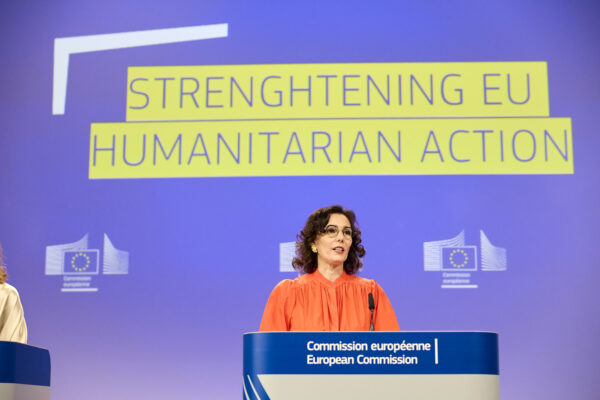
Yesterday, the European Commission also published a broader communication on the future of EU humanitarian aid — arguing that the system now needs to be rethought.
That said, don’t expect announcements of major new funding in the coming years. The commission simply isn’t in a position to make those decisions on its own.
The EU’s multiannual budget is currently being negotiated among the 27 member states, and only once those talks are finished will a figure be set for humanitarian aid spending. Given the current debates, expectations should remain modest.
For now, the commission is mostly talking about improving the efficiency of existing funding.
For example, it wants to strengthen humanitarian diplomacy and make sure aid can still reach people in need instead of being blocked — which still happens far too often in conflict zones.
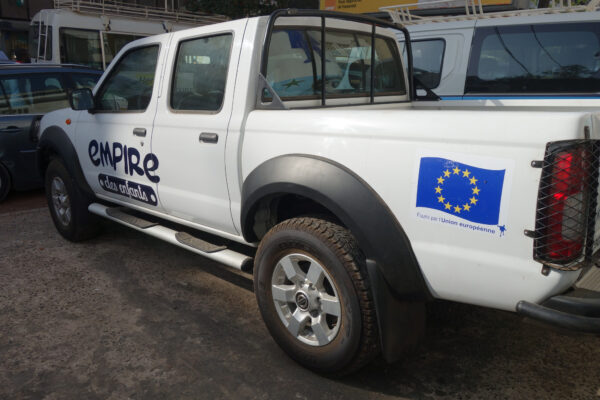
The idea is also to work more closely with local partners in order to maximize both impact and cost-efficiency.
In the meantime, the hope is that the outbreak reaches its peak quickly, and that the spread of strains like Bundibugyo — for which no vaccine currently exists — can be contained.