Israeli finance minister Bezalel Smotrich is now banned from entering France. These sanctions are largely symbolic, but they matter. Why aren’t other European Union countries sanctioning members of the Israeli government?
 Léa Marchal



Production: By Europod, in co-production with Sphera Network.
EUobserver is proud to have an editorial partnership with Europod to co-publish the podcast series “Briefed” hosted by Léa Marchal. The podcast is available on all major platforms.
Find the full transcript below:
Israeli finance minister Bezalel Smotrich is now banned from entering France.
The sanction is largely symbolic, but it matters.
Why aren’t other European Union countries sanctioning members of the Israeli government?
There are now six countries that have decided to sanction Israeli finance minister Bezalel Smotrich.
Besides France, the list includes the United Kingdom, Norway, Canada, Australia and New Zealand.
The reason for the sanction is straightforward: Smotrich actively promotes the annexation of the West Bank. He is widely seen as being responsible for the expansion of settlements and the escalation of violence in Palestine.
For some context, since 2023, at least one hundred seventeen Palestinian communities have been fully or partially displaced, according to the United Nations. Around 6,000 people have been forced from their homes by Israeli settlers.
And in recent months, the annexation process has intensified. In February, the Israeli government adopted a land registration system for the occupied Palestinian territories, a move that makes it easier to expropriate land.

So what do the sanctions against Smotrich actually involve?
Simply put, he is banned from entering the six countries I mentioned earlier. The measure has little practical impact, but it sends a political message.
A few weeks ago, France also sanctioned Itamar Ben-Gvir, Israel’s national security minister.
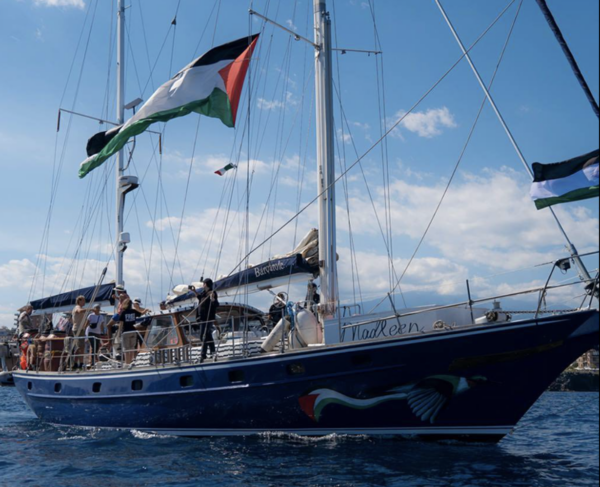
He drew international criticism in May after publishing a video in which he publicly humiliated members of a flotilla which was trying to provide aid to Gaza.
His conduct was even condemned by the European Union.
So why isn’t the EU sanctioning either Ben-Gvir or Smotrich?
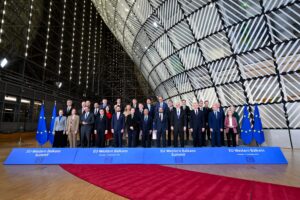
The simple answer is that there is no political consensus among the 27 member states. EU sanctions against individuals require unanimity in the Council of the European Union.
The member states remain divided between those that oppose escalating pressure on Israel and those that are pushing for tougher measures.
The latter group includes France, Ireland, Slovenia oir Spain.
In fact, Slovenia imposed entry bans on both Smotrich and Ben-Gvir as early as last year.
There is also the EU’s high representative for foreign affairs, Kaja Kallas, who would like to take a tougher stance towards Israel.

She has already succeeded in persuading EU countries to adopt sanctions against a number of so-called violent settlers. These are private individuals and entities that actively contribute to settlement expansion and annexation efforts.
But so far, she has not been able to convince all 27 member states to target members of the Israeli government.
As I’ve mentioned before, there is one way around the unanimity requirement: trade measures, which can be adopted by a qualified majority.
But even there, progress is difficult.
For the time being, the EU does not even want to discuss banning products originating from illegal Israeli settlements.
And that’s despite growing pressure from a handful of member states and from civil society groups.

What does the current situation look like?
Products made in settlements that are considered illegal under international law are still imported into the European Union. The only requirement is that their origin be correctly labelled and they are subject to normal customs duties, unlike other Israeli products.
But let’s be clear: those duties are not punitive. They are simply the standard tariffs applied to countries that do not have a preferential trade agreement with the EU.
And for the countries I mentioned earlier, that situation is not acceptable.
I asked the European Commission why it has not put forward a proposal for an embargo on settlement products, in the same way that it proposed suspending the EU-Israel Association Agreement.
The Commission sidestepped the question and referred me back to the Association Agreement discussion. On settlement products, no comment.
Now, no comment does not necessarily mean the commission is unwilling to act.
What it does suggest, however, is that there are no obvious technical obstacles. This is ultimately a political decision.