


While Vladimir Putin’s war rages, travel to the European Union should be an exceptional privilege, not a right, writes Edward Lucas.
 Edward Lucas



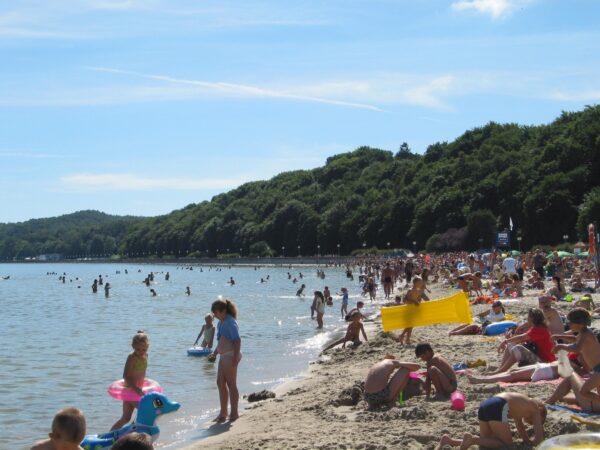
When I hear Russian spoken on the street my ears twitch. I try to start a casual conversation, just to see what kind of Russia-speakers are breathing the same air as me.
Sometimes I choke with sympathy (I still remember a fiery granny from Mariupol and her widowed daughter).
More often I choke with rage.
It is hard to find words to deal with the blithe arrogance and ignorance of a holidaying Putinist, enjoying shopping, nightclubs, and of course complaining.
Others profess liberal sentiments, but spiced with self-pity, self-righteousness and denunciation of Western decadence and hypocrisy.
I am often tempted to snap “Chemodan—Vokzal—Moskva” [Suitcase-Railway Station-Moscow], a slogan coined during the Soviet collapse to encourage colonial-minded Russians to head home.
The Russians’ presence in the West is not on the same scale, but it does have political consequences: their spending power creates a business lobby with self-interested reasons to oppose further sanctions and to thaw ties with the Kremlin.
Sometimes it turns out that these noxious interlocutors live here already: the result of 30-plus years of foolish laxity. Sometimes they are travelling under passports-of-convenience issued (sorry, sold) by other countries. But I am surprised how many are Russian passport-holders with UK or Schengen visas, even multiple-entry ones.
The numbers are shocking: 477,878 Schengen tourist visas were issued to Russian citizens in 2025, mostly by tourist-hungry France, Spain and Italy, in defiance of a supposedly strict European Union policy.
A joint statement by Baltic, Czech, Dutch, Nordic and Polish politicians last week urged the European Commission to review loopholes, increase scrutiny and tighten the rules; most of the signatory countries have already banned all Russian visitors, sometimes at considerable cost to their economies.
The upcoming 21st EU sanctions package goes some way on this, blocking visas for any Russian current or former combatants in Ukraine (though deserters may be excluded).
Too little, too late … again
Like every such EU measure, it is welcome, yet too little and too late. If the preceding 20 packages had been issued and implemented all at once in 2014, when Russia first attacked Ukraine, the full-scale invasion would never have happened and hundreds of thousands of people would still be alive. Cowardice is costly in the long run.
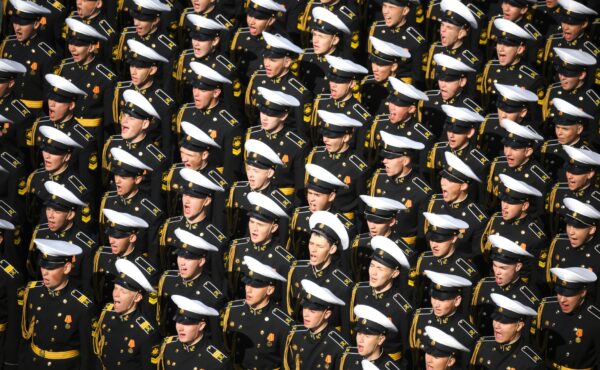
Western countries should ban not just uniformed aggressors, but all Russian business and private visits, with narrow humanitarian exceptions.
The EU should also follow Estonian foreign minister Margus Tsahkna’s suggestion and ban the provision of maritime services (a blow against the shadow fleet) and stop the export of aluminum oxide to Russia’s arms manufacturers; this is a legal, profitable and shameful business for Ireland, which takes over the EU’s rotating six-month presidency in July.
Such measures are blunt. They mean economic and personal hardship. A visa ban has particular political costs. It hits pro-Western Russians, including admirable, innocent ones. It closes off any plan to destabilise Russia by encouraging brain drain. It may hamper attempts to provoke disunity in the Russian elite.
But no plans along these lines have proved effective so far or are likely to work soon, if ever. The only real ‘Russian opposition’ is the armed forces of Ukraine.
Anyone sincerely hoping for a free, democratic Russia should support Ukraine’s victory by all means possible, including intensifying pressure on the Kremlin regime.
Having pumped my casual Russian acquaintances for information, I try to unsettle them.
They ask where I learned Russian and why. I reply tersely but truthfully, “I was deported from the Soviet Union,” leaving them to worry who was really quizzing them.
With luck that may cast a shadow on their day. But not long or dark enough.