Hydration breaks are expected to remain a feature of future World Cups despite attracting widespread criticism, City AM understands. The divisive three-minute pauses, taken midway through each half, have become one of the tournament’s hottest talking points. They have effectively turned football into a game of four quarters and head
 Sam Cunningham



Wednesday 01 July 2026 6:00 am | Updated: Tuesday 30 June 2026 12:01 pm
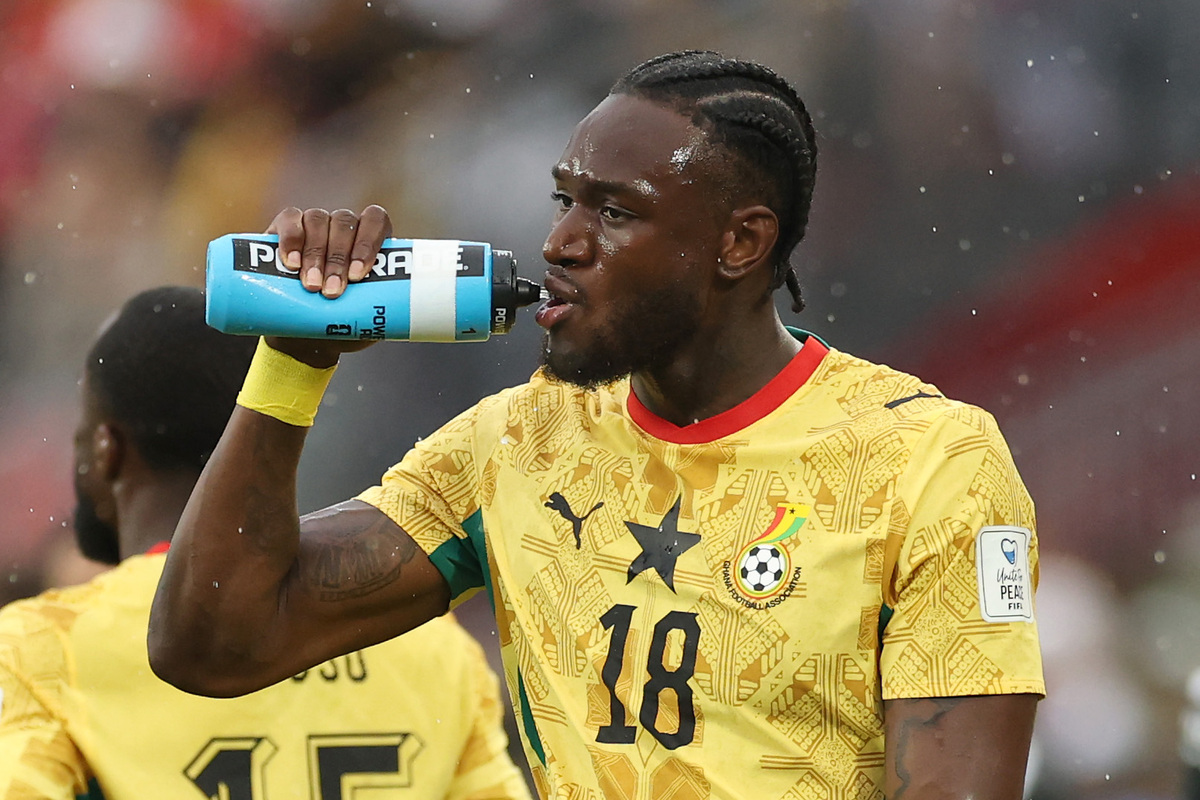
Hydration breaks are expected to remain a feature of future World Cups despite attracting widespread criticism, City AM understands.
The divisive three-minute pauses, taken midway through each half, have become one of the tournament’s hottest talking points.
They have effectively turned football into a game of four quarters and head coaches have said they are fundamentally altering the sport by enabling significant tactical alterations and changing the momentum of matches.
Cynics claim the hydration breaks have been introduced to create extra advertising windows for broadcasters. But Fifa president Gianni Infantino insists they are purely for player welfare in hot conditions and says they are applied across all 104 matches – rather than only the hot ones – to maintain competitive integrity.
Uefa, however, will only implement hydration breaks in games at Euro 2028 when conditions require them.
#mc_embed_signup { background: #fff; clear: left; font: 14px Helvetica, Arial,sans-serif; width: 100%; max-width: 600px; margin: 20px 0; } #mc-embedded-subscribe-form { margin: 20px 0 !important; } .newsletter-form-flex { display: flex; gap: 0; align-items: center; margin-top: -10px; } .newsletter-form-flex input[type=”email”] { flex: 1; padding: 2px 10px; border: 1px solid rgb(18, 22, 23) !important; border-radius: 12px 0 0 12px !important; } .newsletter-form-flex input[type=”submit”] { padding: 4px 10px !important; margin: 0 !important; background-color: rgb(18, 22, 23) !important; color: rgb(255, 255, 255) !important; border: 1px solid rgb(18, 22, 23) !important; border-radius: 0 12px 12px 0 !important; } .newsletter-banner-content { margin-bottom: 15px; } .newsletter-banner-content h2 { margin: 0 0 10px 0; font-size: 18px; font-weight: 600; } .newsletter-banner-content p { margin: 0 0 10px 0; line-height: 1.5; } .newsletter-banner-content ul, .newsletter-banner-content ol { margin: 0 0 10px 20px; } .newsletter-banner-content a { color: #0073aa; text-decoration: none; } .newsletter-banner-content a:hover { text-decoration: underline; } .newsletter-banner-content img { max-width: 100%; height: auto; margin: 10px 0; } #mc_embed_signup #mce-success-response { color: #0356a5; display: none; margin: 0 0 10px; width: 100%; } #mc_embed_signup div#mce-responses { float: left; top: -1.4em; padding: 0; overflow: hidden; width: 100%; margin: 0; clear: both; }
Fifpro, the world players’ union, supports in-game breaks for players in extreme weather, though Fifa ignored the union’s recommendation to schedule those 2026 World Cup games in hotter regions several hours later for safety.
The next World Cup – hosted by Morocco, Portugal and Spain in 2030 – and the 2034 edition in Saudi Arabia are due to see even higher temperatures than this summer’s tournament.
Fifa declined to comment but sources insist the hydration breaks will be reviewed after the tournament concludes.
Murray: Tennis players facing burnout
Doubles legend Jamie Murray is concerned that few tennis players will compete into their late 30s unless the sport addresses mounting mental “burnout”.
Novak Djokovic is playing in his 21st Wimbledon at the age of 39 this week, while Murray’s brother, Sir Andy, played in his last Wimbledon at 37.
A particular point of tension in the ongoing argument between players and tours has been the ATP’s decision to extend most Masters 1000 events from one week to two, including Indian Wells, Madrid and Rome.
“Mentally it’s harder now,” Murray said. “You’re away from home for so many more days. I worry that these guys at the top of the sport won’t play until they’re 37, 38, 39, because they’ll get burnout.
“And they’re making so much money on top of that, it’s like, ‘Well, if I’m not playing for history, why am I doing this? I don’t need to be away from home 300 days of the year – it’s not that much fun for me anymore’. That should be a concern for the tour.”
Read more Hydration breaks: World Cup ad cost could eclipse Super Bowl’s $7m price tag
Prize money has risen and players are given free days between matches, but Murray insists that players are unable to switch off.
“A day off between matches isn’t a day off,” he said. “You’re not at home with your feet on the sofa watching TV.” He added: “It’s a disaster for the players.”
Chelsea strengthen partnerships team
Chelsea are set to make one of their first summer signings – a new director of commercial partnerships.
The Premier League club are hiring Alex Smith, most recently the director of marketing partnerships and head of Team Marketing UK. Smith joined Team – the sports marketing agency credited with building Uefa’s Champions League commercial model and brand – in 2015.
Previously, he worked at Chelsea’s rivals Arsenal, as a partner services manager from 2013 to 2015.
The appointment forms part of a drive to expand Chelsea’s global commercial portfolio. In recent weeks, the club have agreed a deal with Velocity Black to become their official luxury concierge supplier and signed a contract with Legora, an AI platform for lawyers, to become the official sleeve partner across the men’s, women’s and youth teams. Top of their wish list, however, is a new front-of-shirt sponsor, a slot that remains vacant.
Manchester United have set the benchmark in recent years, growing partnerships around the globe. They currently have over 40, including an official wine partner, an official diagnostic medical imaging solutions partner and an official tyre partner.
Viral World Cup ‘phone hip flask’ in demand
The World Cup has already produced a string of viral moments – from Norway fans taking over New York’s Times Square to perform a mass “Viking row” to Gary Lineker’s cameo on ITV and Thierry Henry’s face every time Alexi Lalas and Zlatan Ibrahimovic clashed on US coverage.
But one clip from a Mexico supporter possibly tops them all, and has sparked a surge in Google searches for an ingenious device designed to circumvent Fifa’s ban on hip flasks in stadiums.
The fan was filmed at Mexico’s opening group match against South Africa at the Estadio Azteca, pulling out what appeared, at first glance, to be a smartphone before sliding a button at the side to reveal a screw cap and pouring liquid into his cup.
Since the video went viral, searches for “phone hip flask” have jumped by more than 1,150 per cent. One can be purchased on Amazon for around £20.
“If enjoying a drink from your hip flask is part of your matchday tradition, save it for celebrating while watching the match at home or once you’re back from the game, rather than risking confiscation at stadium security,” said Alex McMillan, founder at accessories specialist Sayers London.
Read more Advertising at World Cup: Levi’s genius, hydration breaks and dodging rules
Similarly tagged content: Sections Categories People & Organisations