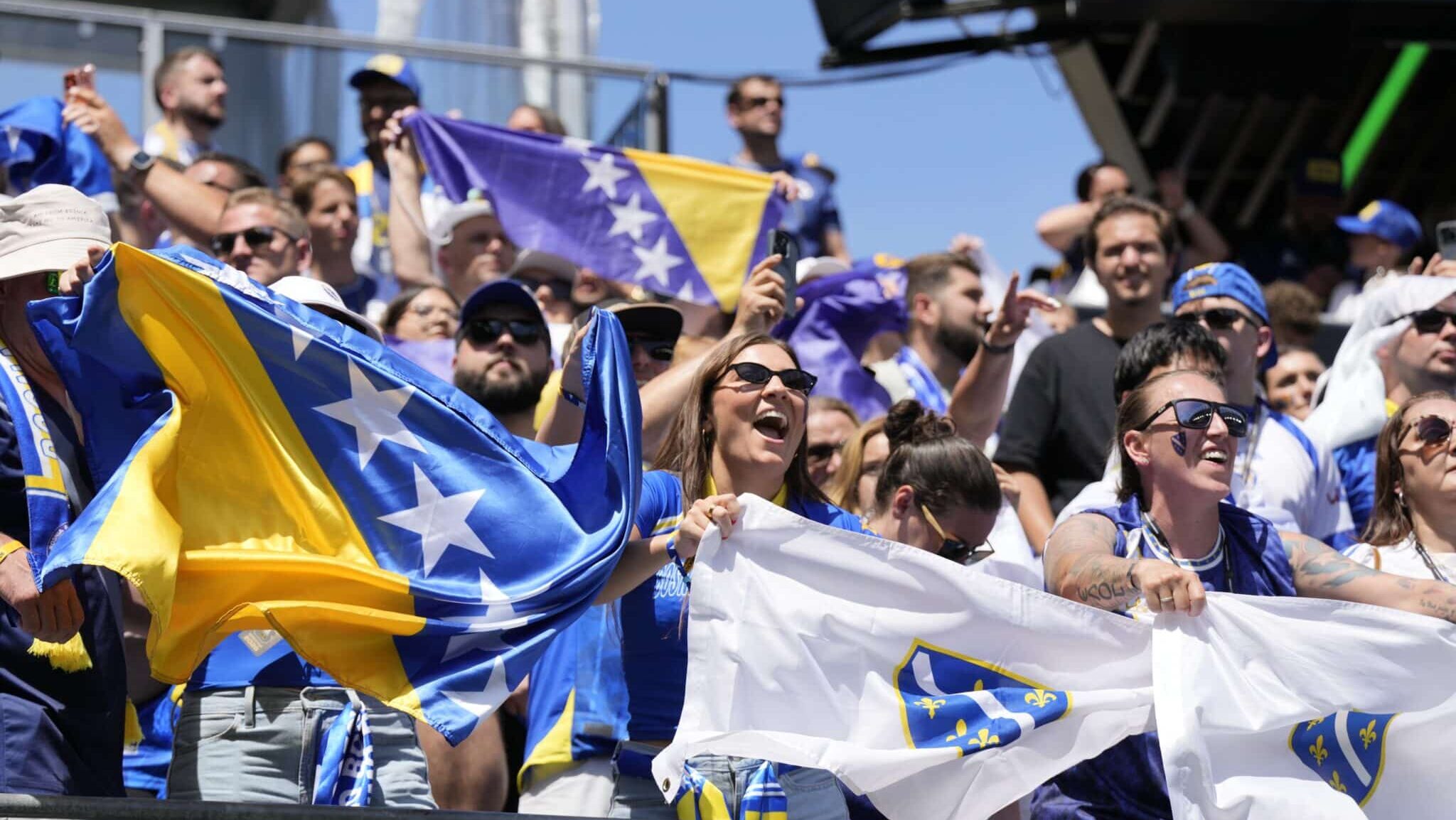
The fans’ euphoria over Bosnia and Herzegovina’s footballing success is countering the disparaging attitudes that some in the United States still express about the Balkan country, says Bosnian-American writer Ermina Veljacic, who grew up as a refugee.
 Ermina Veljacic



In 2021, when I was interviewed at a Srebrenica genocide memorial event at Daley Plaza in Chicago, I had an on-camera mishap myself. I was talking to a local Bosnian radio station that was also video recording. The interviewer asked my take on why genocide remembrance events are crucial for younger Bosnian generations and what compelled me to be part of the event’s organising team. My response started in Bosnian but then something happened. I went blank. My brain searched, hunted, dug deep for the words. But nothing came. “I’m sorry,” I said, taking a long pause. “I’m having difficulty keeping up this conversation in Bosnian.”
The importance of genocide commemoration events, memory and the effects of surviving genocide and war, aren’t new topics. As a refugee, growing up as the only Bosnian family in my neighbourhood on Chicago’s south side, most of my existence had been spent explaining my identity, my country of origin, and the circumstances that led me to be the only white kid in a class of Latino and Black students, and why I didn’t fit the mould of the white people they were used to seeing.
But to translate that experience and feelings into Bosnian felt impossible. My parents had avoided talking about their experiences and the Bosnia they endured, living in a refugee camp for months before we arrived in the US, so most of my knowledge about its history comes from books and learning on my own.
“Izvini, babo,” I apologised, staring into the camera, speaking as if my father was standing in front of me. “I need to continue in English, if that’s OK.”
Luckily, the interviewer was kind and signalled for me to continue. But I took a silent punch to the gut. In retrospect, I didn’t have anything to feel guilty about. My fluency level just wasn’t there because of my experience of growing up disconnected from Bosnian community.
Still, there was a strong, irrational shame. Even though I had survived being homeless, and countless unfortunate circumstances while assimilating and trying to make a living and life in the United States, the language barrier distanced me even more from my Bosnian roots.
Looking at it through the obvious differences in class among Bosnians of the diaspora as I got older didn’t help. My family of nine had less money than other Bosnians who took yearly trips to Bosnia to spend time back home. I still haven’t had the opportunity to go for the first time, which only fuelled the belief that I wasn’t Bosnian enough around Bosnians, and somehow too Bosnian, but not American enough, around others. The burden was always there.
I suspect Velez doesn’t truly understand the weight of her words. On a global stage, she expressed having no desire to learn about a country that qualified for the World Cup in 2014 for the first time and is now in its second pass in the tournament, with a 40-year-old team captain who survived the genocide against Bosnia’s Muslim population.
That captain learned to play soccer under sniper fire, evading death when his friends were killed by a bomb in the spot they’d play together, on a day his mother forbade him to go out – now surrounded on the field by the next generation of stars, members of the Bosnian diaspora as young as 18 – whose parents escaped death and sought refuge in the US, allowing them the opportunity now to play for that homeland.
Genocide denial persists