



Are they elitist or universal? Either way, they’re Christopher Nolan’s new film The Odyssey shows they’re going viral, says Eliot Wilson Classics – the study of ancient Greece and Rome, their languages, literature, history and art – is perceived not only as elitist, but as irrelevant, abstruse, without concrete value
 Adam Bloodworth



Thursday 09 July 2026 4:39 am | Updated: Wednesday 08 July 2026 6:39 pm
Are they elitist or universal? Either way, they’re Christopher Nolan’s new film The Odyssey shows they’re going viral, says Eliot Wilson
Classics – the study of ancient Greece and Rome, their languages, literature, history and art – is perceived not only as elitist, but as irrelevant, abstruse, without concrete value and self-indulgent. That you could grow up to be like Boris Johnson, who studied classics, is not a promising slogan.
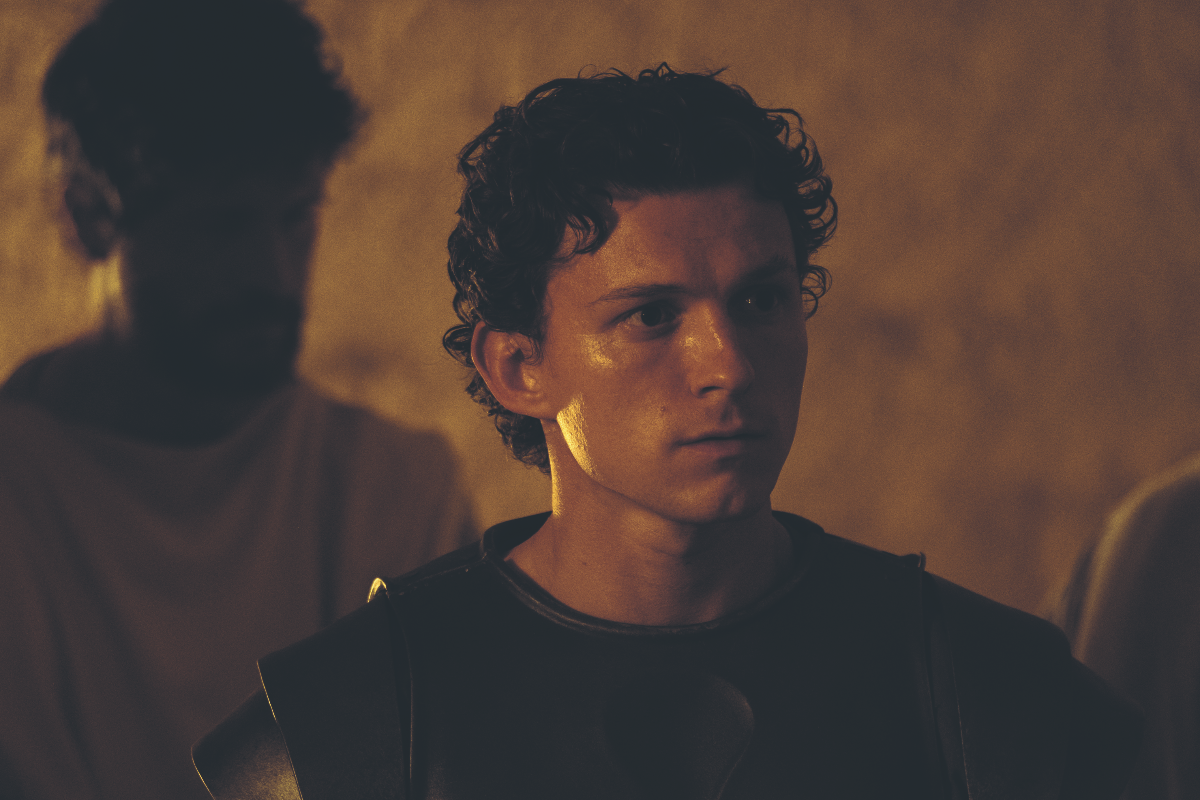
But this month Christopher Nolan’s latest film, a $250 million blockbuster starring Matt Damon, Anne Hathaway, Tom Holland, Robert Pattinson, Lupita Nyong’o and Zendaya, opens in cinemas. Tickets for early screenings of the film, one of City AM’s films to watch in 2026, went on sale a year in advance. This is the epitome of mainstream.
The film is The Odyssey, Nolan’s interpretation of the 8th/7th century BC epic poem attributed to Homer, which tells the story of the 10-year homeward journey of Odysseus, King of Ithaca, after the Trojan War. Along with The Iliad, describing the last phase of the war, The Odyssey is one of oldest works of literature in the world.
It survives in 24 books of dactylic hexameter written in an archaic Greek dialect which sounded mannered even to citizens of ancient Athens in its golden age 2,500 years ago.
#mc_embed_signup { background: #fff; clear: left; font: 14px Helvetica, Arial,sans-serif; width: 100%; max-width: 600px; margin: 20px 0; } #mc-embedded-subscribe-form { margin: 20px 0 !important; } .newsletter-form-flex { display: flex; gap: 0; align-items: center; margin-top: -10px; } .newsletter-form-flex input[type=”email”] { flex: 1; padding: 2px 10px; border: 1px solid rgb(18, 22, 23) !important; border-radius: 12px 0 0 12px !important; } .newsletter-form-flex input[type=”submit”] { padding: 4px 10px !important; margin: 0 !important; background-color: rgb(18, 22, 23) !important; color: rgb(255, 255, 255) !important; border: 1px solid rgb(18, 22, 23) !important; border-radius: 0 12px 12px 0 !important; } .newsletter-banner-content { margin-bottom: 15px; } .newsletter-banner-content h2 { margin: 0 0 10px 0; font-size: 18px; font-weight: 600; } .newsletter-banner-content p { margin: 0 0 10px 0; line-height: 1.5; } .newsletter-banner-content ul, .newsletter-banner-content ol { margin: 0 0 10px 20px; } .newsletter-banner-content a { color: #0073aa; text-decoration: none; } .newsletter-banner-content a:hover { text-decoration: underline; } .newsletter-banner-content img { max-width: 100%; height: auto; margin: 10px 0; } #mc_embed_signup #mce-success-response { color: #0356a5; display: none; margin: 0 0 10px; width: 100%; } #mc_embed_signup div#mce-responses { float: left; top: -1.4em; padding: 0; overflow: hidden; width: 100%; margin: 0; clear: both; } The Odyssey has ‘a bit of everything’
Nolan has called The Odyssey “foundational”, adding “there’s a bit of everything in it. I mean, it truly contains all stories.”
He makes a strong case. Classics in academia might be seen as remote and esoteric, but Greece and Rome were self-evidently the wellsprings of Western civilisation. Homer sits at the beginning of our literary tradition, and these stories are our stories.
We instinctively know this. The Odyssey will be a box office success not just because of its director and cast, but because the narratives resonate deep within us. We have as great an appetite for stories – historical and invented – from the classical world as we have ever had.
Sir Stephen Fry has written four books over the past decade – Mythos, Heroes, Troy and Odyssey – which retell Greek mythology. BBC Radio 4’s Natalie Haynes Stands Up for the Classics examines mythological and historical figures from antiquity, and Haynes has written three novels based on Greek mythology.
In academia, classics are in decline
You can point to Robert Harris’s Cicero trilogy and Madeline Miller’s The Song of Achilles and Circe. Murmuring in our ear to maintain our grasp of the history of the ancient Mediterranean is a national treasure, Dame Mary Beard.
How do we resolve this strange conflict, the idea that books and films with huge popular appeal can emerge from a discipline we think is privileged, exclusionary, dusty and in decline?
Decline is the overall theme for classics as an academic discipline. Today, only 22 or so of more than 160 universities in the UK offer classics degrees; most do not expect students to have studied Latin and Greek before and offer appropriate tuition, and just a handful require mastery of both languages for the final degree. This change in higher education is part of a wider pattern of decline in the teaching of Latin and Greek in schools.
Less than 10 per cent of state secondary schools offer Latin, and under two per cent offer Greek; in the independent sector it is around two-thirds and a third respectively.
Read more London Indian Film Festival Returns with Star-Studded 2026 Programme Led by Aamir Khan Are classics elitist?
This has an inevitable effect on university entrants: 70-80 % of pupils sitting Latin A-level and more than 90 % of those taking Greek attend the country’s fee-paying schools.
The cumulative effect is this perception that classics is elitist, the preserve of students from private schools, a discipline for the privileged and affluent.
In 2021, the Education Secretary, Gavin Williamson, announced a £4 million scheme, the Latin Excellence Programme (LEP), to widen access and increase the numbers of Latin GCSE candidates.
Williamson – hardly the scion of privilege, educated at a comprehensive school in Scarborough before reading social sciences at Bradford – framed the LEP in terms of equality of opportunity. He nodded to Latin’s elitist image but argued that “the subject can bring so many benefits to young people, so I want to put an end to that divide”.
The LEP was modest in scale, establishing a “centre of excellence” which would work with up to 40 schools – there are 4,200 state secondary schools in the UK – as a four-year pilot scheme. In Whitehall terms, it cost next to nothing, 0.0006 % of overall public expenditure.
Stories like The Odyssey compel us. They are where we began
At the end of 2024, the current government announced the LEP would end in February 2025, the third year of the pilot and halfway through the school year. The Department for Education explained the need for cost savings, but the tiny fraction of expenditure it represented made that ring false.
Some believed that the Education Secretary, Bridget Phillipson, regarded even the concept of Latin tuition for some state school pupils but not all as too redolent of privilege, while the timing, mid-year, seemed almost vindictive.
The end result was a cost saving too small to be noticed and fewer state school pupils studying and taking exams in Latin, while independent schools would be unaffected.
But politicians follow as well as lead public opinion, and many probably agree with the DfE’s bullishly utilitarian assertion that “our expert-led curriculum and assessment review will ensure every young person leaves school ready for work, life and the future”.
Learning The Odyssey is hard work
We need to untangle this knot in the public mind. It is not difficult to understand the enduring popularity of classical texts and stories. These stories compel us because they are where we began. The myths and legends of Greece and Rome use the images of wooden horses, golden fleeces and one-eyed giants, but emotionally they speak the language of character, telling us about heroism, fear, love, pity, cruelty, loyalty, betrayal.
The contradiction within us is perhaps a very modern one. We delight in the power and resonance of ancient history and literature when it is placed before us by Nolan or Beard or Fry.
But handling the building blocks of these, learning complex, unfamiliar, strange-sounding languages and learning them with precision – this we dismiss as an irrelevant, indulgent privilege.
Yes, it is certainly hard work, but so is life. As Virgil reminds us, Labor omnia vicit improbus et duris urgens in rebus egestas.
Read more Fernie Cultural Universe: Where Eastern Myths Meet European Animation Soul Within a Medieval Castle
Similarly tagged content: Sections Categories People & Organisations