
Slapping travel bans on EU social media regulators in itself is a violation of free speech rights, US judge tells Trump administration.
 Eliza Gkritsi



President Donald Trump’s secretary of state, Marco Rubio, announced in May 2025 that the U.S. government would apply visa restrictions on “foreign nationals who censor Americans.” The policy was widely seen as targeting the officials enforcing the European Union’s Digital Services Act and the United Kingdom’s Online Act, as well as the civil society groups producing research to support the enforcement.
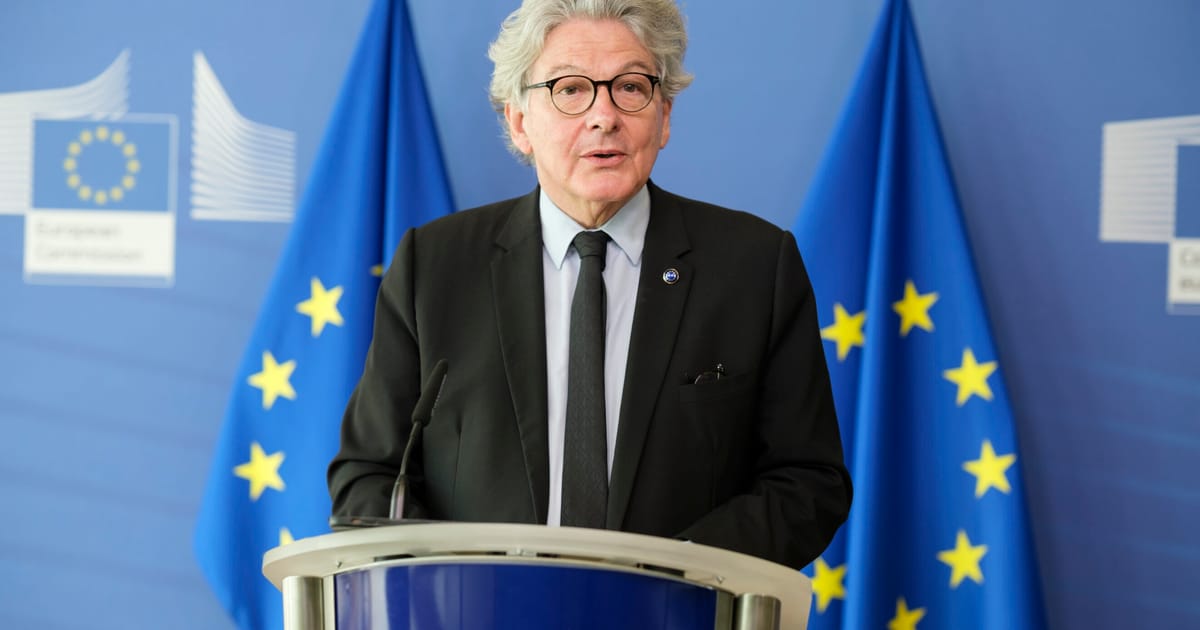
The U.S. enforced the policy in December last year to revoke the visas of five people, including Breton and Imran Ahmed, CEO and founder of the Center for Countering Digital Hate.
In his opinion, released on Tuesday, the judge argued that the visa policy “burdens protected speech and association on the basis of viewpoint,” in a case brought by a group of researchers in March seeking to overturn the policy.
Ahmed, one of the five people targeted by the policy, said in a statement: “Censorship occurs when the government tries to revoke the green cards of people whose views its biggest donors would prefer not to hear. Holding up a mirror to power is not censorship. Deporting the person holding the mirror is.”
HateAid’s Josephine Ballon, another sanctioned person from civil society, said: “We are very relieved by the decision,” but added that the decision doesn’t mean that entry bans have been lifted and doesn’t address the financial sanctions also imposed on the individuals.
The U.S. State Department did not respond to POLITICO’s request for comment. Thierry Breton declined to comment.
Océane Herrero contributed reporting.