On the same day that the UN human rights office called out genocide in Gaza, the European Commission told me there was no public interest in releasing 17 documents it wants to keep secret on the enclave.
 Nikolaj Nielsen



On the same day that the UN human rights office called out genocide in Gaza, the European Commission told me there was no public interest in releasing 17 documents on funding reports it wants to keep secret on the enclave.
The refusal was signed on Tuesday (23 June) by Michael Karnitschnig, the acting head of the commission’s branch dealing with the Middle East.
“We have examined whether there could be an overriding public interest in disclosure, but we have not been able to identify such an interest,” he said.
Perhaps Karnitschnig is unaware that more than 70,000 people have been killed in Gaza since the Hamas terror attacks on Israel in October 2023.
He may also have missed criticism of Israel’s campaign from the EU Commission staff, European Parliament resolutions, various protests in major European cities, flotillas, and discussions among EU leaders at several summits.
But perhaps Karnitschnig’s public interest is limited to the tightly wrapped Brussels bubble he operates in, narrowed down even further to the office he works from.
I understand it. I too have seen what this bubble can do. It limits your horizon and perspectives, often by people obsessed with pay grades.
To help Karnitschnig in his effort, I suggest he try Google Search. It has been around for years.
The 17 documents he refuses to release are about what infrastructure the EU has financed to help the people in Gaza.
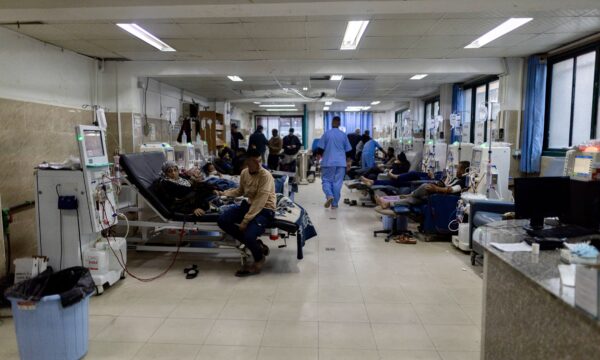
This includes financing solar panels, water desalination projects, renewable energy, and possibly other infrastructures like hospitals and schools.
I had asked for the documents in early February, in a freedom of information request spanning the years 2020 to the end of 2023.
EU taxpayers funded many of these projects, which have since most likely been destroyed. Gauging the war’s impact is what accountability transparency is all about.
Even his boss, Dubravka Šuica, told MEPs earlier this month that the EU has requested Israel to return or compensate for EU-funded assets on every occasion that it demolished, dismantled, or confiscated such assets.
To be fair, Karnitschnig was kind enough to provide links to four related public documents, one per project, as well as two physical annexes [here and here] that are also already public. But this is no substitute for the budget reports it has under lock and key.
He also invoked the protection of international relations. I suppose he doesn’t want to upset EU relations with Palestine or Israel. Probably Israel.
The projects he cites are also either suspended or completed, and the implementing partners are public institutions and NGOs. Among them are Germany’s KfW development bank, Oxfam Novib, and WE WORLD.
One of them sought to help treat water in Khan Younis, a city in southern Gaza Strip. It has been wiped from the map, following an Israeli ground invasion.
EUobserver has since tried to compile the information in an investigation using multiple sources, in a story we published last week. We low-balled the figure to €150m, an estimated sum that also includes the West Bank.