As fuel runs out in Crimea and Ukrainian drones stalk convoys, Putin’s war bloggers are openly warning men to pack “emergency bags” for a mobilisation the Kremlin can no longer rule out.
 Roman Pataj



Every day, the Ukraine Battlefield update newsletter offers a clear look at how the war is unfolding on the ground. Subscribe for free here to get the full text delivered to your inbox.
Since the start of the Russian invasion of Ukraine, which was supposed to last three days, maybe a week, 1,558 days have passed and this sentence has now appeared in the Russian press: “Russian regions and large companies are arming themselves against attacks by Ukrainian drones.”
“Do not travel to Crimea with your family. There is no fuel on the peninsula, the attached footage shows queues at filling stations, and the ration is a maximum of 20 litres per person per day,” the well-known war correspondent Roman Saponkov also warned Russians on Sunday ahead of the holiday season.
He added that the road “through the new territories”, as Russians call the occupied parts of Ukraine, “is life‑threatening, the enemy is carrying out remote mining on two stretches of the R-280 road, and there are civilian fatalities.”
It is not only the holiday season that is currently collapsing for Russians, but also their plan for a successful continuation of the war. According to all available signs, we are witnessing a fundamental qualitative change in the course of the war, which is creating growing tension in Russian society.
As we will show below, there is increasingly serious talk in Russia about declaring mobilisation, which Putin had tried in every way to avoid. The situation on the battlefield is now such that without it the Russian army is unable to advance. Its declaration, however, would inevitably be highly unpopular and a scenario in which it triggers serious upheavals cannot be ruled out.
An increasing number of Russian Z‑channels admit that the Russian offensive has failed. Most recently, “Two Majors” wrote on Sunday about a “stagnation”, which they linked to the Ukrainian drone offensive.
The Russian army is experiencing enormous difficulties mainly in the south, but no longer only there. Let us start with that. The shortage of fuel, and now also of other goods, is so severe that the Russian commentator Fighterbomber asked his audience how it was possible that Crimea was suffering so much if the Crimean Bridge was fully operational and only the land corridor via Mariupol and Melitopol was under drone attack. The answers reveal that Russia’s problem is much bigger than it appears, and is due to long-running, if less visible, operations in the Kerch Strait:
In 2022 the Crimean Bridge was heavily damaged. Although the Russians repaired it, people familiar with the matter told Fighterbomber that since then rail transport over it has only been allowed in exceptional cases.
At the same time, in fear of damage, the owners of rail tankers are unwilling to provide them for journeys to Crimea. There were three rail ferries in the Kerch Strait capable of carrying entire trains, but as Fighterbomber wrote, all of them are damaged and a new one is not due to arrive until September. “In addition, there is a shortage of seamen to crew them.” “The waiting time for car ferries is five days.” “In the ‘new territories’, tanker-truck drivers are not willing to drive.”
Russian truck drivers on the “land bridge” highway to Crimea face a dangerous dilemma.
Ukrainian strike UAVs are attacking at night, so headlights could be fatal.
But minefields are now being scattered on the road—how can drivers see them in time to avoid without headlights? https://t.co/m078XTe1ux pic.twitter.com/Qq8q1bCoE2
— Roy🇨🇦 (@GrandpaRoy2) May 31, 2026
This is by no means the only source with the same reports. “There is a fuel collapse in Crimea,” the channel Poznámky veterána (Veteran’s Notes) admitted outright. However, it did not see the cause in an inability to bring fuel onto the peninsula, but in the destruction of fuel depots (not on Crimea itself, but think of Tuapse and similar places where drones destroyed large fuel storage tanks).
“We are able to bring fuel onto the peninsula, but we simply have nowhere to store it. In all the enemy’s actions related to attacks on Russian energy infrastructure, you can see the systematic nature of the campaign, and the tempo of these attacks is only increasing,” this source added.
In the following video, the road beyond Mariupol is provisionally protected by Russian infantry.
The operation to destroy Russian logistics is, however, even more complex and is not limited to ground transport alone. Ukraine is constraining that not only with conventional drone strikes, but is now dropping mines onto roads from unmanned aircraft. In addition, they are targeting tankers. This weekend a drone attacked a ship in occupied Berdiansk, but not only there. The video shows an attack on Russian territory:
USF Conducted a Series of Deep Strikes Against Enemy Fuel Infrastructure
On the night of May 30, operators of the Unmanned Systems Forces carried out a series of deep strikes against the enemy’s fuel infrastructure.
🎯Operators of the @1usc_army struck a shadow fleet oil tanker… pic.twitter.com/KZJpR1NQKu
— 🇺🇦 Unmanned Systems Forces (@usf_army) May 30, 2026
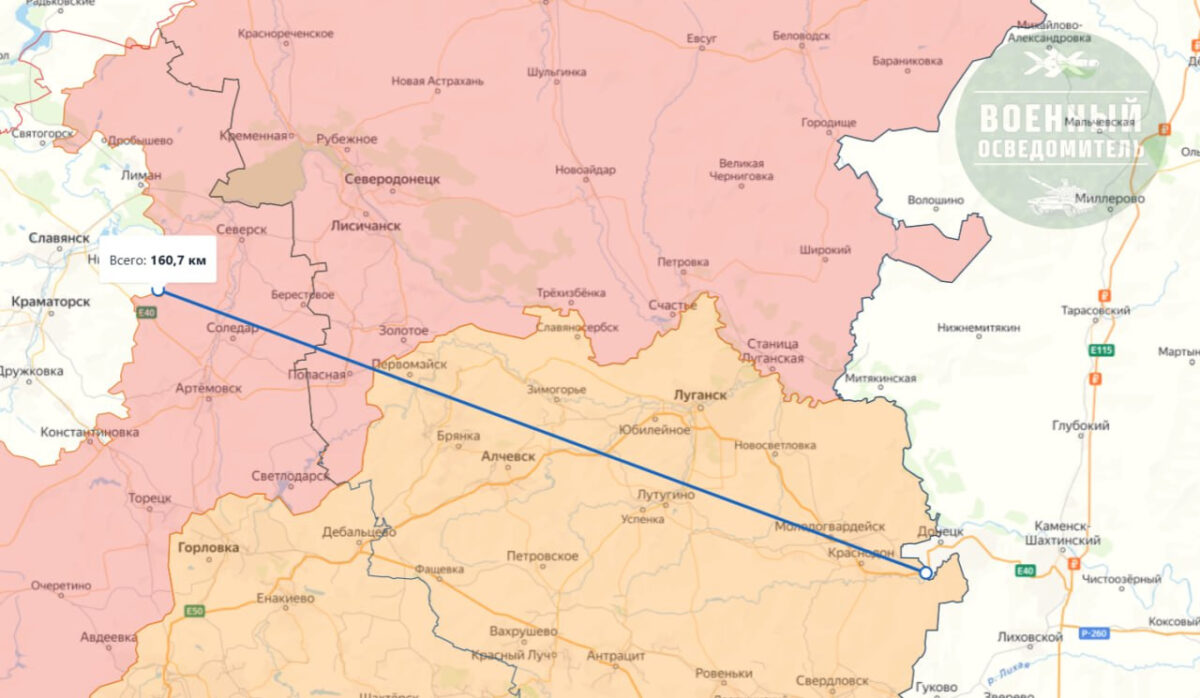
The range at which drones strike is also increasing. They are already hitting lorries waiting at the border between Russian territory and the occupied areas in Ukraine. As the channel Military Informant wrote, that is already 160 km behind Russian lines: “If it increases the number of its Hornet, Baton, RAM-2X and other kamikaze drones, the Ukrainian army will be able to unleash terror directly at the border crossings.”
It is still not certain whether there will be mobilisation in Russia, but Putin’s regime is preparing for it. Last Thursday, the well-known Telegram account Zapisky Veterana (Veteran’s Notes) called on its readers to write in if they had personally encountered the issuing of a mobilisation order.
As it described, this is mostly a pink document that is glued into a military ID booklet. It states where and when a particular man of conscription age must report in the event mobilisation is declared. It is therefore not a declaration of mobilisation itself, but an administrative measure that would make it easier and faster if mobilisation were announced.
In peacetime such a document does not represent an obstacle to travelling abroad, but in the event of mobilisation it must be followed immediately. Failure to comply with the instructions entails criminal liability and the risk of up to ten years behind bars.
“Has anyone received this?” the author asked at midday on Thursday, because he had information that in many Russian regions the authorities had begun sending out such documents.
Just eleven minutes later he posted a second update: “The situation is such that in the autumn there will either be peace or mobilisation. Therefore I would advise men of conscription age, just to be safe, to prepare an emergency bag.”
On the same day, a few hours later, anti‑Putin Russian and former associate of Alexei Navalny, Yan Matveyev, wrote an almost identical message: “Russia is actively preparing for mobilisation … people are increasingly receiving mobilisation orders requiring them, in the event a new mobilisation is declared, to report to the military registration and enlistment office without receiving a summons.”
[embedded content]
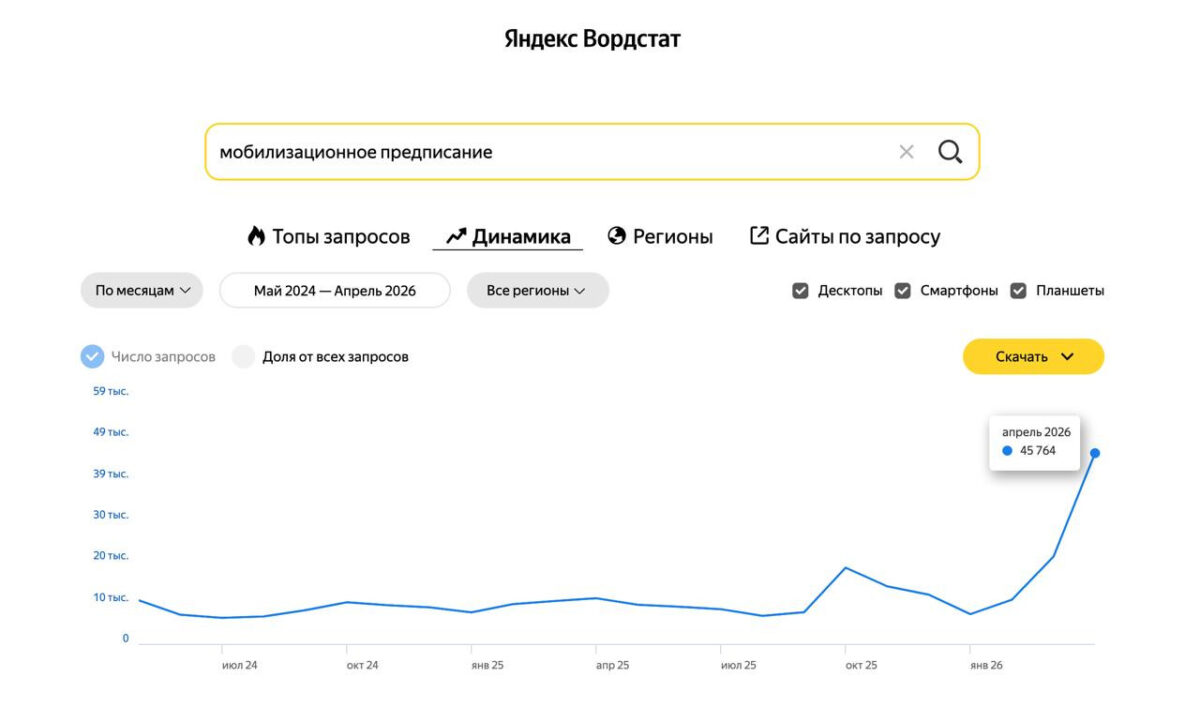
The possibility of a new mobilisation is also suggested by a sharp rise in the number of searches on the Russian internet in which users are asking specifically about the mobilisation order. The Telegram account War Zone published a graph showing the change on the Russian search engine Yandex.
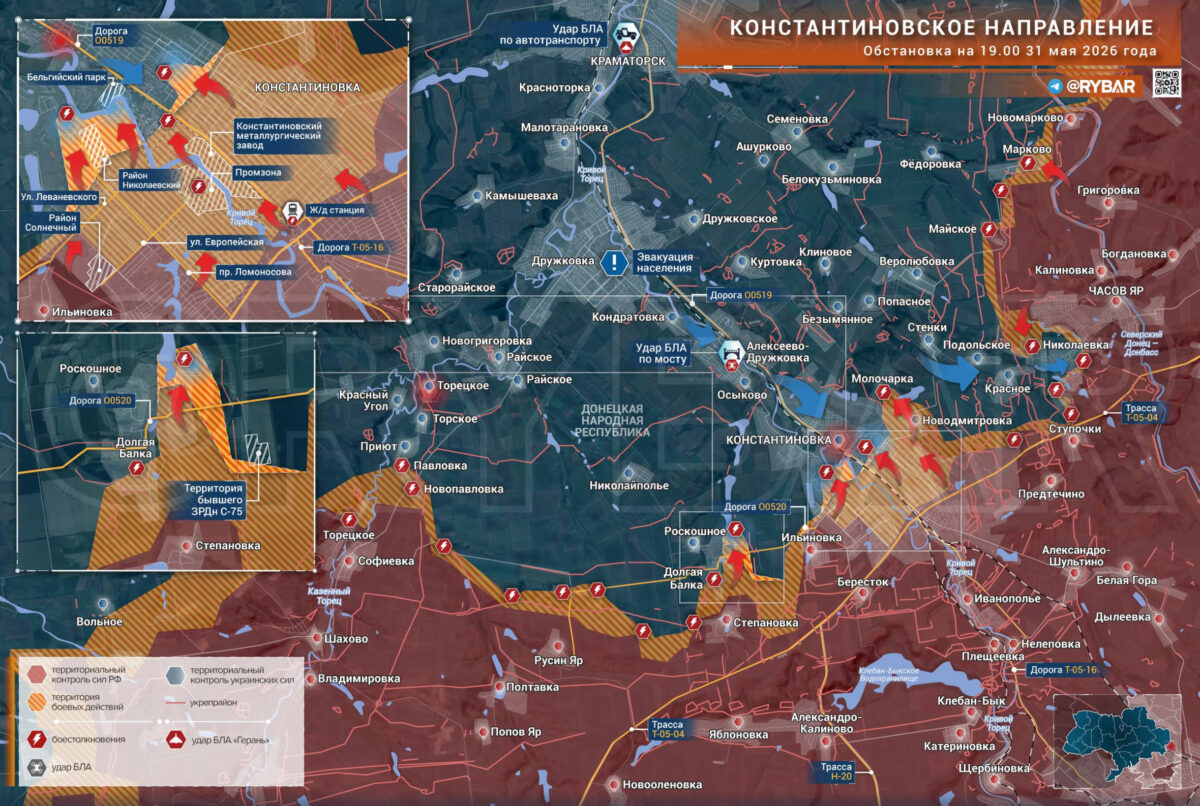
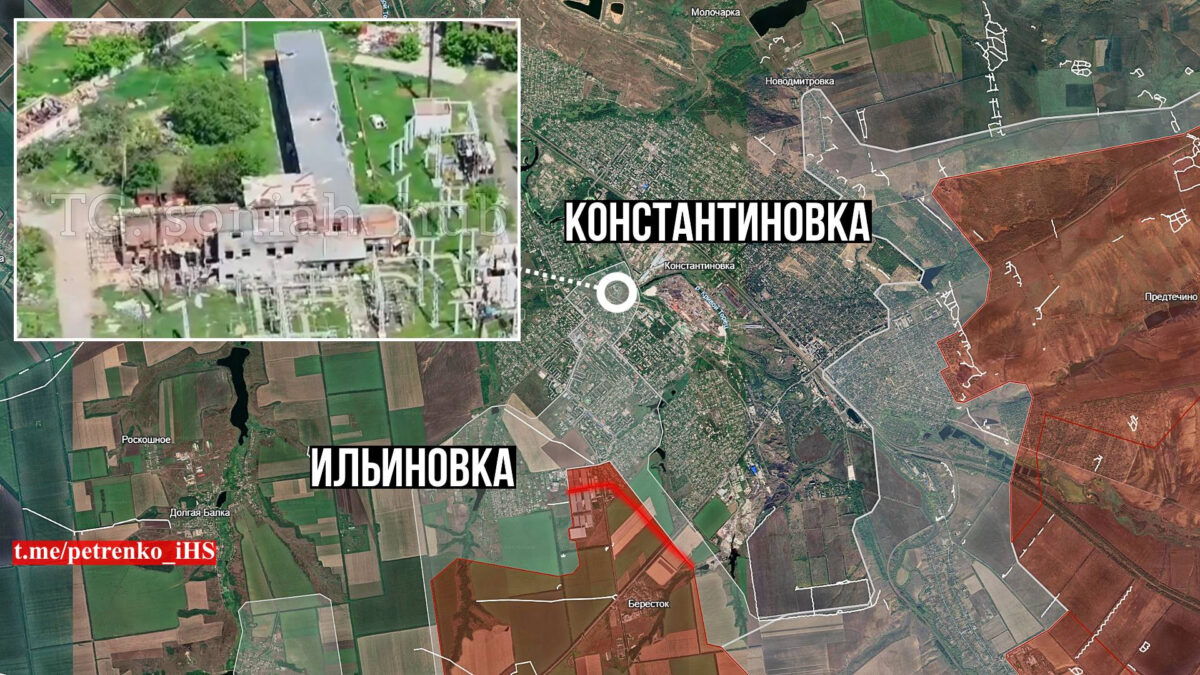
The situation in Kostyantynivka has deteriorated again; the only disagreement is over how much. “Liberation is approaching,” the Russian channel Rybar reported in traditional Kremlin newspeak about developments in the battle for Kostyantynivka. In that language, “liberation” means occupation and the near‑total destruction of the town. In its description of the fighting, it claimed that Russian infantry was pushing into an ever larger part of the town and that the moment was approaching when it would break through the defences in the village of Dovha Balka to the west of the town.
“The capture of the village of Dovha Balka is essential for developing an offensive towards Olexiyivo‑Druzhkivka. The position of the Armed Forces of Ukraine here is deteriorating as Russian troops destroy more and more crossings over the Kryvy Torets river. Building pontoon bridges takes time, and pontoons are far less resistant to regular strikes than concrete structures,” Rybar added.
Ukrainian analyst Petrenko is also watching events around this village. He confirmed that the Russians are attacking there and warned that “if it is captured together with Stepanivka, the pressure on the western part of Kostyantynivka may increase significantly.”
The first map comes from the Russian Rybar channel. More than half of Kostyantynivka – the inset at top left – is, according to him, either under Russian control or a grey zone (marked orange on his map). Dovha Balka is, according to the same source, half‑captured (inset at bottom left).
On Petrenko’s map, the situation in Dovha Balka is nowhere near as serious. First, it makes clear how small a settlement has been fought over for many weeks; second, he marked the northern limit of the Russian advance in exactly the same place as Rybar, but it is most likely that this involved an individual or a small group that has since been eliminated. The Russians, however, often use such incursions to expand the area that, on their maps, is shown as controlled by the Russian army.

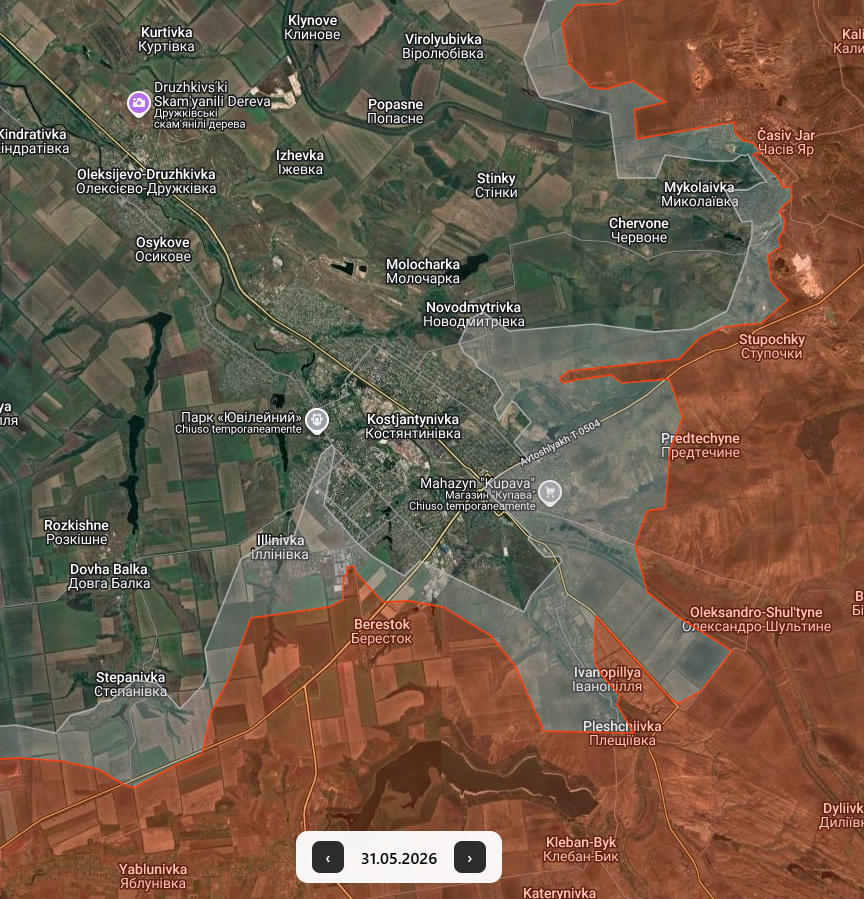
It is very similar with Kostyantynivka itself. Here too, there is a difference in interpretation.
Nevertheless, it is basically the only place – perhaps with the exception of side directions in Sumy and near Vovchansk – where the Russians are showing optimism. One of the most clear‑eyed Russian accounts, Military Informant, also claimed that Kostyantynivka is turning into a second Pokrovsk.
“Just as in Pokrovsk, once Russian infantry held on at the edge of the town and began to mass there, Ukrainian drone operators lost the ability to hit them effectively between the buildings,” this source claimed.
Among other things, it illustrated its view of how the battle is developing with this map:
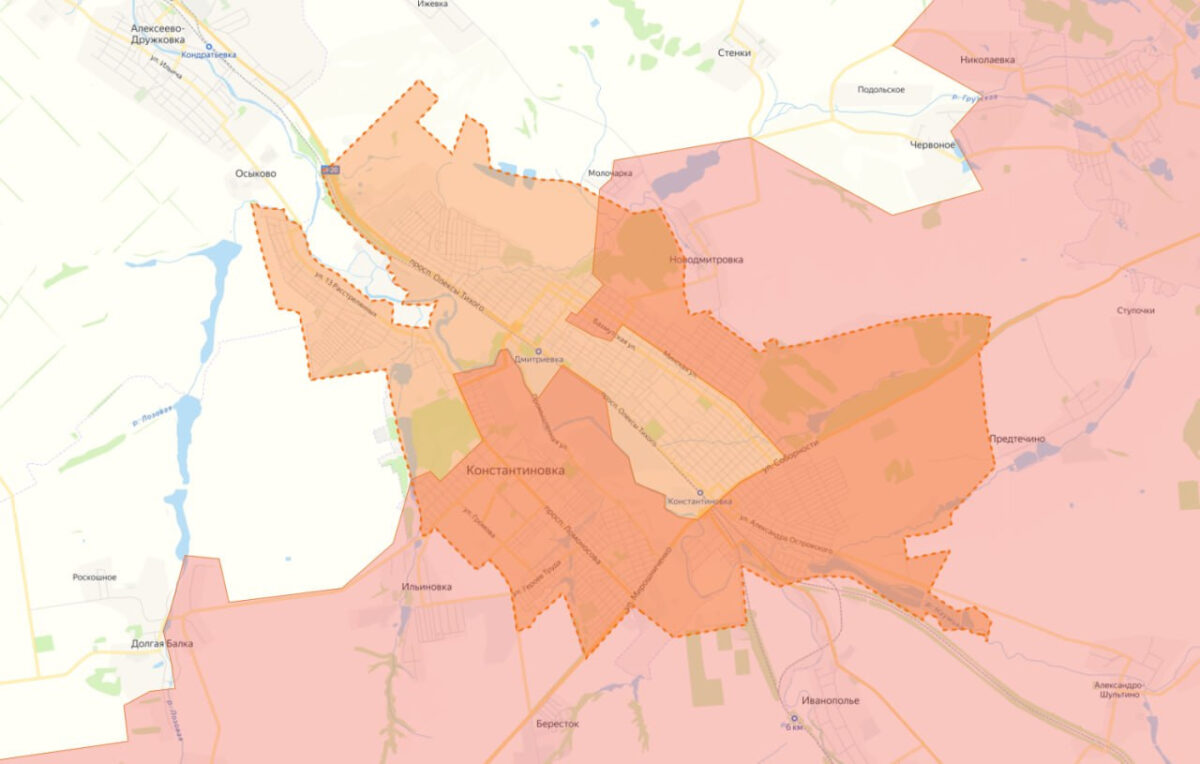
In this case too, the view from the other side is different. Specifically, the OSINT account Playfra also sees an emerging funnel, but draws it significantly wider than the Russians do.
On the eastern flank of the Zaporizhzhia axis, the Ukrainian army has liberated dozens of square kms. This time the situation is the opposite of Kostyantynivka, and the Russians are not reporting anything serious.
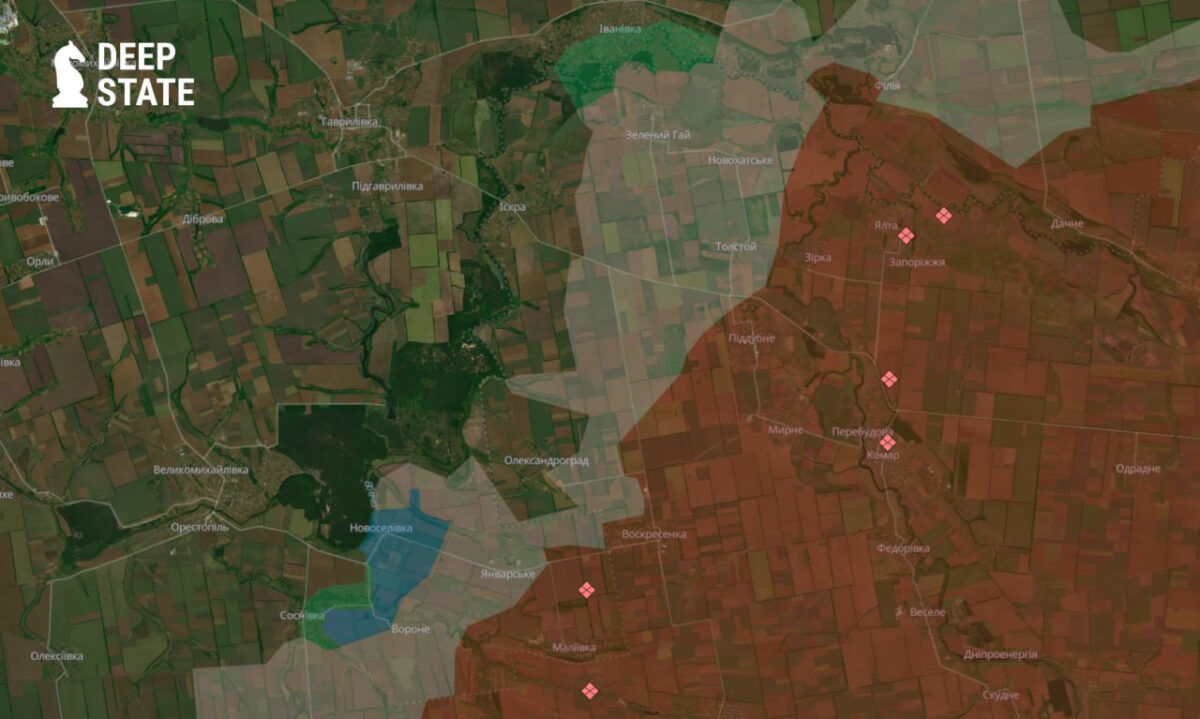
The claims of the Ukrainian command were confirmed on Friday by the Ukrainian OSINT project DeepStateUA: “We confirm the information from the General Staff of the Armed Forces of Ukraine about the successes of the Armed Forces of Ukraine in the Oleksandrivka sector. The Armed Forces of Ukraine have liberated territory near Novoselivka and are clearing enemy forces from the area around the villages of Vorone, Sichneve, Piddubne, Tovste, Novohatske and Zelenyi Hai.”
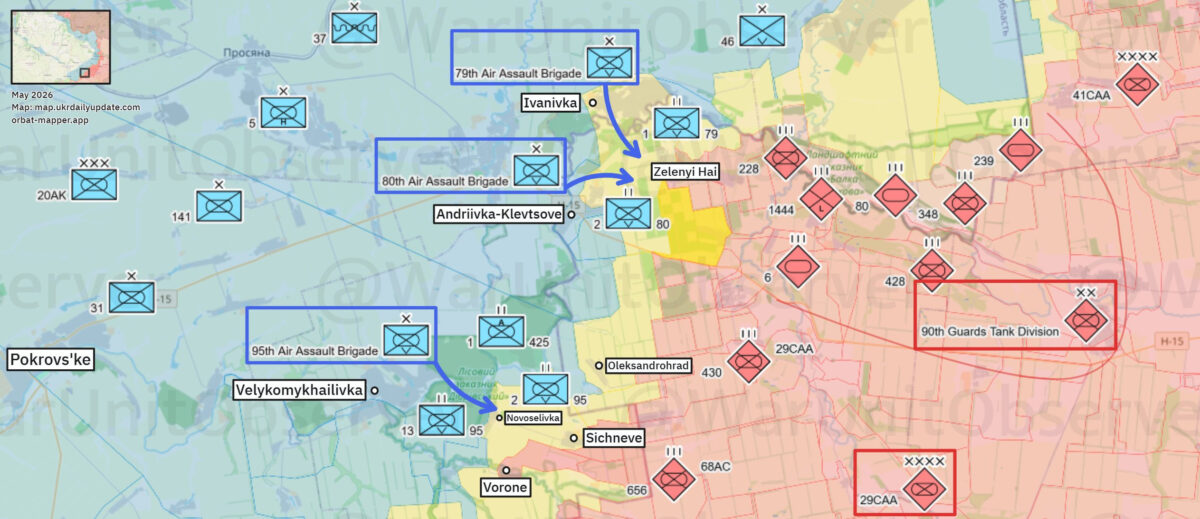
The independent project Unit Observer also commented on the Ukrainian success. As its name suggests, it monitors the movement of units along various sections of the front. In this case it identified three airborne brigades behind the Ukrainian advance, specifically the 79th, 80th and 95th. This repeats the situation from February, when elite units of the Ukrainian army also advanced on the same axis. Russian accounts speak only of intense meeting engagements.
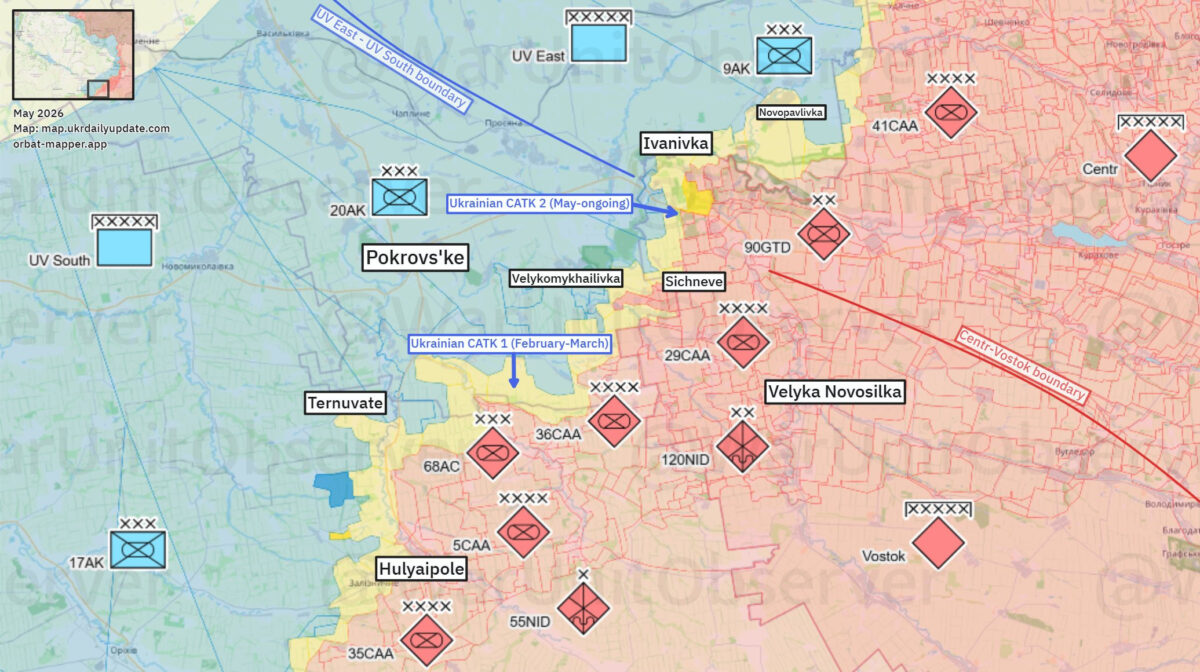
The same source also drew a map from which you can see how close together the two operations took place. The location of the current one is in the centre, slightly towards the top. The February counter‑attack from the Ternuvate area ran almost through the middle of the map.
Not because this is expected to happen, but for easier orientation – if the current attack were to continue, it would head roughly towards the well‑known town of Kurakhove, shown in the centre‑right of the map.
Videos of the day
When conditions line up favourably, even a large Geran can be shot down with small arms. It was flying low enough over an area where good marksmen from the Ukrainian border guard in Chernihiv region happened to be present.
Footage of a group of Ukrainian border guards shooting down an incoming Russian Shahed attack drone at near point blank range with massed small arms fire. pic.twitter.com/ArXoZNRUk8
— OSINTtechnical (@Osinttechnical) May 31, 2026
An M113 armoured evacuation carrier survived nine drone attacks while heading out to casualties on the Kostyantynivka battlefield.
A MiG-29 hunting drones with guided missiles. In this video you can see how short the firing distance is and that it is flying at a very low speed.
🔥An 🇺🇦Ukrainian MiG-29 fighter jet shot down 🇷🇺Russian Shahed strike drone with an air-to-air missile while repelling a drone attack on the Rivne region pic.twitter.com/v87Wo52wZW
— Cloooud |🇺🇦 (@GloOouD) May 31, 2026
Ukrainians boasted that they had set two rare Tu-142 maritime patrol aircraft on fire at the Taganrog airfield. The type and the outcome match, but according to the Russians these were aircraft that had not been used for two decades. Taganrog is so close to the front that it really does seem very unlikely they would have kept them in active service there.
USF Destroyed Tu-142 Aircraft and an Iskander Missile System Deep Behind Enemy Lines
Operators of the @1usc_army destroyed two Tu-142 aircraft at a military airfield in Taganrog, Rostov Oblast, russia. The Tu-142 is a long-range maritime patrol and anti-submarine aircraft used… pic.twitter.com/2cDhhGChG0
— 🇺🇦 Unmanned Systems Forces (@usf_army) May 30, 2026
What the losses are
By Monday (11 May) Russia had demonstrably lost 23,556 pieces of heavy equipment (on Monday (11 May) it was 23,439). Of these, 18,551 (18,444) pieces were destroyed by the Ukrainians, 979 (971) were damaged, 1,199 (1,197) were abandoned by their crews and 2,827 (2,827) were captured by the Ukrainian army. This includes 4,394 (4,390) tanks, of which 3,293 (3,297) were destroyed in combat.
Ukraine has lost 11,397 (11,253) pieces of equipment, of which 8,863 (8,737) were destroyed, 678 (666) damaged, 669 (665) abandoned and 1,187 (1,185) captured. This includes 1,424 (1,422) tanks, of which 1,089 (1,087) were destroyed in combat.
Note: Neither side regularly reports its dead or destroyed equipment. Ukraine publishes daily figures for Russian casualties and destroyed equipment, which cannot be independently verified. In this overview we use data from the Oryx project, which since the start of the war has compiled a list of equipment losses documented exclusively by photographic evidence.