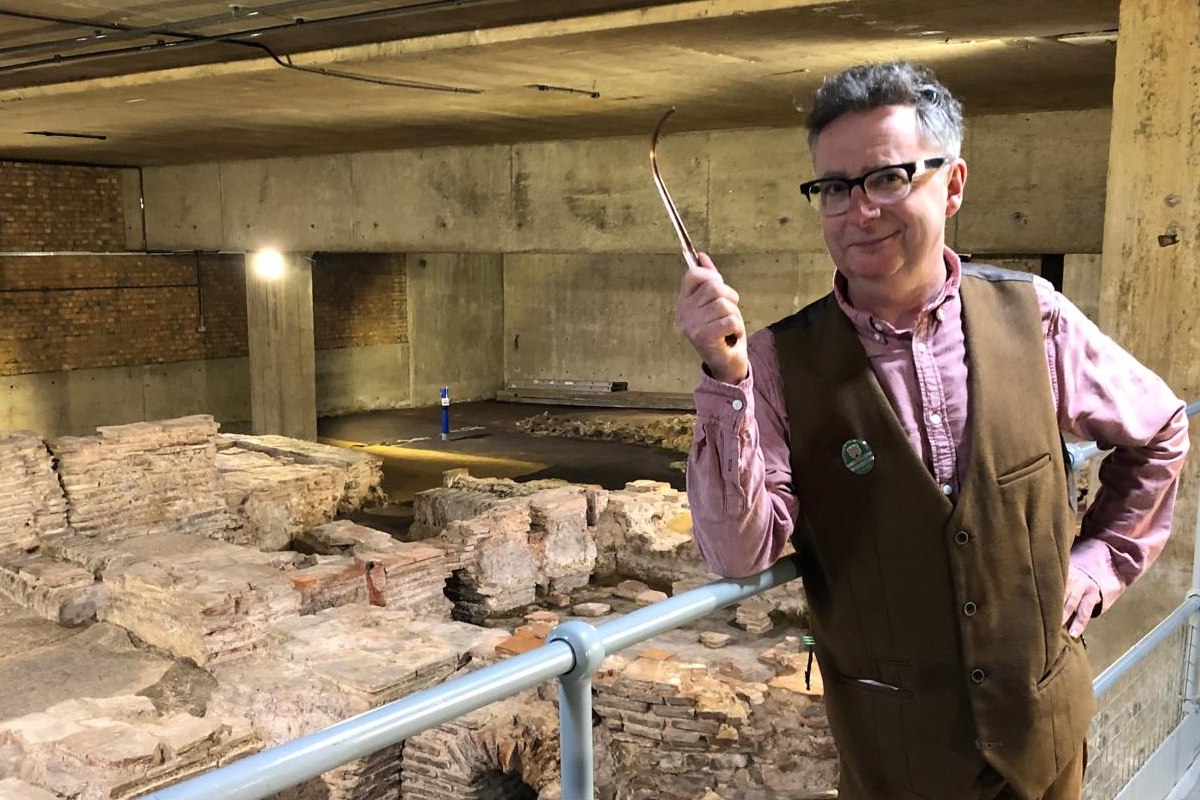
We’re celebrating all the places that make the Square Mile great with our Toast the City Awards. This week we sent David Harry – AKA The London Spy – to report on the amazing Billingsgate Roman Bathhouse lurking beneath an office block Underneath 101 Lower Thames Street, a nondescript 1960s
 David Harry AKA The London Spy



Friday 26 June 2026 3:50 pm | Updated: Friday 26 June 2026 3:52 pm
We’re celebrating all the places that make the Square Mile great with our Toast the City Awards. This week we sent David Harry – AKA The London Spy – to report on the amazing Billingsgate Roman Bathhouse lurking beneath an office block
Underneath 101 Lower Thames Street, a nondescript 1960s office block, hides one of London’s greatest archaeological treasures.
Discovered at a time when Roman discoveries were routinely destroyed or even blown up, it is due to the genius of the City of London Surveyor James Bunning that we are able to enjoy visiting this incredible survivor.
It is an 1,800 year old private Roman house, with a great surprise – a bathhouse in the garden.
The history of the Billingsgate Roman Bathhouse
In February 1848 excavation work on the grand London Coal Exchange, one of the most important business locations in London, where coal taxes were levied and trading carried out, discovered a startling set of remains.
#mc_embed_signup { background: #fff; clear: left; font: 14px Helvetica, Arial,sans-serif; width: 100%; max-width: 600px; margin: 20px 0; } #mc-embedded-subscribe-form { margin: 20px 0 !important; } .newsletter-form-flex { display: flex; gap: 0; align-items: center; margin-top: -10px; } .newsletter-form-flex input[type=”email”] { flex: 1; padding: 2px 10px; border: 1px solid rgb(18, 22, 23) !important; border-radius: 12px 0 0 12px !important; } .newsletter-form-flex input[type=”submit”] { padding: 4px 10px !important; margin: 0 !important; background-color: rgb(18, 22, 23) !important; color: rgb(255, 255, 255) !important; border: 1px solid rgb(18, 22, 23) !important; border-radius: 0 12px 12px 0 !important; } .newsletter-banner-content { margin-bottom: 15px; } .newsletter-banner-content h2 { margin: 0 0 10px 0; font-size: 18px; font-weight: 600; } .newsletter-banner-content p { margin: 0 0 10px 0; line-height: 1.5; } .newsletter-banner-content ul, .newsletter-banner-content ol { margin: 0 0 10px 20px; } .newsletter-banner-content a { color: #0073aa; text-decoration: none; } .newsletter-banner-content a:hover { text-decoration: underline; } .newsletter-banner-content img { max-width: 100%; height: auto; margin: 10px 0; } #mc_embed_signup #mce-success-response { color: #0356a5; display: none; margin: 0 0 10px; width: 100%; } #mc_embed_signup div#mce-responses { float: left; top: -1.4em; padding: 0; overflow: hidden; width: 100%; margin: 0; clear: both; }
Taxes on coal had powered much of the rebuilding of the City of London after the Great Fire of 1666, and Coal tax would also go on to fund the massive Victorian works of the Thames Embankment, the Bazalgette sewers and the Holborn Viaduct.
The Coal Exchange opening was therefore a huge affair, hundreds of thousands attended hoping to see Queen Victoria.
Unfortunately the heavily pregnant Queen caught chicken pox and was forced to stay at home, but Prince Albert and the nine year old heir George came instead, the first time George had been presented in public.
Read more Fogo de Chao nominated for Best Casual Dining Toast award
Bunning insisted on preserving the discovery, and underneath the Exchange on application to the beadle visitors could descend an iron staircase and see the bathhouse remains.
Fast forward to the early 1960s and traffic demands meant the road had to be widened and despite massive protests led by John Betjeman and the Victorian Society, the Coal Exchange was demolished.
The City of London Archaeologist Peter Marsden accessed the building works and found evidence of even more Roman remains. He successfully appealed to the authorities and his team managed to unearth an entire Roman house surrounding the bath section.
What did they discover?
The house was built in the late second century and we know it was occupied almost to the end of the Roman occupation because of a coin hoard found there.
The bathhouse was built about fifty years later than the main building in the middle of what would have been the garden with a river view – no one knows for certain why it was constructed. Theories are that it might have been a tavern or inn for travellers – it is one of the mysteries of the site.
It is the only Roman house accessible to the public in London today, and is an extraordinary survivor, preserved as if it were an active archaeological dig, with hypocausts and the three room bathhouse itself. It is a startling contrast with the Mithraeum, which is a very curated and theatrical experience, this is raw archaeology.
The site is now open for public tours given by the City of London Guides on Saturdays from April to November each year, details are available on the City of London website here.
• For more information or to book a tour, visit the City of London Guides website here
Read more SET Ceramics nominated for Best Newcomer Toast award
Similarly tagged content: Sections Categories People & Organisations