


Preparatory works for construction of a resort linked to Donald Trump’s son-in-law Jared Kushner, which helped spark Albania’s ongoing demonstrations, have been suspended – but they’ve left their mark on this protected habitat.
 Vladimir Karaj



The resort project in the protected Pishe Poro-Narta area associated with Jared Kushner and his partners in the Middle East and Albania has become a flashpoint for activism. The project was unveiled alongside a similar plan for Sazan Island as part of ambitions to develop high-end tourism in Albania. It is being backed by the Socialist government of Edi Rama, which sees it as a welcome example of foreign investment.
Rama told Reuters that he did not want Albania to be stigmatised as “a country where investors are met with hostility”. He added: “There is absolutely no chance that the investment will stop as long as I am here.”
On the ground, this investment began with barbed-wire fences, heavy machinery and interventions in a protected landscape, without transparency or clarity.
Protesters who have been taking to the streets of Tirana every evening for the past month are not just demanding that the project be cancelled, but that Rama resigns.
The symbol of the protests is the flamingo, a bird that has come to represent the area, one of Albania’s most important coastal ecosystems. For the protesters, the flamingo is not just an environmental symbol but a reminder of a broader question: who decides the fate of public land, protected areas and the spaces Albanians have used for generations?
For environmentalists, the unauthorised intervention is the first tangible evidence of how a large tourism project can alter a protected landscape before the public has even seen the documents, permits and assessments that should have preceded the works.
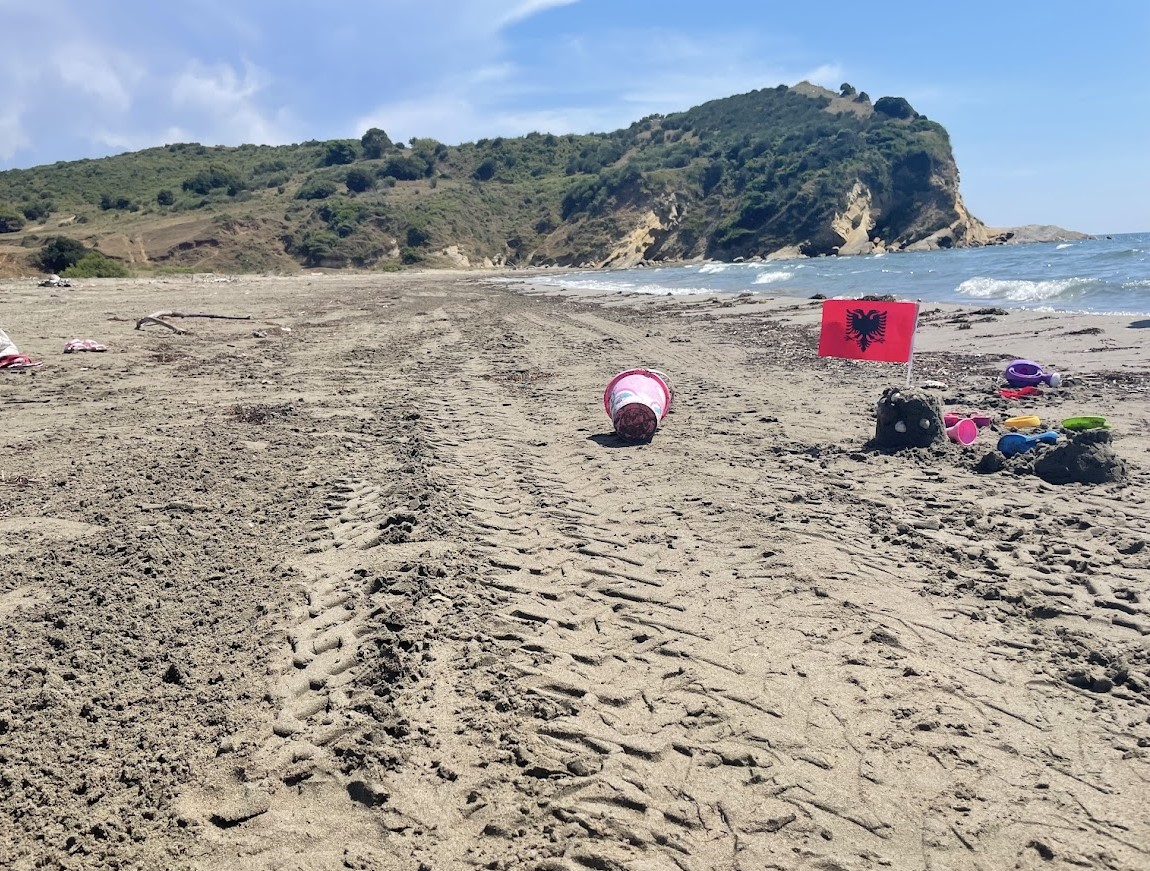
“Dunes take hundreds of years to form as they were,” says Zydjon Vorpsi. “An area that was once very well preserved, unlike the more accessible parts, is no longer protected because a road has been cut through it. A concrete bridge has also been built,” he adds.
The dunes were not the only areas affected. Parts of the molasse hills –designated natural monuments and inalienable state property under current legislation – were cut away by excavators to create a road where none previously existed.
Beyond these physical scars, the most immediate damage was the disturbance of wildlife during one of the most sensitive periods of the year.
The works began at the height of the birds’ nesting season and at the start of the period when sea turtles come ashore to lay their eggs. Excavators on the beach, vehicle traffic and construction noise placed immediate pressure on the ecosystem.
Another source of concern is the impact on Limopuo, the freshwater lagoon that is also designated a natural monument.
“Keep in mind that when the works began, there were dozens of cars, bulldozers, excavators, trucks and hundreds of people inside the area. That drove the wildlife away completely,” Vorpsi noted.
Activists are also concerned about interventions in the channels that connect the lagoons with the sea. On one of the main channels, the flow of water was blocked for days, and there is now a bridge made of concrete and stones held together in steel cages.
“The area now is no longer as well protected because a road has been built straight through that habitat. A concrete bridge has also been constructed over the connecting channel, and that will create its own problems in the future,” Vorpsi said.
‘These lands are sacred to us’