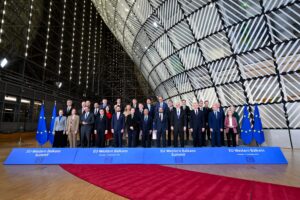
On Thursday (18 June), as the 27 EU leaders meet in Brussels, Britain will elect its next prime minister. Not strictly true, but don’t panic – you haven’t missed some snap general election on the Brexit island.
 Matt Tempest



On Thursday (18 June), as the 27 EU leaders meet in Brussels, Britain will elect its next prime minister.
Not strictly true, but don’t panic – you haven’t missed some snap general election on the Brexit island.
What is, in fact, happening, is a local by-election in a place called Makerfield, halfway between Manchester and Liverpool, where Labour’s current Manchester mayor is standing to become an MP (Again. He already was an MP from 2001-2017, before he stood down from Westminster to run as a regional mayor).
Normally, a local byelection in the UK would not be earth-shattering news in Britain – let alone in Europe. This one could be the most significant in half a century of British political history.
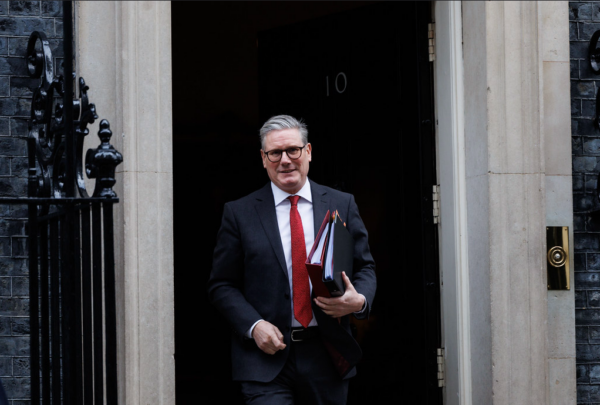
Because Burnham is not hoping to simply become another one of the 650 MPs in London, but to immediately challenge the incumbent prime minister, Keir Starmer, for the Labour party leadership, and thus become, by default, British prime minister by the end of the summer.
And all that without any general election – it all depends on the 76,000 voters in Makerfield. Probably only half that number, in fact, as turnout at the 2024 election was only 50 percent.
Burnham has qualities Starmer lacks – namely, warmth, personality and likeability. He has been a very popular mayor of Manchester, albeit a post with very limited political powers. Labour MPs are hoping he will revive the governing party’s plummeting electoral popularity in time for the planned 2029 general election, so that they keep their seats and Labour stays in power – an incredible reversal-of-fortune, since Labour defeated the Conservatives, with a whopping 174-seat majority, less than two years ago.
To be dethroning an incumbent PM, sitting on a majority that large, after less than two years, would normally be unthinkable. But – as many commentators have pointed out – in the 10 years since Brexit (whose anniversary is also this month), the UK has become almost ungovernable, getting through six prime ministers in that time (David Cameron, Theresa May, Boris Johnson, Liz Truss, Rishi Sunak and Starmer, for those who’ve lost track).
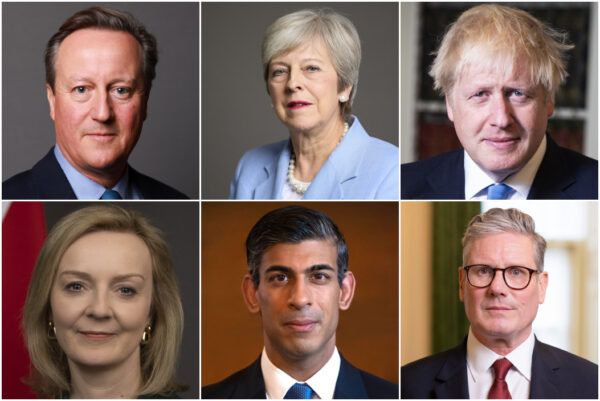
It could now be poised to be on its seventh. A situation more akin to the chaos of Italy in the 1980s, than traditional British stability: Margaret Thatcher served 11 years, and Tony Blair 10.
What does all this mean for Brussels? Very little, in the short term.
Burnham, for all his likability, has little of a policy platform as yet. And his hands are tied – at least in theory – by the Labour manifesto the party was elected on two years ago. Namely, no return to the EU, no attempt to join the single market, no customs union. All so-called ‘red lines’.
His words on the campaign trail have not been encouraging for pro-Europeans (which is almost all of the Labour party, Green party and Liberal Democrats), either:
“My view is that Brexit has been damaging, but I also believe the last thing we should do right now is re-run those arguments. Britain will be stuck in a permanent rut if we’re just constantly arguing and people are pulling away from each other.”
Last year, before running, he was slightly more positive: “Long term, I’m going to be honest, I’m going to say it… I hope in my lifetime I see this country rejoin. People prosper more when they’re part of unions.”
One option he could dust down from the years of the ‘hard vs soft’ Brexit debate, (which, crazily enough, only took place AFTER the 2016 referendum had been lost, and even that, remember, only by two percentage points of voters), is membership of European Free Trade Association, joining Norway, Switzerland, Iceland and Liechtenstein.
Those three, minus Switzerland, are also members of the European Economic Area, allowing access to the single market for goods, services, people and capital, so long as they accept the bloc’s rules.
Makerfield – the making or unmaking of the next PM
But first – and not losing sight of Brexit – Burnham has to actually win on Thursday. Not as easy as some London journalists assume from 250km away, in a constituency that just over a month ago voted across the board for Nigel Farage’s far-right Reform party over Labour in local elections.
After a fairly neck-and-neck start, Burnham seems to pulling ahead of the three-percent margin-of-error lead, thanks in part to the deeply sexist and unpleasant social media output of the Reform candidate, but also thanks to the hard-right vote being split between Farage’s party and an even more extreme-right outfit called Restore Britain, led by a disgruntled ex-Reform MP called Rupert Lowe. And backed from across the Atlantic by the world’s richest man, and new trillionaire, Elon Musk, who would be unable to find Makerfield on a map, even with Tesla’s in-built navigation.
Restore Britain is calling for the “remigration”, ie mass expulsion of migrants and asylum seekers, the return of the death penalty, and making Britain a “Christian” country again.
Only around four percent of Britons actually attend church weekly, and yet Restore Britain are currently polling around seven to eight percent – enough to split the hard-right vote with Reform, and allow Burnham back to Westminster and then Number 10 Downing Street.
But governing a country where the wannabe white supremacists of Reform and Restore are polling at a combined one-third of more of the electorate will not be easy for a slightly more left-leaning PM.
As any of his six immediate predecessors will tell him.