EU leaders will hold their first formal discussion on Friday, after the Cypriot presidency tabled the first so-called “negobox”, a draft document setting out possible spending compromises.
 Elena Sánchez Nicolás



Talks on the EU’s next seven-year budget are intensifying, but member states and the European Parliament remain split over what to fund, how much to spend – and how to split the bill.
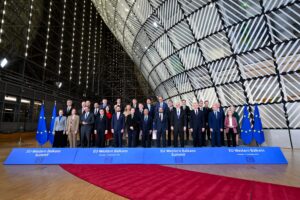
EU leaders will hold their first formal discussion on Friday (19 June), after the Cypriot presidency tabled the first so-called “negobox”, a draft document setting out possible spending compromises.
Talks are being rushed to get ahead of next year’s election cycle and secure a deal before a possible change in the French presidency, with presidential hopeful Jordan Bardella having vowed to cut France’s EU contribution by half.

But passing the EU budget is not easy.
It requires joint approval from MEPs and EU member states, and unanimity among EU countries. A senior EU official said “it’s safe to say” that positions are still “not fully convergent.”
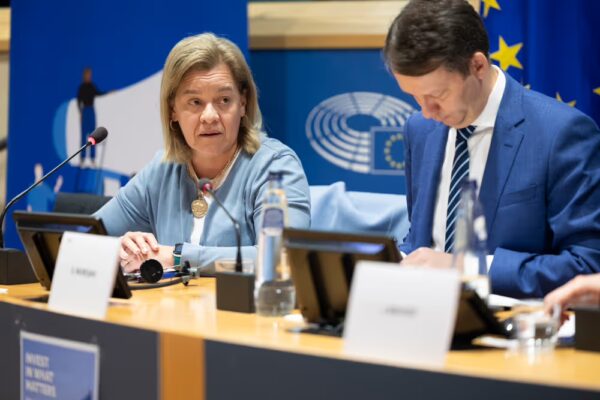
“No one around the table is happy,” said commissioner Piotr Serafin at the meeting in Luxembourg with ministers on Tuesday (16 June). “The [EU] Commission also isn’t happy because we felt that our proposal was the right one.”
With that said, here are the main sticking points:
Overall funding level
The parliament is demanding a significantly more ambitious budget, amounting to nearly €1.79 trillion — representing 1.27 percent of the EU’s Gross National Income (GNI). Notably, MEPs are calling to exclude the debt repayment of the recovery funds (€149.3bn), setting it above the MFF ceilings.
The parliament’s position on the overall funding level represents a 10-percent increase compared to the commission proposal, set at €1.76 trillion (including the repayment of the recovery funds). The commission increased from 1.14 percent to 1.15 percent of GNI for the budget, compared to the current one, despite new challenges and priorities such as defence.
In the first negotiation proposal, the Cyprus EU council presidency proposed a budget of €1.58 trillion, representing a two-percent cut compared to the commission proposal – about 1.13 percent of GNI, amounting to €1.73 trillion, including the repayment of recovery funds.
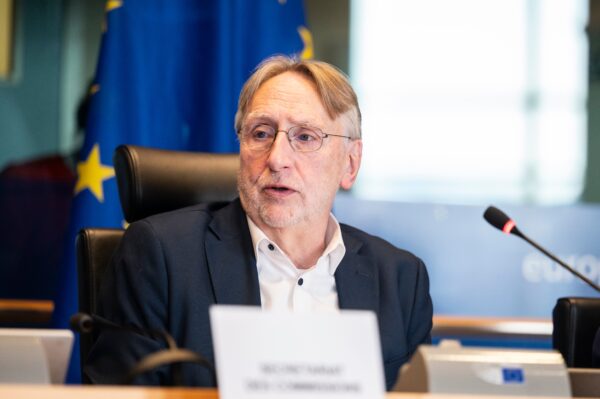
“You cannot be serious as a council to say that security, defence, and competitiveness are our new priorities. We have to make more efforts, we have to ensure food security and energy security to protect our borders and our cyberspace, and then to reduce the allocations there, particularly for cohesion and agriculture. This is bad news,” said Romanian centre-right MEP Siegfried Mureșan, lead MEP on the file.
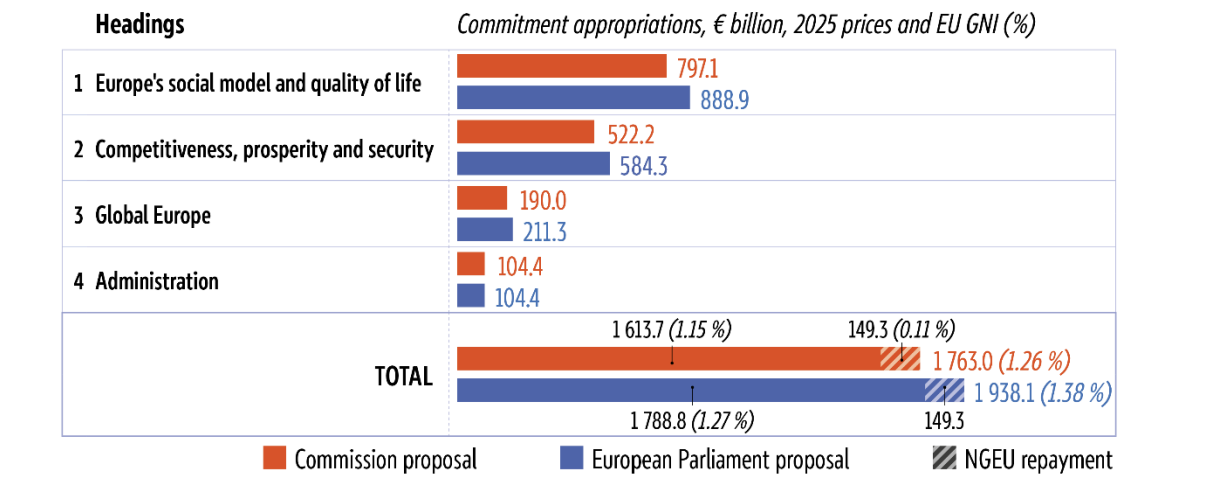 European Parliament proposal for the next EU budget (Source: EU Parliament)
 Traditionally, EU member states (especially the fiscal ‘frugals’ and net contributors within the Council) fight to keep the GNI percentage as close to the baseline proposal as possible to limit their direct national contributions.
“The proposal finances yesterday’s priorities at the expense of tomorrow’s challenges. This shows exactly how not to proceed,” said Dutch finance minister Eelco Heinen. “The overall volume remains far too high at a time when fiscal space is limited across Europe and difficult choices are unavoidable”.
One of the most difficult political fights over whether Germany, the Netherlands, Sweden, Austria and Denmark — countries that pay more into the EU budget than they receive — should continue to benefit from discounts to their national contributions was left to national leaders to solve.
Addressing the Italian parliament last week, prime minister Giorgia Meloni called the rebate system “anachronistic,” saying it should be scrapped, warning that Italy would otherwise demand the “same privilege.”
Structure and centralisation fears
Another major contention will be the way in which money is handed out to member states.
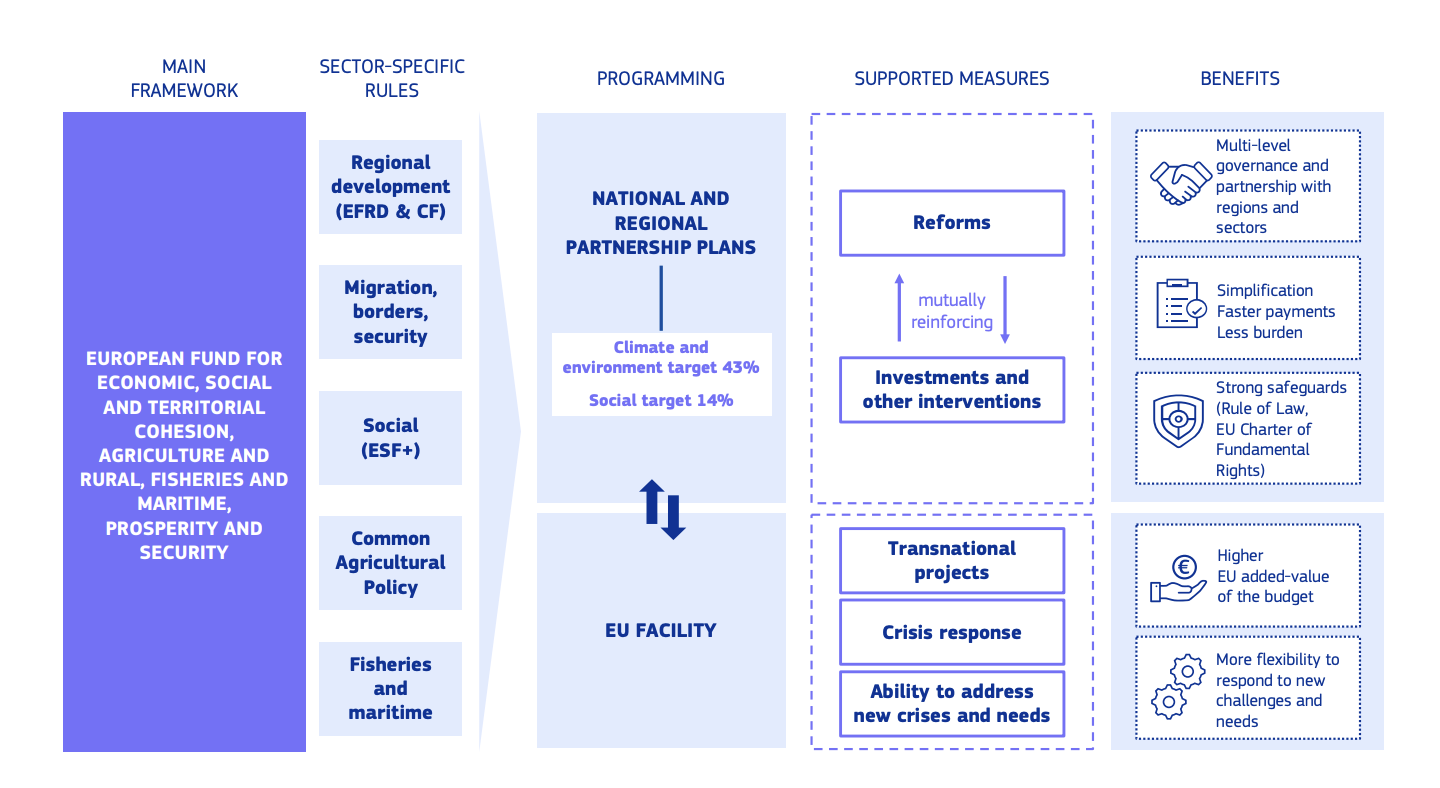
While EU countries have backed the commission proposal to streamline funding through National and Regional Partnership Plans (NRPPs), MEPs explicitly insist on maintaining distinct, rigidly protected spending lines for traditional flagship areas — specifically under the so-called “Heading 1”, ensuring separate allocations for the Common Agricultural Policy (CAP), the European Regional Development Fund (ERDF), and Cohesion Policy for regional development.
The NRPPs mirror the plans under the recovery funds, linking funding to reforms – but creating questions over accountability and transparency in public procurement.
MEPs see a risk of centralisation, under one plan, controlled by one national ministry and overseen by one European Commission. This is partly why they have called for a meaningful involvement of regional authorities in drafting these plans before they are approved by the commission.
Competitiveness, yes, but what about farmers?
Another of the pillars of the EU’s long-term budget is the European Competitiveness Fund, which covers 14 different instruments of the current budget.
The parliament explicitly maps out standalone nominal increases for highly visible public programmes like the research programme Horizon Europe, student-exchange Erasmus+, EU4Health, and infrastructure funding Connecting Europe Facility (CEF), while the council lowers the figures initially proposed by the commission.
For example, MEPs want to allocate €200bn to the next EU’s research and innovation program Horizon Europe, a €25bn increase over the commission’s initial proposal (€175bn), while the Cyprus presidency has proposed a budget of €167bn.
Likewise and despite Erasmus+ being considered one of the EU’s flagship integration success stories, the Cypriot presidency has allocated just €39.1bn for the programme over the next seven years, falling short of both the commission’s proposed €40.8bn and parliament’s preferred allocation of around €48bn.
The Cypriot presidency largely preserved money set out for agriculture, and poorer regions and fisheries, while directing the bulk of cuts at defence and competitiveness. This kept a coalition of roughly 15 southern and eastern member states led by Italy, Spain and Poland from walking out, but it has infuriated Sweden and Denmark.
“Sweden is among the largest bilateral donors to Ukraine in absolute terms. Clearly, we and a few other member states are doing the heavy lifting, so when I say there’s no room for increased contributions, I mean exactly that,” said Sweden’s European affairs minister Jessica Rosencrantz.
Commissioner Serafin also pushed back on cuts to defence and competitiveness, but other than frugal countries, also warned that cutting back on joint expenditure would not help solve national budget woes.
“This will not result in savings, because the spending will need to be met at the national level anyway,” the commissioner said. “We will have missed the opportunity for joint projects.”
Own resources – the magic solution?
MEPs are seeking to persuade EU member states to back higher figures relying on more new ‘own resources’, which in EU lingo are independent sources of revenue for the European Union.
Initially, the commission proposed new resources based on revenue from the EU Emission Trading System (ETS), the Carbon Border Adjustment Mechanism (CBAM), non-collected e-waste, a corporate tax, and tobacco duties.
But the European Parliament has put the focus on a digital levy. MEPs believe it would be a mistake to reduce funding for farmers, regions or security, and economic development without asking the world’s largest digital corporations to contribute their fair share.
“I think it would be wrong to cut funding to our citizens, to our SMEs, to our security, just to allow Elon Musk, the richest person on earth, to continue enjoying free access to the union single market without contributing a single penny for this access to the union single market,” said MEP Mureșan.
MEPs are determined not to repeat the approach taken during the last budget negotiations, when they accepted a compromise that left decisions on new own resources to be made later. They want an agreement on own resources in place by January 2028.
The digital levy could trigger another clash with the US administration led by Donald Trump, and making it difficult an agreement in time.
Other proposals from the parliament include new revenue sources based on profits from cryptocurrencies, as well as a levy on online gaming and gambling.
What happens next
While Cyprus has put forward a first proposal to EU leaders, real discussions are expected to kick off later this October under a new proposal from the next Irish presidency.
The parliament has already locked in its side of the table, with the plenary backing its position last April.
But the gap between the two institutions is already significant, setting the stage for difficult negotiations in the months ahead.
“We all know that the final result will be a compromise,” Mureșan also said, warning that the demands of the parliament will need to be taken “sufficiently” into account.