

International flights arriving in Europe from destinations within 5,000 km will be required to pay for their CO2 emissions from 2029 as part of a major overhaul of the EU’s emissions trading system announced on Friday.
 Benjamin Fox



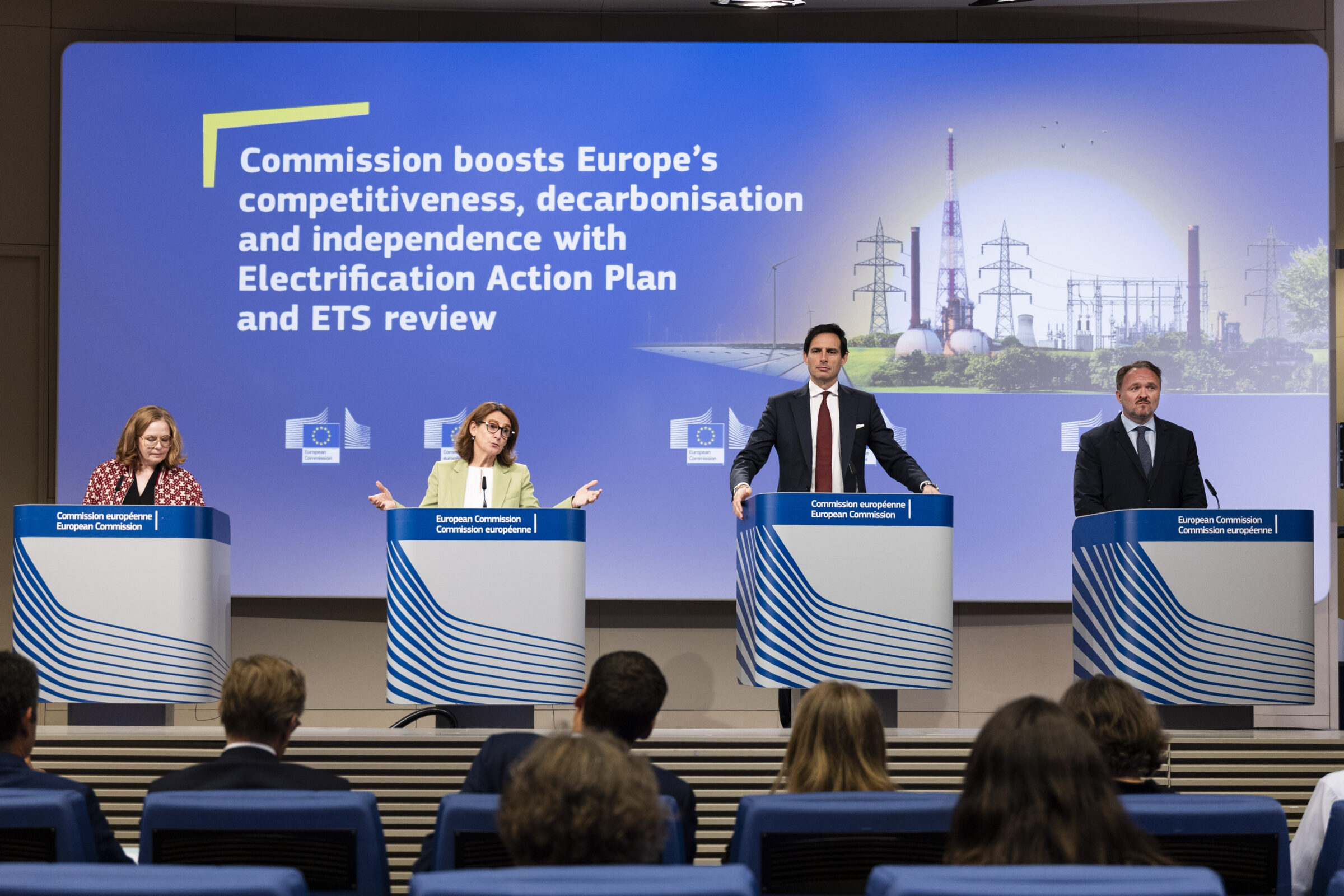
International flights arriving in Europe from destinations within 5,000 km will be required to pay for their CO2 emissions from 2029 as part of a major overhaul of the EU’s emissions trading system announced on Friday (17 July).
The review of the Emissions Trading System (ETS), which offers economic incentives to businesses to reduce their carbon emissions, and sets a price on carbon, has already been subject to a major lobbying effort that will now intensify as the proposal hits the European Parliament and EU Council for amendments.
“Aviation is the only major sector where emissions are going up rather than down. At the same time, the EU faces a level playing field issue: currently ETS only covers the EEA [European Economic Area] and quite a few countries, particularly in the Gulf, subsidise their airlines,” climate commissioner Wopke Hoekstra told reporters on Friday (17 July).
Elsewhere, industrial companies will continue to receive free emissions allowances beyond 2030 — but with a catch, one of the main reforms to the ETS since 2005.
They will receive 80 percent of their free allowances after publishing a board-approved decarbonisation investment plan, with the remaining 20 percent released only after investments and emissions reductions have been delivered.
Polluter pays
Hoekstra told reporters that the reform was about “bringing together ambitious climate action with competitiveness” and would do more to reward companies that had invested in going green.
Under the current regime, member states receive about 80 percent of all ETS revenues. But of that 80 percent, less than 10 percent has been spent on industrial decarbonisation. In a bid to change that, the commission says that national governments will now be required to spend 50 percent of their national ETS revenues on investments to decarbonise ETS sectors.
“Emissions trading makes polluters pay while generating the revenues needed to invest in our future,” commission vice president Teresa Ribera told reporters.
“Together, these initiatives point Europe’s economy in one clear direction: towards a future that is cheaper, greener, fairer, more competitive and more secure,” she said.
Divisive success story
The commission points to the ETS as a success story that has generated €270bn for investments in Europe’s decarbonisation.
But although the ETS has helped reduce CO2 emissions by around 50 percent across the electricity, transport and manufacturing sectors since 2005, it remains a divisive policy, primarily over the sectors it covers and the pace of emissions reduction.