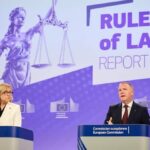

The announcement on Friday follows the publication of reports that attempt to decrypt rule-of-law issues in each of the 27 member states. It will include a boost to the European Public Prosecutor’s Office.
 Nikolaj Nielsen




A series of a new anti-corruption proposals are set to be tabled by the European Commission before the end of the year.
The announcement on Friday (17 July) follows the publication of reports that attempt to decrypt rule-of-law issues in each of the 27 member states.
Speaking to reporters in Brussels, the EU’s democracy commissioner Michael McGrath said the new proposals aim to strengthen the European Public Prosector Office (EPPO), a Luxembourg-based office that can already launch criminal investigations.
“We have conducted an evaluation of the EPPO that will lead to a proposed revision of the EPPO regulation that will be later this year,” he said.
The proposal will also review the EU’s so-called anti-fraud architecture, a term that spans a whole array of policies, rules and agencies that together seek to stop people stealing EU taxpayer money.
The EPPO last year had already called for greater investment in advanced IT systems capable of real-time monitoring and shared risk analysis, along with the use of AI tools to spot suspicious patterns and flag high‑risk transactions.
The warnings came amid broader fears that the design of the EU’s next long-term budget would leave it wide open to abuse.
With Hungary now joining the EPPO, the news is likely to unsettle people linked to the country’s former prime minister, Viktor Orbán amid widespread accusations of fraud involving large sums of EU funds under his reign.
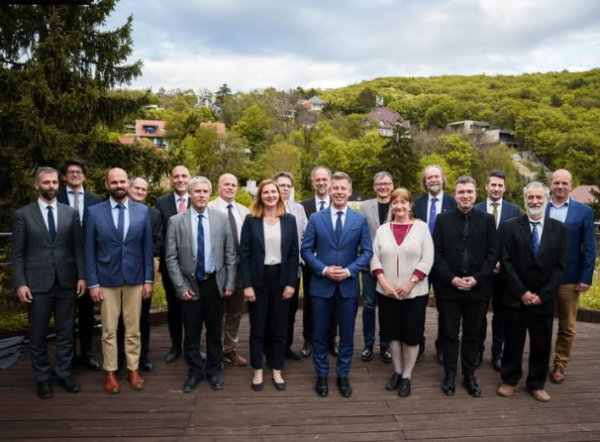
Prime minister Peter Magyar has since promised to untangle Orban’s 16-year legacy even though the commission’s latest rule-of-law report suggests outstanding issues remain.
“Some issues that were considered as highly problematic last year have already been addressed to quite a large extent by the new government,” said one EU official, speaking on the condition of anonymity.
He said Hungary had disbanded the so-called sovereignty protection office, set up under Orban, and which was used to smear civil society and independent media.
But the report also notes that “obstacles hindering the work of independent civil society organisations are yet to be removed” and “no steps have been taken yet to adopt comprehensive legislation on lobbying and revolving doors”.
McGrath declined to comment on Hungary’s former trade and foreign affairs minister Péter Szijjártó who took up a senior position at the Chinese manufacturer BYD.
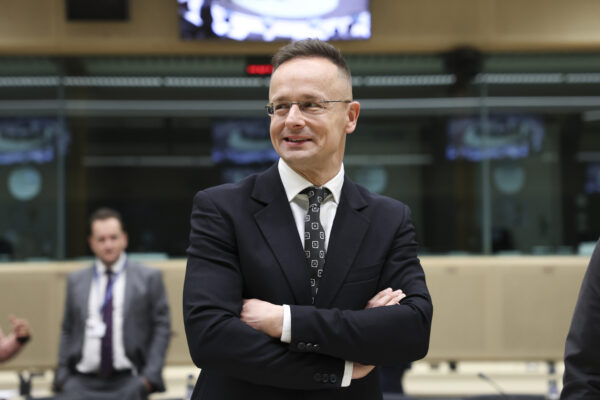
But he said the issue of lobbying rules and revolving doors, whereby politicians take up jobs in areas they legislated on, is a widespread problem among EU states.
Although it has a low perception of corruption, Denmark, for instance, has no plans to introduce rules on ‘revolving doors’ for ministers and on lobbying. And Sweden only recently adopted legislation requiring lobbyists to register their contacts with politicians.
In Spain, a proposed law to improve lobbying rules and government transparency still hasn’t been passed by parliament.
“Shortcomings remain regarding compliance with transparency obligations related to political party financing,” reads the report.
It also notes that the new national whistleblower authority has started operating with limited funding and staffing.