




A physio, a tailor and a historian on the style trends that can put women in hospital and how to avoid the dangers“Buyer beware” is one of the oldest principles in English law. Now, a pair of wide legged trousers from Zara is bringing the phrase back to the forefront
 Chloe Mac Donnell



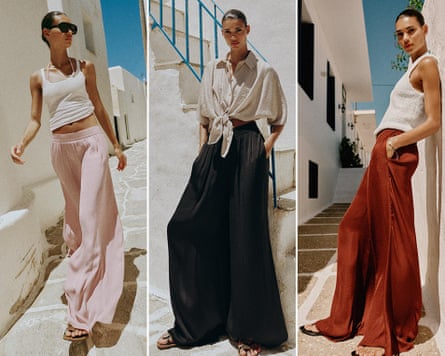
“Buyer beware” is one of the oldest principles in English law. Now, a pair of wide legged trousers from Zara is bringing the phrase back to the forefront of shoppers’ minds.
On social media the £25.99 wide-legged trousers from the high-street retailer have earned the moniker “Zara death pants” thanks to a slew of videos showing wearers tripping over the leg of the trousers and injuring themselves.
“These Zara pants need to come with a warning because now I have a fractured knee,” wrote one TikTok user below a video of them leaving hospital in a wheelchair.
Some videos show wearers face-planting on pavements while others highlight bloodied knees and elbows, bruised limbs and broken fingernails.
Lucy McDonald, a spokesperson for the Chartered Society of Physiotherapy and a physiotherapist at Restart, said that throughout her career she had treated injuries, including fractures and ligament tears, due to “fashion pieces that cause difficulty in movement and balance”. The most common culprits are high heels, but long trousers also feature.
Despite the social media posts alerting wearers to the risks of Zara’s “lethal trousers” they continue to be a bestseller.
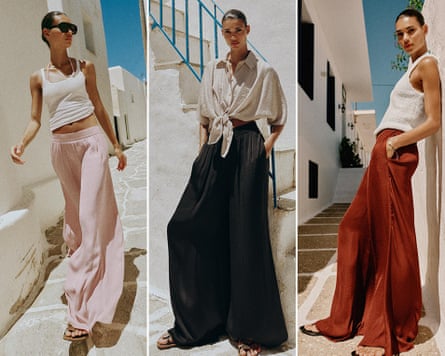
It is not just Zara championing the wide leg; the style has been spotted at brands from M&S to Mango and Next. At John Lewis, searches for the style are up 61% year on year, while linen versions are up 225%. This echoes the catwalk, with designers including Victoria Beckham and Stella McCartney showing long fits.
On its website, Zara describes the trousers as being “longer than usual” with “a loose fit”. The accompanying imagery shows the fabric pooling around the model’s feet. In the sizing description, the total length of a size small is 108cm, while the large measures 109cm.
Ruby Slevin, a tailor and the founder of Banshee of Savile Row, said the trip issue stemmed from the length of the in-seam.
During the design process most high street brands use a “fit model”, a model with specific proportions who tries on the clothes to test for size and movement. To reduce costs, rather than hiring fit models some brands use a stationary mannequin that mirrors their typical sizing baseline.
The national average height for women in the UK is 162.5cm (5ft 4in) but most fit models hover around the 178cm mark.
“Fit models are not an accurate indication of an everyday woman,” Slevin said. “The length has to be in proportion to the person who is wearing it otherwise it is going to end up being problematic.”
To ensure this, Slevin said, the client’s hip measurement should be used as a guide to how wide the trousers should be cut. “A person who is 5ft 5in cannot wear the same width of trousers as someone who is 5ft 10ins. It’s like wearing a pair of shoes that are the wrong size. It’s not safe.”
She suggested high street shoppers should take trousers to a local tailor or drycleaner to have them adjusted.
Virginia Hill, a fashion historian, said wide-legged trousers first became popular in the 1920s when women began to wear house pyjamas. She pointed to a rich history of fashion clothing being impractical or hazardous. The hobble skirt, introduced by the Parisian designer Paul Poiret in 1910, featured such a tight hem around the lower legs that women could only shuffle. One headline from the time read: “Skirts are so tight around the ankle that locomotion is seriously impeded and speed is impossible.”
In 1927, the American dancer Isadora Duncan was killed when her silk scarf became entangled in the wheels of the open-top car she was travelling in.
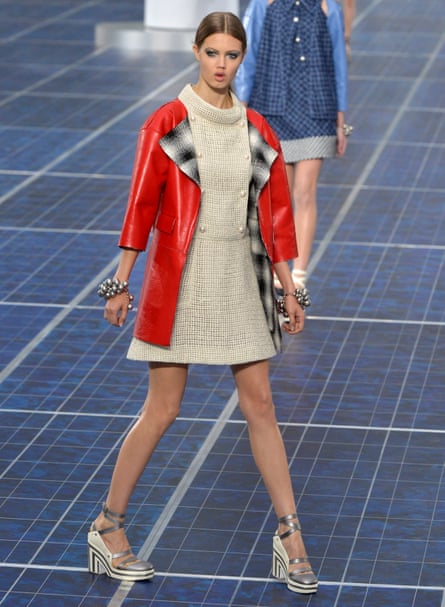
In 2009 the model Abbey Lee Kershaw tore a ligament when she fell while wearing high heels on the Rodarte catwalk, while Lindsey Wixson revealed that numerous catwalk injuries, including a linear tear on her big toe, had forced her to take a year off work in 2017.
Macdonald said the most common fall injury was a fractured wrist because people put their hands out to break their impact. A foot getting caught in fabric could lead to torn ligaments, and hip issues were also common but the severity depended on how the person landed and the state of their bone health.
Injuries could take anywhere from six weeks to nine months or more to heal. “At the very least you will end up with a whopping big bruise,” Macdonald said. “My advice is very simple: do not wear anything that could increase your risk of falling.”