

Stigma still cloaks the issue of wartime sexual violence in Kosovo, but even more so for survivors from the Roma, Ashkali and Egyptian minorities.
 Serbeze Haxhiaj



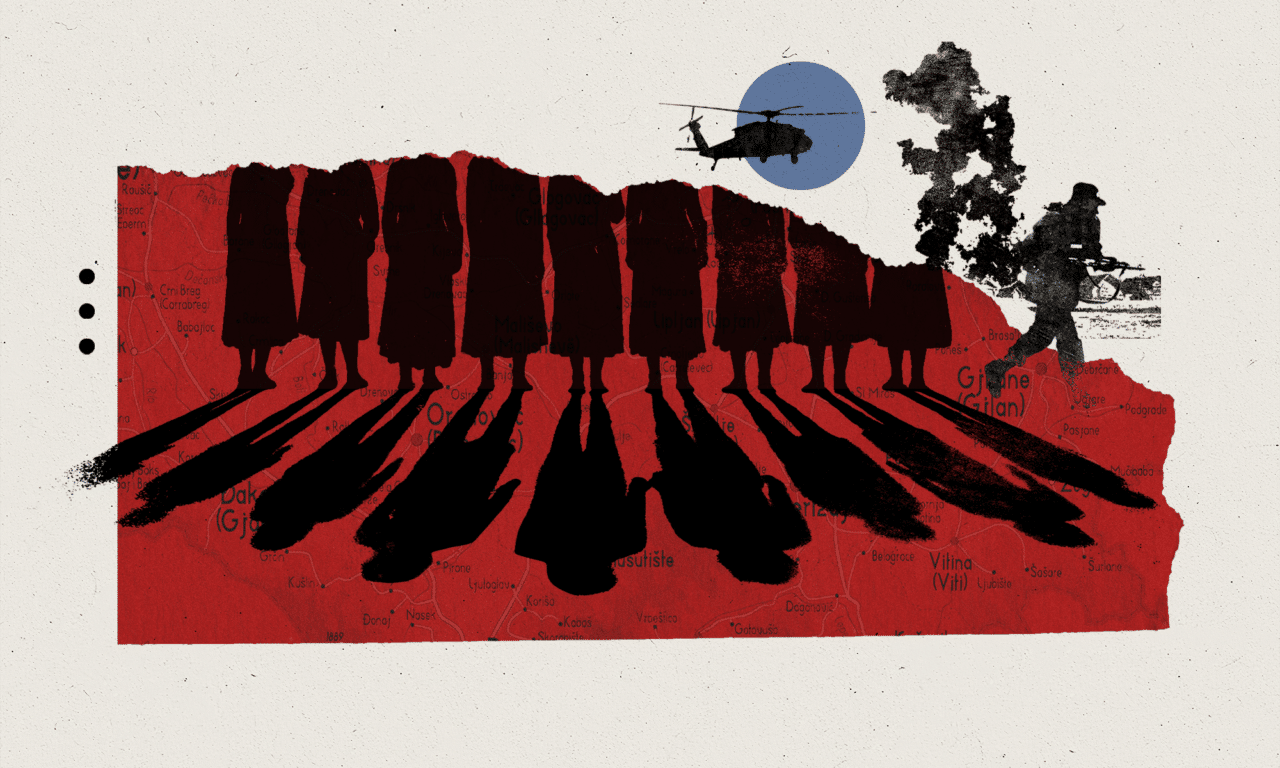
Those who fled and never returned often have no means of applying for recognition as survivors of wartime sexual violence.
That includes a fourth woman interviewed by BIRN, who was 29 years old when she was raped twice by uniformed men in the police headquarters in Gjakova/Djakovica in March and April 1999. A cleaner in the building, she fled when the war ended out of fear of being targeted for revenge as a former employee of the Serbian state.
The woman now lives in the Montenegrin capital, Podgorica, but does not possess Kosovo documents.
“Living in a refugee camp for a long time, we didn’t have food, let alone a psychologist,” she told BIRN. “Sometimes I bought sedatives when I had a few dinars.”
When the war ended, ethnic minorities were targeted for revenge by Kosovo Albanian guerrillas and civilians.
Speaking to BIRN, an Egyptian woman from a village near Peja/Pec recalled five armed men entering her house on July 27, 1999, one of them in a T-shirt featuring the symbol of the guerrilla Kosovo Liberation Army, KLA. Her husband was beaten and she was dragged into the woods. “One of them raped me, and my husband was unable to help.”
The men later went next door, where they raped the woman’s neighbour.
Three days later, the family left Kosovo. Her case was documented in a 1999 report by the Belgrade-based Humanitarian Law Centre. In the report, she says: “When they came, they asked me to find two other women and go with them. I told them I could not find any and begged them to let me go because I was a mother with small children. One of them threatened to kill my husband if I did not comply. Crying, I went there. They left me there, crying and dishonoured.”
However, Kosovo’s Law on the Status and Rights of Martyrs, Invalids, Veterans, Civilian Victims, and Victims of Sexual Violence only provides for recognition of survivors of wartime sexual violence between February 1998 and June 20, 1999, i.e. roughly a week after Serbian forces pulled out of Kosovo and the war ended.
The woman said she doesn’t “need” recognition. “But I am frustrated that nobody mentions us,” she said. “Egyptian Roma women have also been raped here.”
Agushi, the Roma rights activist, said rape survivors from minority communities barely feature in public discourse surrounding the war and wartime sexual violence; those raped after the official cessation of hostilities are doubly discriminated against.
“They are even more marginalised, and those who were victims of sexual violence after June 20, 1999, are particularly discriminated against because they are not legally recognised and remain in the shadows.”
Campaign of terror