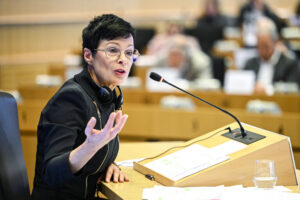

Brussels’ double standards towards North Macedonia over its historical disagreements with Bulgaria reflect the EU’s wider failure to adopt a strategy that addresses various bilateral disputes in the Western Balkans.
 Erwan Fouéré



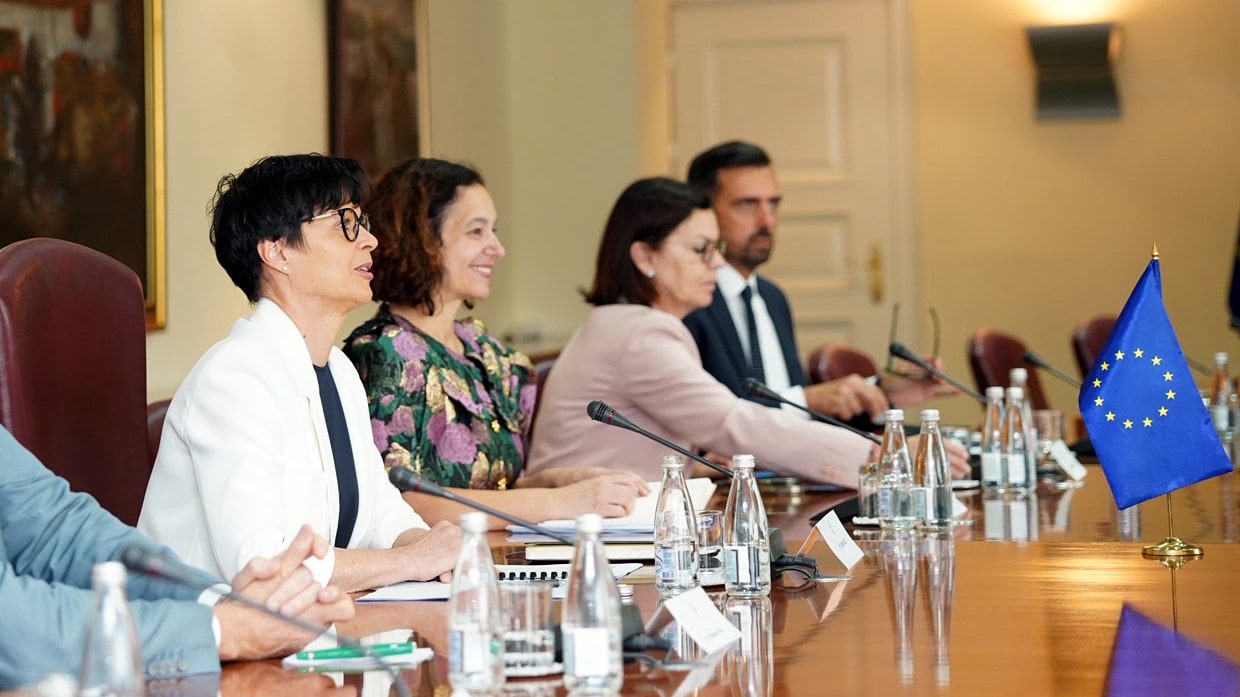
It also underlines the consequences of the EU’s failure to put forward an overall strategy to address the many bilateral disputes in the Western Balkans.
North Macedonia’s current centre-right government led by Hristijan Mickovski, elected in 2024, has insisted that before it amends the constitution, Bulgaria should guarantee it will make no new demands that could further block negotiations down the road.
The background to this request relates to the long list of obstacles placed on the country’s aspirations to join the European Union ever since it applied for membership in 2004, and successive governments’ efforts to address them with varying degrees of success.
In her response, however, Commissioner Kos underlined that “EU enlargement is not built on guarantees given in advance. It is built on trust, commitments, dedication in fulfilling these commitments and hard work”.
A week later, she repeated the same call on the government to build trust with all the EU member states.
In doing so, she seemed to forget the number of times North Macedonia’s citizens were let down by promises made by the EU which were not kept. She should acknowledge that trust can only succeed if it exists on both sides and is based on solid foundations.
Under the so-called Prespa Agreement, signed with Greece in June 2018, the country agreed to replace its constitutional name with “Republic of North Macedonia”, to be applied erga omnes. The agreement also included recognition of the Macedonian language.
In return the EU assured the country that this agreement would open the door to EU and NATO membership, only to be confronted with a French government veto in 2019, calling for a pause on EU enlargement.
This was resolved the following year with the adoption of a revised methodology for accession negotiations, and the European Council recommendation that negotiations should start with both Albania and North Macedonia.
However, Bulgaria then decided to impose its own veto against the latter, which was transformed into an EU veto in 2022, with the adoption of the French proposal. Under this proposal, formal negotiations with both countries were launched in July 2022. But until parliament in North Macedonia adopts the constitutional amendment, its accession negotiations remain blocked.
Renewed momentum flawed by unanimity rule