EU foreign ministers have imposed a ban on Sudan’s gold trade in a bid to curb financing of its civil war – but they ignored MEPs’ demands to designate a militia accused of genocide as a terror group.
 Benjamin Fox



EU foreign ministers have imposed a ban on Sudan’s gold trade in the bloc’s latest sanctions – as it seeks to block one of the main sources of funding for the central African country’s three-year civil war.
The ban on the purchase, import or transfer of gold originating in Sudan, which was announced in a statement on Monday (13 July) ahead of a meeting of foreign ministers in Brussels the same day, also bans the sale, supply, transfer or export of mercury and cyanide to Sudan on the grounds that these chemicals are widely used for gold mining or gold exploitation.
Illicit gold smuggling has been one of the main sources of financing for the civil war, which started in April 2023.
“By restricting trade in Sudanese gold and limiting access to chemicals used for gold mining and gold exploitation, the EU aims to reduce the resources available to those responsible for perpetuating the violence,” ministers said in a statement.
In particular, the Rapid Support Forces, which now controls most of north and western Sudan, has been accused of funnelling billions of dollars worth of gold to the United Arab Emirates and Kenya to pay for weapons and mercenaries.
However, the sanctions regime does not include new measures against the RSF despite MEPs backing a resolution in the European Parliament last week urging the bloc to add the RSF to its list of terrorist organisations.
Earlier this year, a report by a United Nations expert group said that atrocities committed by the RSF during its 18-month siege of El Fasher, the main city in Darfur, bore “the hallmarks of genocide”, a phrase which SAF leaders and Khartoum’s diplomats have repeated ever since to pressure the international community to increase sanctions against the RSF.
The parliament also condemned the UAE for its role as the main sponsor of the RSF. The resolution was passed by a 476 to 28 margin on 9 July.
MEPs also accused the Global Security Services Group, an Abu Dhabi-based group, which has ties to the UAE ruling family and senior officials, of violating the United Nations arms embargo in the western Darfur region.
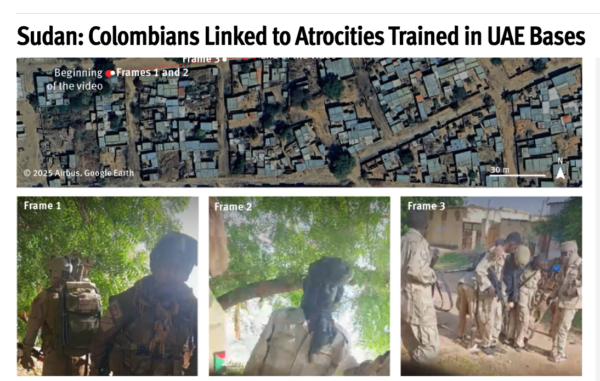
The resolution marked the first time that MEPs have specifically called out the UAE over its role in the war. Civil society groups have previously complained that major lobbying efforts in the EU parliament by Abu Dhabi have been successful in watering down criticism of its role in the civil war.
The civil war appears to be increasingly intractable.
Though the Sudan Armed Forces, which supports the government backed by the international community, controls the capital Khartoum and Port Sudan, the RSF declared a parallel administration last year and the country is in a state of de facto partition.