We do not solve a warming planet by lowering our standard of living, raising taxes and making ordinary people poorer. We solve it with engineering, enterprise, adaptation and abundance, says Albie Amankona For decades, the British national pastime has been complaining about the weather. We have endured centuries of grey,
 Albie Amankona



Wednesday 01 July 2026 5:50 am | Updated: Tuesday 30 June 2026 12:21 pm
We do not solve a warming planet by lowering our standard of living, raising taxes and making ordinary people poorer. We solve it with engineering, enterprise, adaptation and abundance, says Albie Amankona
For decades, the British national pastime has been complaining about the weather. We have endured centuries of grey, damp, drizzling misery, huddled around radiators while dreaming of Mediterranean sun. Well, the sun has finally arrived. Climate change is no longer a distant forecast, it is reality. While the professional doom-mongers of the eco-lobby would have us don hairshirts and weep into our oat milk, it is time for some great British pragmatism.
The age of pretending Britain can control the planet’s thermostat from Whitehall is over. Net zero may satisfy the moral vanity of our political class, but it will not stop the world from getting warmer. The serious question is no longer whether the climate is changing, it is whether Britain intends to adapt, build, profit and win.
The green lobby’s vision for Britain is depressing and economically illiterate. Too often, their answer to a warming world is less growth, less comfort, less energy, less mobility and less ambition. They would rather we sat inside, in pitch darkness, performing some cosplay of a nomadic desert tribe, than admit that modern civilisation has already invented air conditioning.
Britain contributes a tiny share of global emissions, and we have already done more to decarbonise than most industrialised countries. Crippling our economy with state edicts will not meaningfully change global temperatures. We do not solve a warming planet by lowering our standard of living, raising taxes and making ordinary people poorer. We solve it with engineering, enterprise, adaptation and abundance.
#mc_embed_signup { background: #fff; clear: left; font: 14px Helvetica, Arial,sans-serif; width: 100%; max-width: 600px; margin: 20px 0; } #mc-embedded-subscribe-form { margin: 20px 0 !important; } .newsletter-form-flex { display: flex; gap: 0; align-items: center; margin-top: -10px; } .newsletter-form-flex input[type=”email”] { flex: 1; padding: 2px 10px; border: 1px solid rgb(18, 22, 23) !important; border-radius: 12px 0 0 12px !important; } .newsletter-form-flex input[type=”submit”] { padding: 4px 10px !important; margin: 0 !important; background-color: rgb(18, 22, 23) !important; color: rgb(255, 255, 255) !important; border: 1px solid rgb(18, 22, 23) !important; border-radius: 0 12px 12px 0 !important; } .newsletter-banner-content { margin-bottom: 15px; } .newsletter-banner-content h2 { margin: 0 0 10px 0; font-size: 18px; font-weight: 600; } .newsletter-banner-content p { margin: 0 0 10px 0; line-height: 1.5; } .newsletter-banner-content ul, .newsletter-banner-content ol { margin: 0 0 10px 20px; } .newsletter-banner-content a { color: #0073aa; text-decoration: none; } .newsletter-banner-content a:hover { text-decoration: underline; } .newsletter-banner-content img { max-width: 100%; height: auto; margin: 10px 0; } #mc_embed_signup #mce-success-response { color: #0356a5; display: none; margin: 0 0 10px; width: 100%; } #mc_embed_signup div#mce-responses { float: left; top: -1.4em; padding: 0; overflow: hidden; width: 100%; margin: 0; clear: both; }
The solution to a hotter Britain is not boiling in the dark. It is unleashing private enterprise to cool the nation down. Commercial landlords, offices, hotels, restaurants, shops and gyms should be able to deduct the full cost of installing modern air conditioning, ventilation and cooling systems from their taxable profits. VAT should be slashed to zero on residential cooling systems, shutters, awnings and other adaptations. Installing solar panels, external cooling units, retrofitting Victorian terraces, upgrading windows and adapting historic buildings should be treated as basic property rights, not an excuse for local councils to trap homeowners in paperwork for months.
If the Singaporeans can turn a swamp into a hyper-prosperous, fully air-conditioned global financial hub, there is no reason Britain cannot become a comfortable, productive, high-growth country that adapts faster than its competitors
If the Singaporeans can turn a swamp into a hyper-prosperous, fully air-conditioned global financial hub, there is no reason Britain cannot become a comfortable, productive, high-growth country that adapts faster than its competitors.
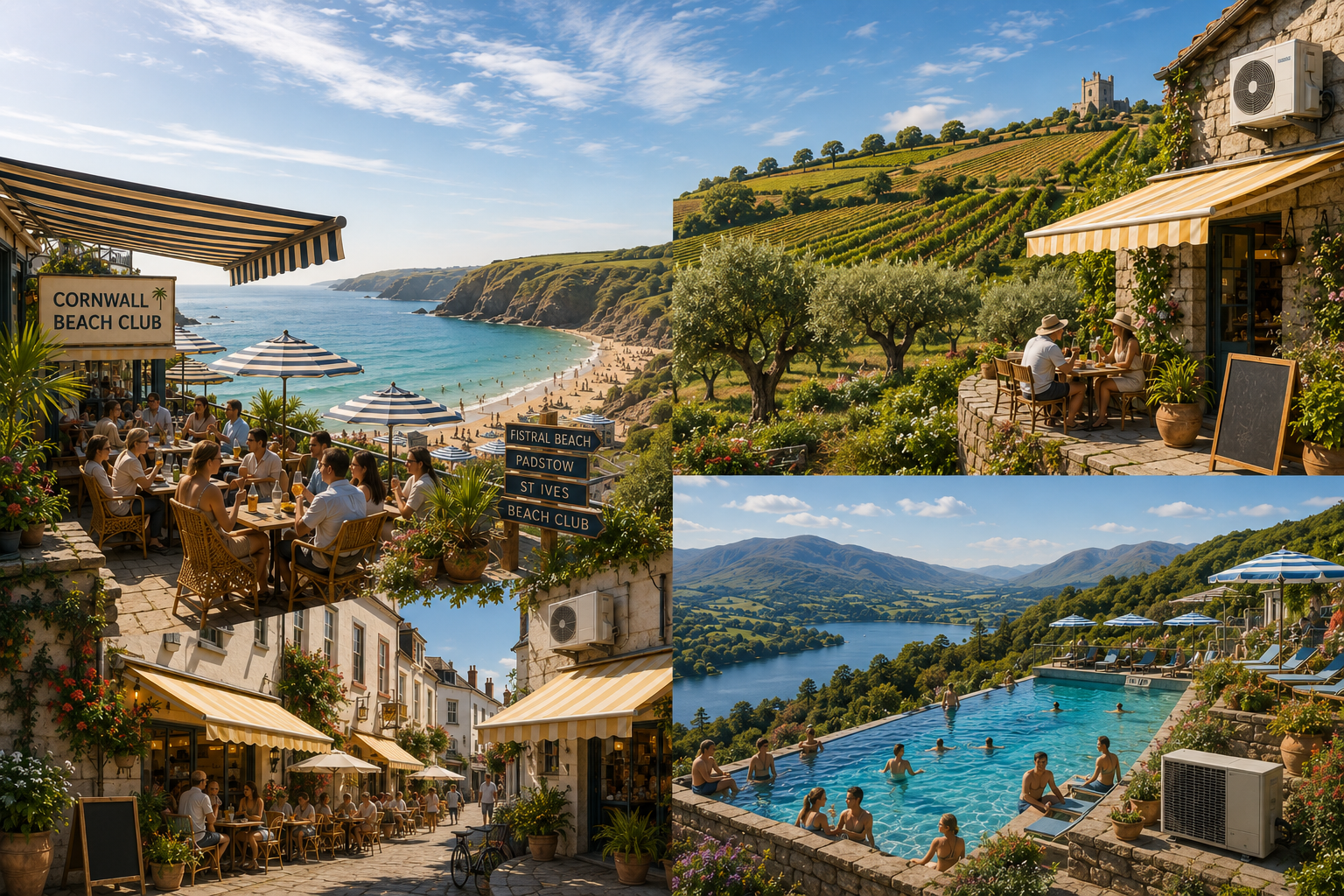
This transformation extends far beyond our indoor spaces. As Southern Europe tragically transforms into an uninhabitable kiln, the traditional summer holiday is up for grabs. Our famous coastlines could thrive as holidaymakers swap St Tropez for Salcombe, Ibiza for the Isle of Wight and the Costa del Sol for Cornwall. The Cotswolds, Peak District and Lake District could become Britain’s answer to Provence, Lake Como and the Dolomites.
I witnessed this potential during the most recent heatwave, when I fled the oppressive heat of London for a friend’s cottage in Cornwall. For my one week as a climate change refugee, I felt like I was in the Algarve or Biarritz. The Atlantic sea remained characteristically cold, but the weather was beautiful, the beaches were immaculate, and the coast was alive with dynamic small businesses capitalising on the influx of DFLs (a colloquial acronym for people “down from London”).
Read more The climate quango empire will keep growing until cheap matters more than ideology Bring the global elite to Cornwall
Global warming is the biggest economic opportunity for Britain’s struggling coastal towns since the invention of railways. The Victorians built railways, piers, promenades, hotels and seaside resorts. They did not respond to change by forming a committee, commissioning an impact assessment and then banning everything attractive.
We should show the same ambition. With radical planning reform, Britain could attract billions in private investment to build world-class beach clubs, boutique hotels, lakeside retreats, hillside chalets, outdoor pools, vineyards, marinas, restaurants and luxury resorts. Let the global elite spend their money overlooking the Cornish Riviera, the Norfolk coast, the Isle of Wight and the lakes of Cumbria rather than the Mediterranean.
We must also let the price mechanism re-engineer our countryside, as the sun-baked plains of the South become less suitable for traditional livestock, market forces will dictate that cattle move northwards to cooler pastures. In their place, farmers can transform southern counties into sprawling olive groves and world-class vineyards. English wine is already a national success story. Within a generation, Britain could be known not just for warm beer and wet picnics, but for crisp sparkling wine, premium produce and even English extra virgin olive oil. Furthermore, a market-driven shift to a locally grown Mediterranean diet will naturally alleviate pressure on the NHS, trading deep-fried despair for tomatoes and fresh olive oil to the benefit of both our waistlines and our GDP.
To run a sub-tropical superpower, however, you need serious, cheap and abundant power. You cannot power an air-conditioned, AI-heavy economy on the hope that the wind happens to blow on a Tuesday afternoon. Britain should drill the North Sea, frack, approve a new generation of oil and gas-fired power stations, and rapidly deploy Small Modular Reactors alongside renewables.
North Sea oil and gas should not be treated as an embarrassment. If Britain is going to use fossil fuels during the transition anyway, we may as well produce more of them here, tax them here, employ people here and control our own energy security.
Abundant energy and planning reform are also the key to securing Big Tech. As wildfires, rolling blackouts and punitive state taxes render California increasingly unlivable, Britain should offer cheap energy, a competitive tax regime, the rule of law and a presumptive right to build on land purchases. AI data centres and tech enterprises will go where energy is cheap and governments let them build.
The real threat to Britain is not warm weather. It is the cold, dead hand of eco-austerity. Climate change is happening. Net zero Britain will not stop it. So our choice is simple: adapt and get rich, or moralise and get poorer.
Let us cut taxes, deregulate, drill, frack, build, cool, farm, innovate and grow. The future of Britain is not grey, damp and apologetic. It is bright, prosperous and beautifully warm.
Albie Amankona is a broadcaster across all the major UK networks and a financial analyst specialising in technology, media and telecoms
Read more Two-tier taxes are not the way to get Britain back to work
Similarly tagged content: Sections Categories People & Organisations