Candy Crush is a garish game that can make winners incredibly rich. Anna Moloney attends the world finals and meets the new champion.
 Anna Moloney



Thursday 25 June 2026 11:03 am
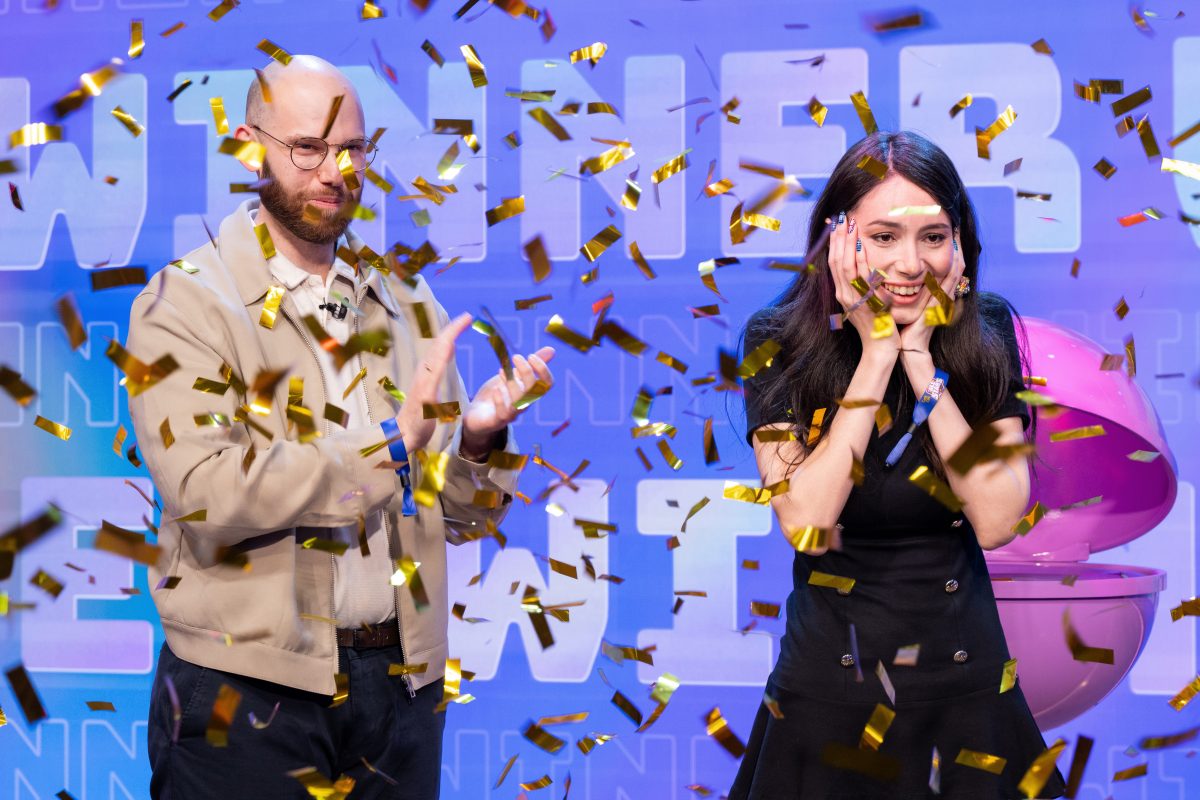 25-year-old Luana is crowned the 2026 winner of Candy Crush All Stars
 Candy Crush is a garish mainstay of Tube journeys and lunch breaks, but it’s also a global competition that can make winners incredibly rich. Anna Moloney attends the world finals and meets the new champion
It was a sunny Friday afternoon when I found myself sitting inside the Piccadilly Lights. Yes, inside the digital billboards. Around me, in nauseous technicolour, is the live final of this year’s Candy Crush All Stars competition, a tournament that sees the year’s 10 best players flown in from around the world to compete in a gameshow-style final for the chance to win $500,000 – and a coveted jewel-encrusted ring, designed to resemble the game’s colourbomb candies.
The event is shiny-floored and otherworldly. A man with a microphone struts around in a sweetie-print blazer, reading out jokes he is generating live on ChatGPT to warm up the crowd. Off the back of the front row chairs hangs a line of polyester bomber jackets embroidered with ‘ALL STARS LONDON 2026 FINALIST’.
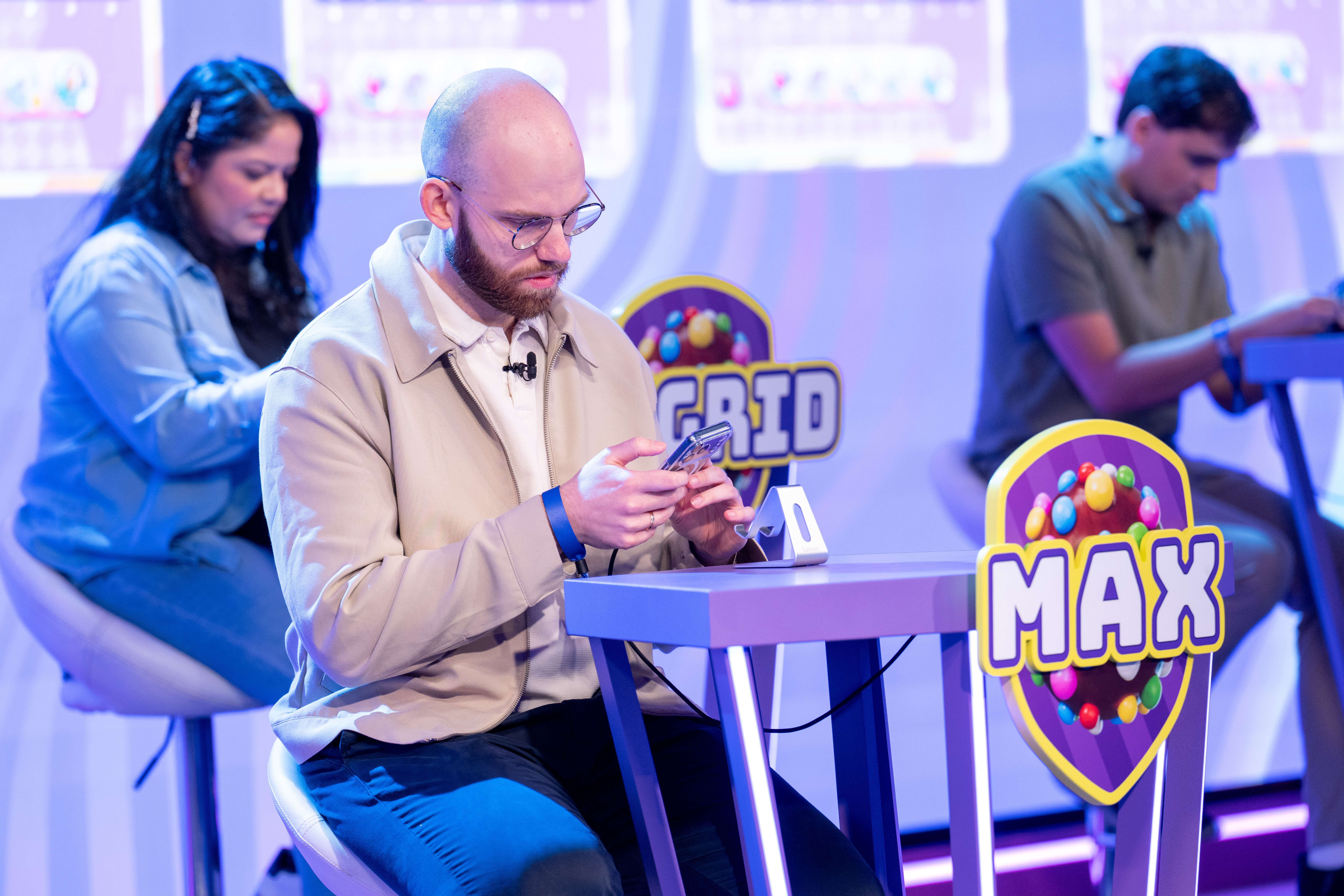
As the final round got into full swing, I took my place in the audience, where, along with around 30 others (friends, family and crew), I bedded in to watch the action: a roughly three minute level played head to head between 25-year-old arts student Luana and 31-year-old finance worker Max.
Bathed in a neon purple glow, we stared up as one at Luana and Max, hunched over their phone screens, swiping furiously to metronomic music pulsing in the background. On the panoramic screen ahead of us their progress was beamed, their scores neck and neck. Until everything changed. Lemon drops, gummy squares and jelly beans rained down in a dizzying torrent upon one screen. The audience practically swooned. For me, the tension was, I admit, bearable. But for others it was pure agony: voices hushed, mouths agape. The woman in front of me clutched a marshmallow plushie to her chest, while the man beside me held his head in his hands, letting out a strangled cry: “For fuck’s sake!”
#mc_embed_signup { background: #fff; clear: left; font: 14px Helvetica, Arial,sans-serif; width: 100%; max-width: 600px; margin: 20px 0; } #mc-embedded-subscribe-form { margin: 20px 0 !important; } .newsletter-form-flex { display: flex; gap: 0; align-items: center; margin-top: -10px; } .newsletter-form-flex input[type=”email”] { flex: 1; padding: 2px 10px; border: 1px solid rgb(18, 22, 23) !important; border-radius: 12px 0 0 12px !important; } .newsletter-form-flex input[type=”submit”] { padding: 4px 10px !important; margin: 0 !important; background-color: rgb(18, 22, 23) !important; color: rgb(255, 255, 255) !important; border: 1px solid rgb(18, 22, 23) !important; border-radius: 0 12px 12px 0 !important; } .newsletter-banner-content { margin-bottom: 15px; } .newsletter-banner-content h2 { margin: 0 0 10px 0; font-size: 18px; font-weight: 600; } .newsletter-banner-content p { margin: 0 0 10px 0; line-height: 1.5; } .newsletter-banner-content ul, .newsletter-banner-content ol { margin: 0 0 10px 20px; } .newsletter-banner-content a { color: #0073aa; text-decoration: none; } .newsletter-banner-content a:hover { text-decoration: underline; } .newsletter-banner-content img { max-width: 100%; height: auto; margin: 10px 0; } #mc_embed_signup #mce-success-response { color: #0356a5; display: none; margin: 0 0 10px; width: 100%; } #mc_embed_signup div#mce-responses { float: left; top: -1.4em; padding: 0; overflow: hidden; width: 100%; margin: 0; clear: both; }
What we were seeing, he later informed me, was near unprecedented at that stage of the game, where levels are so complex the chance of ‘cascading’ – the term for the ferocious chain reaction of candy explosions we were witnessing – is extremely rare. I nodded as if I understood the weight of what he was telling me. But minutes later 25-year-old Luana from Brazil was shrieking with joy as she was crowned the Candy Crush All Stars 2026 winner, for which she will duly be awarded half a million dollars. I started to get it.
How Luana became a Candy Crush Champion
Luana isn’t a professional gamer. To her credit, she doesn’t look like one either. The surprised reaction I get when I show people a picture of officially the best Candy Crush player in the world is unanimous: “She’s hot?”
Yes, and rich now, too.
Admittedly, it was the first thing that struck me, too, when she came onto the stage to compete. Both she and her semi-final rival Camilla, I noted with some astonishment, appeared perfectly normal. Well dressed, well groomed, no obvious signs of mental decay. Like around 200m others, they just like to play Candy Crush. They’re also pretty good at it.
Luana says she started playing the game back in 2013, when, aged 12, she would compete with her sisters for time on their shared iPad in their home in Brazil. She would play the game with a stylus, something she says she had to train herself out of for the live final, which requires players – or ‘Crushers’ – to compete on a phone. She also made sure to buff her long, manicured nails down, lest they should interfere with her gameplay.
The start of Luana’s love affair with Candy Crush came not long after the game’s release, upon which it became an instant phenomenon. Launched on Facebook in April 2012, within just three weeks Candy Crush had gained 4.2m users. Six months later it was rolled out on mobile to capture the burgeoning thumb-tapping market; in 2014, the company behind it, King, floated on the New York Stock Exchange with a valuation north of $7bn. Since then the candy conquest has marched on. And on. And on.
The game’s success lies in its simplicity – you swap candies on the board in order to get three in a row – but also in its addictiveness. By the end of 2013, Apple declared it the most downloaded free app of the year, and in 2023, Guinness World Records recognised it as the highest grossing mobile game ever, having racked up a lifetime revenue of around $20bn.
Which all goes some way to explaining why King, the company behind the game, is happy to give away an astonishing $1m a year to its All Star finalists.
The annual All Stars tournament has been running for six years. It’s grown substantially in that time (the prize used to be a pillow) but the premise remains the same. You do not need to formally enter; instead, if you are playing the game during the tournament window, you are automatically involved. Players are entered into multi-day stages, at the end of which the top slice of the leaderboard is carried through to the next round.
Read more Reform UK Treasurer Nick Candy takes podcast firm off sales block
This continues in what can be a fairly passive manner for most players, until the final knockout round: a 24-hour sprint in which the remaining players must collect as many points as possible. It is here the top 10 finalists, all of whom will receive a minimum of $15,000 along with an all-expenses trip to the final, are determined. If the Reddit thread’s anything to go by, the knockouts are by far the most gruelling stage of the competition. Many, including Luana, played for the whole 24 hours. She says her mum stayed up with her to bring her food and energy drinks, while her father massaged her cramping hands.
The less sugary side…
Finalists like Luana tend to share a fascination with the mechanics of the game. Take Cole, a four-time finalist who has cumulatively won £165,000 (which he has put towards paying off debt and making investments): he says his gameplay is akin to chess, always planning three or four moves ahead. In the live finals, players are given 30 seconds of hands-free time before every round to furiously study the level before playing.
Skill and strategy undoubtedly play a substantial role in the game. But so too do in-app purchases, which is where things get a little less… sugary.
From ‘lollipop hammers’ that smash blockers to ‘color bombs’ that destroy all candies of a matching colour, ‘boosters’ are a well-loved and well-utilised part of the game – but they come at a price: specifically, around $1-$3 apiece. You are not allowed to purchase them for the live final, but for the qualifying rounds you are free to go ham – something that has raised not only eyebrows but litigation.
Last year, one Candy Crush player was so aggrieved they filed a class action lawsuit against King and its parent company, Activision Blizzard. The plaintiff, California man Ruben Valenzuela, alleged the competition violated the state’s consumer protection laws by misleading players about the odds of winning the 2023 All Stars competition, thereby inducing players “to spend significant sums on in-app purchases that they otherwise would not have spent”.
The finalists I speak to preach frugality when it comes to in-app spending. Last year’s winner Tiago, a tax director with an impressively laid-back attitude to the whole affair (even during the tournament he only plays for around 15 minutes a day to relax before bed), tells me he does not budget for any boosters at all. Indeed, he actively tries to avoid using them in order to hone his skills for the live finals. Luana is more liberal. She says she probably spent around $200 for this tournament, which, given the way it went, feels like a solid investment.
For others, the figure can be much, much higher. When I ask Cole how much he’s spent, he’s coy, but suggests he knows people who spend a lot. When pressed for the figure, he says he’s not allowed to talk about that…
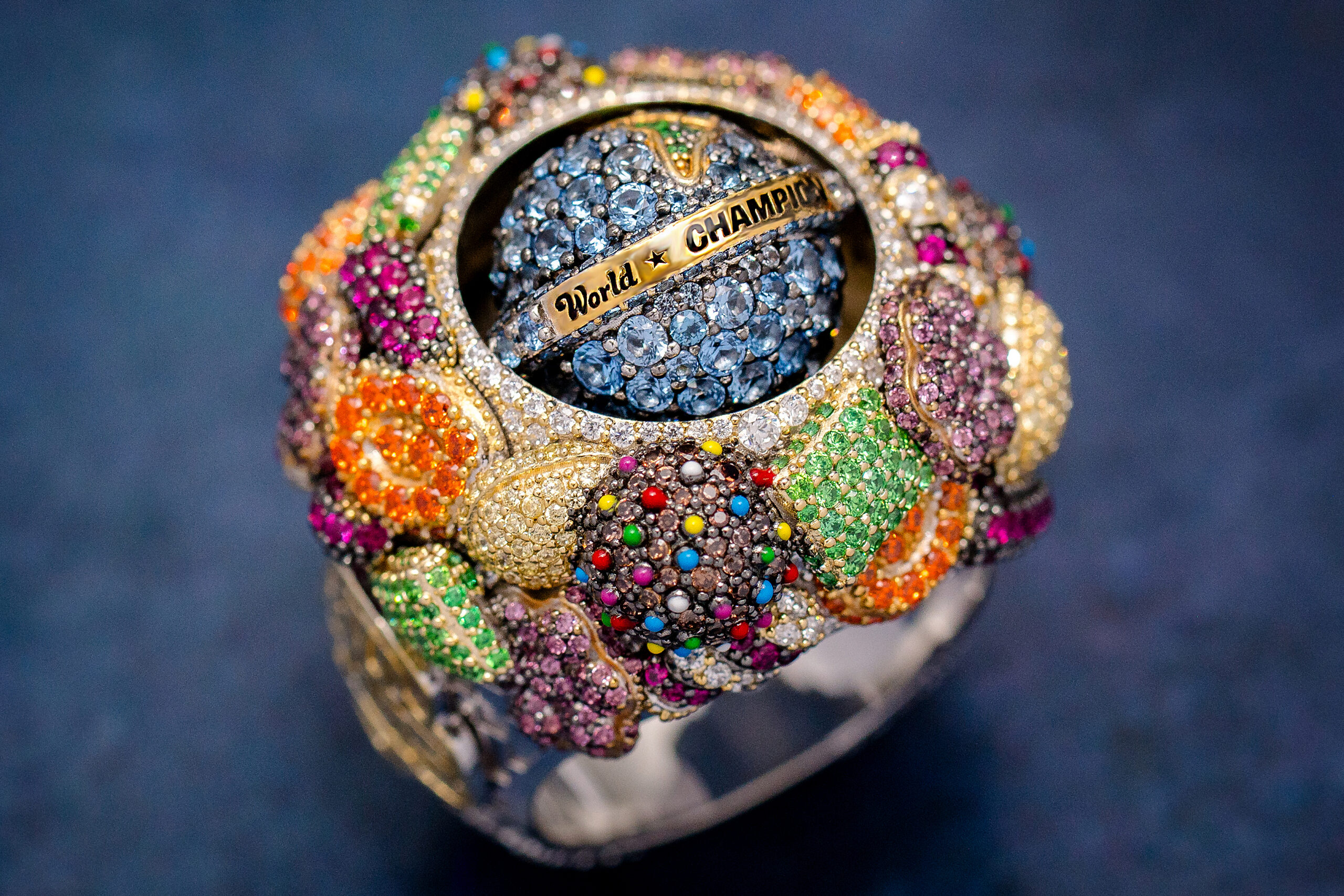 The Candy Crush All Stars 2026 jewel-encrusted ring awarded to Luana
How does Candy Crush make money?
Information from when King was a public company (between 2014 and 2016, after which it was bought by Activision Blizzard for $5.9bn) tells us the overwhelming majority of Candy Crush players enjoy the game without spending a penny, with only around two to four per cent making any purchases at all, which is fairly typical for free-to-play apps. But those who spend can spend big: data from AppMagic suggests Candy Crush hit a single-month record in April 2025, when net in-app revenue hit £108.3m. That this was the same month as the qualifying rounds for the 2025 All Stars competition was probably not a coincidence.
In 2019, when summoned to a Commons select committee investigating addictive technologies, Candy Crush senior executive Alex Dale defended the game, saying only “a very, very small number” spend or play at high levels, and that these players are happy with what they are doing. He revealed that each day more than 9m players spend between three and six hours playing the game, while one player had spent $2,600 in a single day on the game’s gold bar currency.
When approached for comment on the lawsuit, Candy Crush Saga general manager Paula Ingvar says the company is “unable to comment on any individual player cases or ongoing legal matters” but they have “processes in place to review player concerns and remain committed to maintaining a fair and competitive experience” throughout the competition. When asked if the game is addictive, she says it is designed to be “engaging and enjoyable” and that players can enjoy it “at a time and duration that suits their play style”.
At the finals this year, I couldn’t help watching a woman in the front row, one of the finalist’s plus ones, who spent large chunks of the day playing Candy Crush. When I ask Luana, Tiago and Cole whether they consider themselves addicted, they all laugh it off. Cole says he’s ready to take a couple months off playing. And Luana says she only plays for fun. But they all want to compete again next year – and with their success, who can blame them?
I walked into the competition smugly wondering what kind of nerd would devote so much of their lives to matching virtual gum drops. But as Luana stood triumphant on the stage beside a giant lollipop, a hideous but admittedly diamond-encrusted ring on her finger, I was forced to reassess. When asked by the presenter what was her favourite part of the experience, her answer came straight from the heart and lungs: “WINNING!,” she screamed. Luana is now halfway to being a millionaire. It is I, after all, who may be the fool.
• Tap here for more stories from The Magazine
Read more Hydration breaks: World Cup ad cost could eclipse Super Bowl’s $7m price tag
Similarly tagged content: Sections Categories People & Organisations