


With most Britons now saying Brexit was a mistake, any future bid to rejoin would still force the UK to swallow full free movement and EU rules again. Is that actually a realistic possibility?
 Léa Marchal



Production: By Europod, in co-production with Sphera Network.
EUobserver is proud to have an editorial partnership with Europod to co-publish the podcast series “Briefed” hosted by Léa Marchal. The podcast is available on all major platforms.
Find the full transcript below:
Ten years after voting to leave the European Union, 57 percent of Brits now believe Brexit was a mistake.
But what if the United Kingdom eventually wanted to rejoin the EU?
Is that actually a realistic possibility?
Hi, I’m Léa, and this is Briefed, your daily European podcast.
The result of the referendum on the UK’s membership of the European Union was close ten years ago: 51.89 percent voted to leave the EU, while 48.11 percent voted to remain.
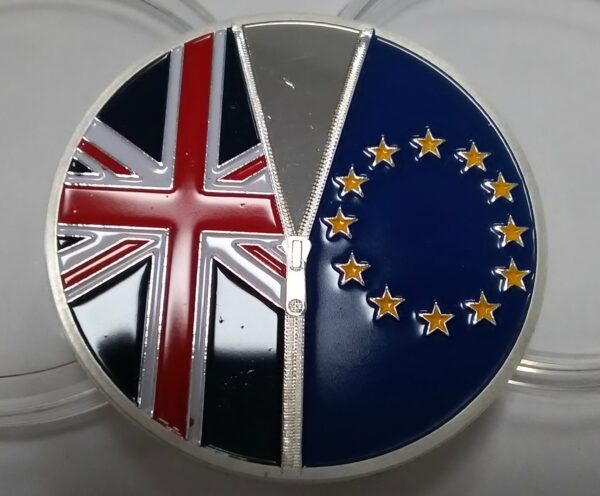
It then took five years of negotiations and technical work before the United Kingdom formally left the bloc. Since then, seven different prime ministers have led the country.
Today, many Britons appear to have second thoughts. According to a YouGov poll of around 2,000 people, 57 percent believe Brexit was a mistake, and 54 percent would vote to rejoin the EU if given the choice today.
The trend is even stronger among the youngest people, who were too young to vote in 2016.
On Monday, prime minister Keir Starmer announced his resignation after a sharp decline in popularity. Manchester Mayor Andy Burnham is widely seen as a leading contender to replace him.
And he is quite pro European.

This Labour politician said last year that he hoped to see the United Kingdom rejoin the European Union within his lifetime.
Could that actually happen?
In theory, yes. The United Kingdom could apply to join the EU again, and it is unlikely that one or more member states would block the process.
However, the European Commission has already made it clear that there would be no special treatment for Brits.
To rejoin the EU, the United Kingdom would therefore have to follow the same path as other candidate countries, such as those in the Western Balkans, as well as Ukraine and Moldova.
Of course, the UK would start from a strong position. It was a member for decades, already applies a large share of EU legislation, and fully meets the requirements related to the rule of law and democratic institutions.
However, there are still areas where the UK remains reluctant to align itself with the EU. One example is the principle of free movement of people. In fact, this was one of the main reasons Brexit negotiations proved so difficult: Britain wanted to keep the benefits of the single market — namely the absence of tariffs and most border checks — while limiting the free movement of people.
Today, these positions, along with Britain’s reluctance to align certain standards with EU rules, mean that its partnership with the EU is not as deep as it could be.
So Andy Burnham, should he become the next prime minister, knows that now is probably not the time to reopen the debate on EU membership.
As for the EU, what would it gain from Britain’s return?
For Europeans, Britain’s return would mean smoother trade and cooperation, as well as easier travel between the UK and the rest of the continent.
There are countless practical advantages to being part of the bloc. That said, the agreements concluded after Brexit already provide a fairly high level of cooperation, similar to the relationship between the EU and Switzerland.
Moreover, since Keir Starmer came to power in 2024, the UK has moved closer to the EU, and on the international stage, the two have remained broadly aligned. We saw it at the start of the war in the Middle East, when some European countries coordinated their response with the UK.
In other words, the UK does not need to be a member of the EU to be a close international ally.
For the time being, the EU–UK summit that was due to take place on 22 July has been postponed. Not because of tensions, but because the United Kingdom first needs to sort out its domestic political situation — starting with appointing a new leader.
Which should happen over the summer.