



Warren, a Ghent-based FinTech startup focused on workplace pensions and financial coaching, has raised €10 million in a Seed round to accelerate its growth in Belgium and lay the groundwork for a European launch. The round was led by the venture arm of transatlantic investment fund Motive Ventures, with participation
 Rahul Raj



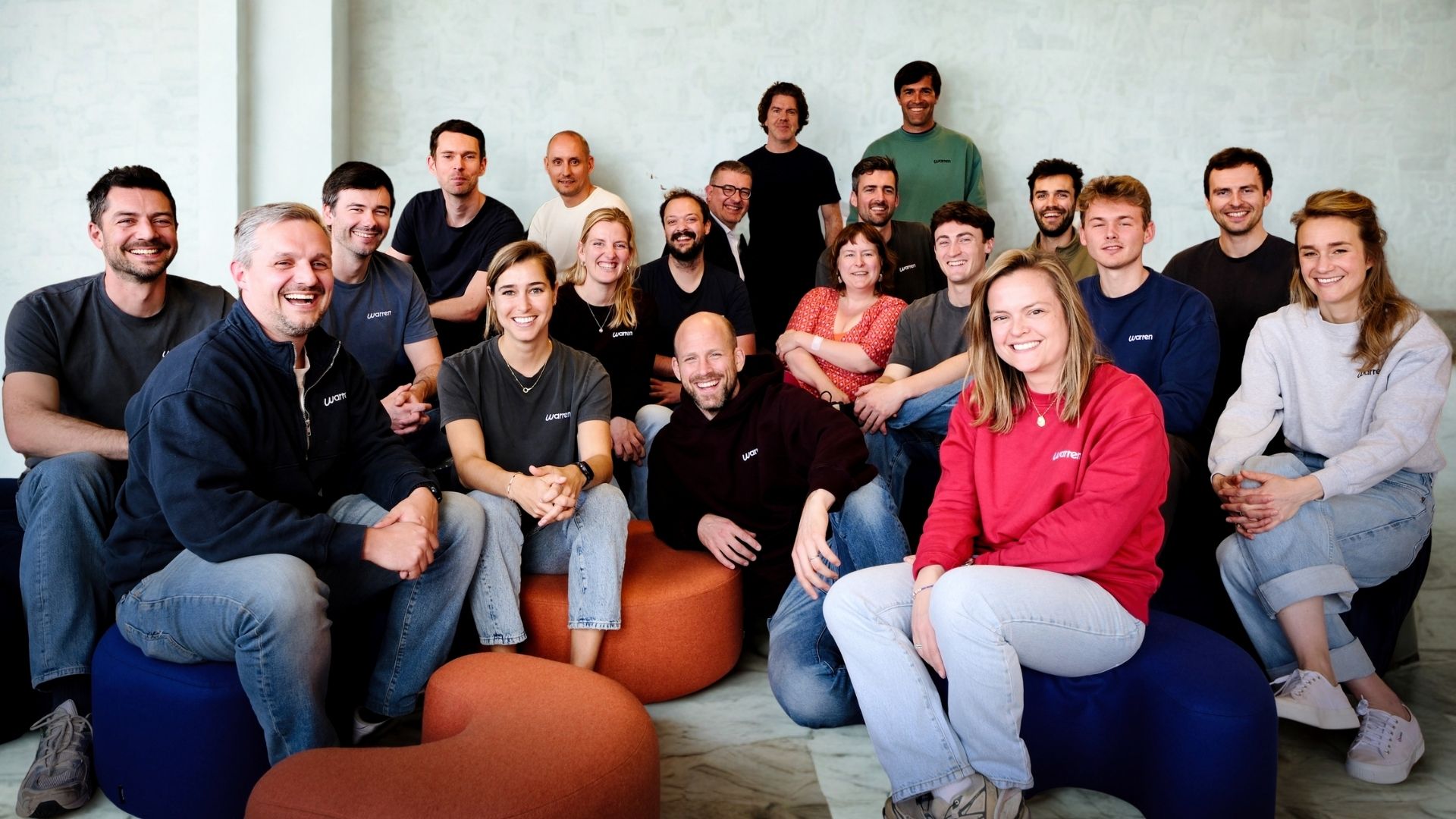
Warren, a Ghent-based FinTech startup focused on workplace pensions and financial coaching, has raised €10 million in a Seed round to accelerate its growth in Belgium and lay the groundwork for a European launch.
The round was led by the venture arm of transatlantic investment fund Motive Ventures, with participation from F Capital and renewed backing from Entourage, Syndicate One and 100IN. In March 2025, Warren announced it had raised €3 million in pre-Seed funding.
“The vast majority of Belgians save for their retirement in financial products that erode their purchasing power year after year, even though retirement is by definition a long-term horizon. This is an enormous social problem whose severity remains chronically underestimated. It’s not just about our pension. It’s about our prosperity, today and for future generations,” said Cedric De Vleeschauwer, co-founder and CEO of Warren.
Founded in 2024 by Cedric De Vleeschauwer, Jos Polfliet, David Du Pré, Tijs Deryckere, and Pieterjan Behaeghe, Warren claims to be reforming workplace pensions in Belgium.
According to the company, Belgium’s pension system is under serious strain. “People are living longer, birth rates are falling and the ratio of workers to retirees shifts further in the wrong direction every year. Statutory pensions have long stopped being enough, and the second pillar meant to bridge that gap — the supplementary pension — is barely pulling its weight. Today, the median supplementary pension reserve among Belgian employees aged 56 to 65 is less than €10,000,” Warren mentioned in the press release.
It further states that part of the problem lies with the products themselves. Some pension reserves are allocated to branch 21 group insurance schemes: products that offer nominal returns but provide minimal gains after accounting for inflation and fees. Although branch 23 products invest more dynamically, structurally high management fees erode returns year after year.
Warren notes that group insurance remains one of the heaviest line items in an employer’s compensation budget and one of the least appreciated benefits. Employees receive one document per year that they barely understand.
The company points out that the Belgian system largely overlooks the potential of compound returns over an extended period. It highlights that countries like Australia, the Netherlands and the Scandinavian nations built their supplementary pension systems based on this insight.
“In Australia, employers contribute at least 11% of gross salary into pension funds that invest broadly across capital markets. The entire system is designed to let that compounding effect work across a full career. The result: roughly €2,500 billion in pension capital sitting in the country, about twice Australia’s GDP. By comparison, second-pillar pension reserves in Belgium amount to less than one-fifth of GDP,” explained Warren.
Warren started from that observation. The company obtained an IBP licence in June 2025 and has since run its own pension fund: Warren Pension Fund OFP. The fund invests through a mixed portfolio including an equity ETF and a bond ETF, under FSMA supervision.
The Belgian startup claims that there are no entry or exit fees and no percentage-based charge on assets under management. Companies that switch do so without any additional cost, working with the same pension budget they already have. The employer pays a fixed subscription. Every cent of return goes to the employee.
David Du Pré, co-founder and CCO, said, “Finance and HR teams are hearing the same question more and more: where does this money actually go, and what do I really get back? Traditional pension products are still too often a black box. The money leaves, but it generates neither a better financial outcome for the employee nor a stronger employer brand. Employers understand the urgency now, and they’re not waiting around.”
Apart from the pension fund, Warren also offers a coaching platform that guides employees across their entire financial life, through AI or a personal adviser when needed. The AI coach in the Warren app pulls data from multiple sources: the employer’s compensation package, data from Mypension.be and bank transactions via PSD2.
This app allows employees to find answers to questions like what income they will rely on during long-term illness, how much to save for retirement at 63, or the most effective way to renegotiate their mortgage. It also offers video consultations with one of Warren’s nine domain specialists, covering everything from loans and insurance to investment planning.
“With this capital, we want to fundamentally reinvent the Belgian pension system. We’re targeting 100,000 employees on the platform by 2028, after which we’ll push into one or two larger European markets. That’s why we’re looking for around thirty additional hires, on top of the 25 already in place. We’re building a workplace pension platform that genuinely delivers returns, for every company in Belgium and beyond. Building the financially fearless generation,” added Du Pré.
Warren reports that within a year, around a hundred Belgian companies, including Lighthouse, Yuki, Wintercircus and Poppy Mobility, have switched to Warren for their pension plan.