Two years after opening its doors to Ukrainians, Poland is now quietly rewriting the rules, leaving many refugees scrambling to understand why the help they relied on is suddenly disappearing.
 Léa Marchal



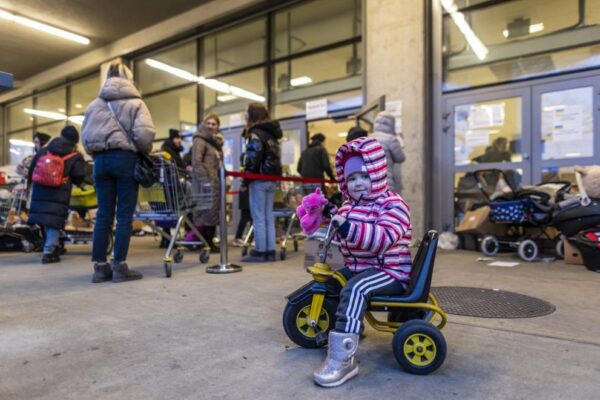
Production: By Europod, in co-production with Sphera Network.
EUobserver is proud to have an editorial partnership with Europod to co-publish the podcast series “Briefed” hosted by Léa Marchal. The podcast is available on all major platforms.
Find the full transcript below:
Since March, Ukrainians benefiting from temporary protection in Poland no longer enjoy the same rights as before.
Free collective accommodation is no longer available to everyone. And neither are family benefits.
Why has Poland tightened the rules, and what does it mean for Ukrainian refugees?
In an article published last week, Polish media outlet Krytyka Polityczna tells the story of Irina, a Ukrainian woman from Kharkiv. In 2022, she was shot in the arm and her home was destroyed by the war. After seeking refuge in Poland, she was able to access healthcare and social assistance.
But that changed on 4 March.
From now on, Ukrainians under temporary protection must be employed in order to receive benefits such as family allowances or housing support.
And to qualify for free accommodation in collective housing, they must be severely disabled, have survived torture, or be pregnant.
Despite her injury, Irina does not meet those criteria because she is not considered unable to work.
Fortunately, she was able to recover from her arm injury and find a job as a cleaner. She even managed to secure social housing.
For Katia, however, a Ukrainian student also interviewed by Krytyka Polityczna, the consequences are more serious. She will have to interrupt her studies and start working because her father has cancer and no longer meets the conditions required to receive healthcare free of charge.
So why has Poland changed access to these benefits?
The Polish government argues that the situation has stabilised since 2022 and the first waves of refugees. Most Ukrainian adults living in the country are now employed, meaning that for the majority of them, little will change.
But above all, the move is aimed at reducing public spending, according to Krytyka Polityczna, which is a member of the Sphera network alongside Europod.
The author of the article argues that the new restrictions on social benefits are unlikely to generate significant savings for Poland. Ukrainians not only help fill labour shortages in key sectors, they also contribute to the country’s social security system.
So where do applications for temporary protection in the EU stand today?
More than four years after the start of the war, Ukrainians continue to seek refuge across the European Union. In April alone, nearly 43,000 people were granted temporary protection status, according to figures from the European Commission.
Poland is not the main destination country, but the second-largest. Germany has welcomed the highest number of Ukrainians since the beginning of the war, with almost 1.3 million people. Poland hosts just under one million.
The numbers have gradually declined over time, but not dramatically.
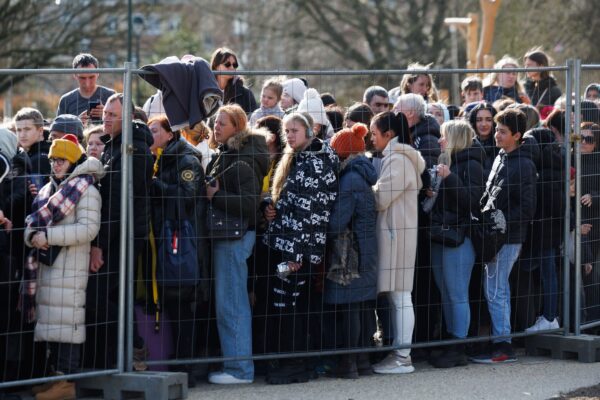
As for Poland’s new framework, if we compare arrivals in March and April, we can already observe a decrease. However, it is still too early to say whether that decline is linked to the new rules.
In the coming months, we may see a modest redirection of refugee flows from Poland toward countries such as Germany or Lithuania, which still provide support under more flexible conditions. In most cases, Ukrainians simply need to have the proper documentation and register as job seekers.
As for temporary protection itself — the automatic status granted to Ukrainians fleeing the war — it remains in force until May 2027.
Before then, European governments will have to decide whether to extend the scheme once again or begin restricting it.