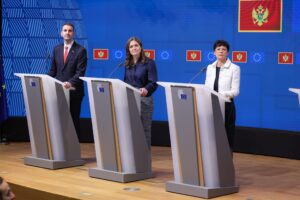
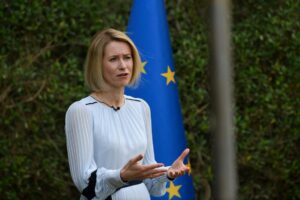
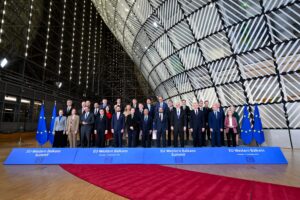
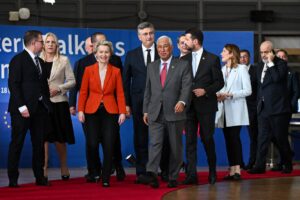
Four freshly installed prime ministers are joining the EU leaders’ table.
 Sebastian Starcevic



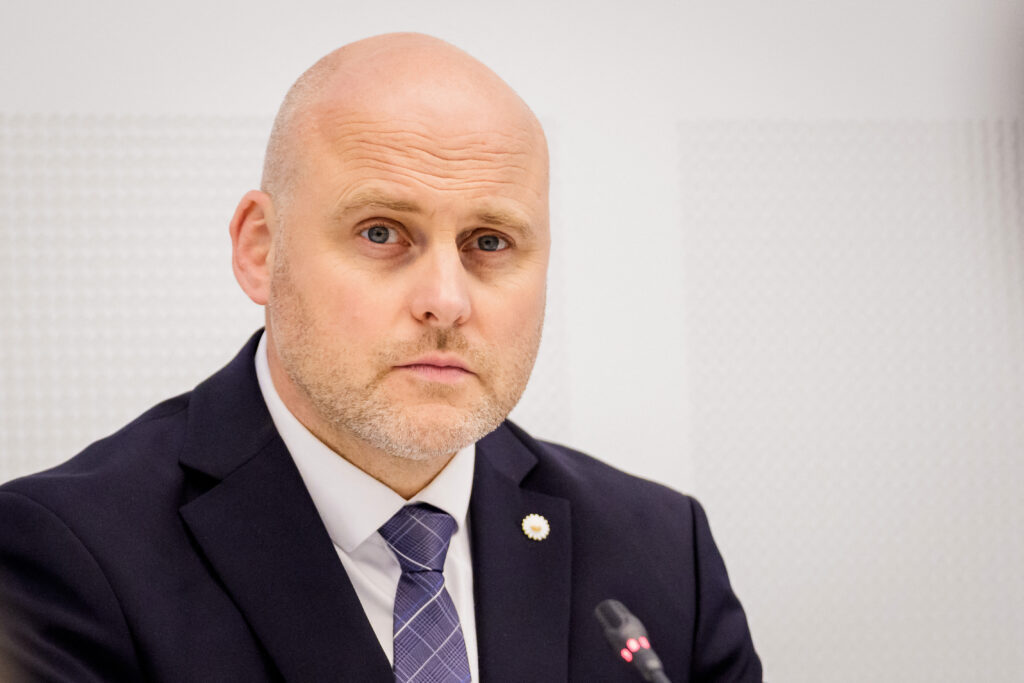
In recent weeks, he has gone further than many of Israel’s European defenders, reversing Slovenia’s arms embargo on Israel and lifting an entry ban on both Ben-Gvir and Israeli Prime Minister Benjamin Netanyahu. Israel subsequently announced plans to open an embassy in Ljubljana, a move Janša hailed as “a new era in Slovenia-Israel relations.”
That opposition may not be decisive, however. If Germany softens its stance on sanctions, other holdouts — including Slovenia — could become more willing to fall into line, according to the first European diplomat.
The Russia hawk: Latvia’s Andris Kulbergs
Latvia’s parliament last month voted to make petrolhead businessman-turned-politician Andris Kulbergs the new prime minister, after a political crisis caused by a series of accidental Ukrainian drone incursions in Latvian airspace led to the resignation of former premier Evika Siliņa.
Kulbergs first entered parliament in 2022, doesn’t belong to any party and has never been a minister, but has the backing of a broad coalition. With just four months before Latvia’s general election, his government’s priority is shoring up the country’s anti-drone defenses to better respond to future airspace breaches.
That comes as the bloc’s leaders are set to discuss on Thursday and Friday how to secure the bloc’s airspace on its eastern flank, according to the summit’s draft conclusions, and express “full solidarity” with member countries exposed to such threats.
The Latvian prime minister has pledged to continue Riga’s stalwart support for Ukraine, signing a drone deal with Kyiv in the first days of his premiership. Latvia is in the company of the EU’s top defense spenders and fellow Russia hawks Poland, Lithuania and Estonia.
Koen Verhelst contributed to this report.