On Tuesday, the Shaftesbury Theatre, the largest independent theatre in the West End, announced that it was changing its name. As of February 2027, following a renovation which will include restoration of its unique opening dome, it will be the Judi Dench Theatre, in honour of the 91-year-old actress who
 Eliot Wilson



Wednesday 17 June 2026 4:55 pm | Updated: Wednesday 17 June 2026 4:57 pm
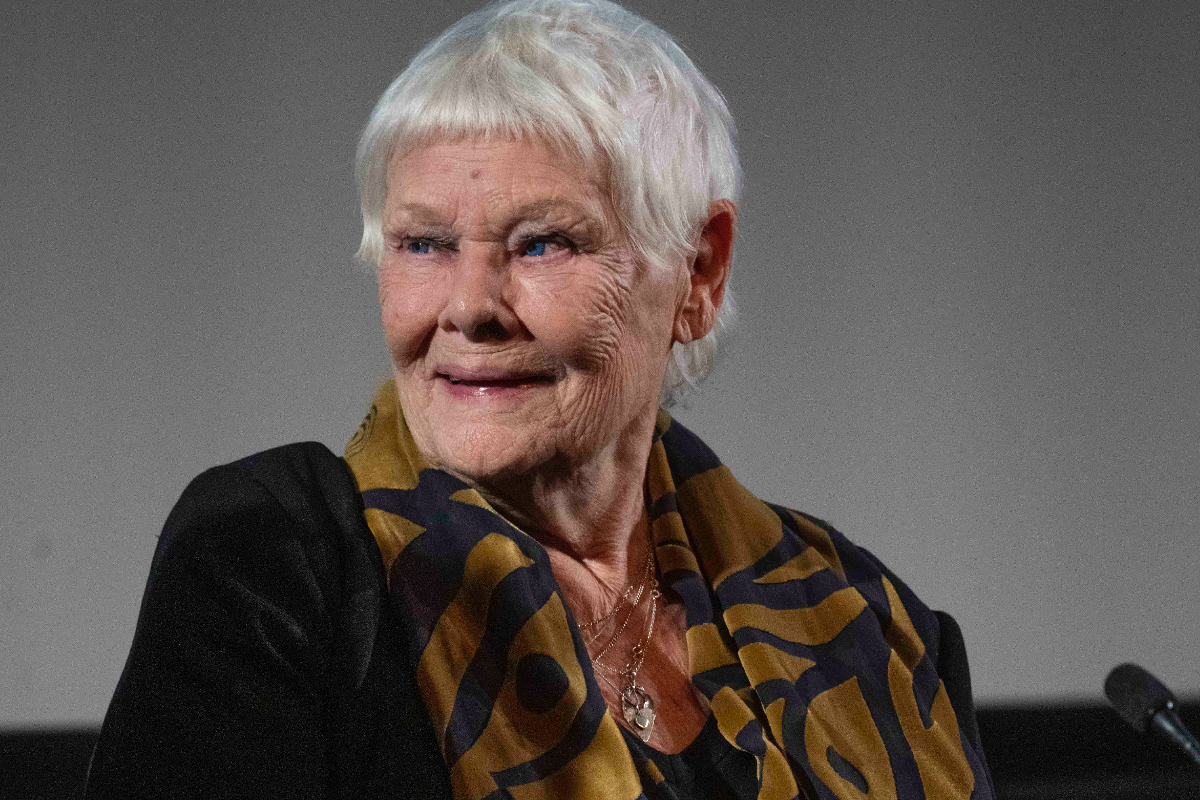
On Tuesday, the Shaftesbury Theatre, the largest independent theatre in the West End, announced that it was changing its name. As of February 2027, following a renovation which will include restoration of its unique opening dome, it will be the Judi Dench Theatre, in honour of the 91-year-old actress who boasts an Academy Award, a Tony Award, two Golden Globes, four British Academy Television Awards and six Film Awards, and seven Laurence Olivier Awards.
Dame Judi Dench is more than the sum of her glittering career, though. Her versatility, longevity and very obvious good humour have made her a genuine national treasure, a label too frequently applied to more transient stars. As the old joke runs, to start a riot in Surrey, you need only walk into a local tea room and say, “I think Judi Dench is overrated”.
Dench said that “to have this beautiful theatre renamed after me is truly overwhelming”. This is not empty, soulless branding; she was one of 30 founding members of the Theatre of Comedy Company, a group of actors, directors and writers brought together in 1983 by playwright Ray Cooney, which took on the lease of the Shaftesbury Theatre and later bought the building with the aim of presenting the best of British comedy. Other members included Richard Briers, John Mortimer, George Cole, Nigel Hawthorne, Sheila Hancock, Julia McKenzie and husband-and-wife Maureen Lipman and Jack Rosenthal. Dench is also a close friend of the Taffner family, Donald Taffner Jr currently serving as Chairman of the Shaftesbury Theatre.

Judi Dench: One of the great actresses
Few would argue with Dench’s status as one of Britain’s greatest actresses. She made her professional stage debut nearly 70 years ago, in September 1957, playing Ophelia in the Old Vic’s production of Hamlet at the Royal Court Theatre in Liverpool. She made her first appearance in London is the same role later that year; the eponymous Prince of Denmark was played by John Neville, not quite 10 years her senior; he was seen as Sir John Gilegud’s natural successor in the Shakespeare canon while his friend Richard Burton was tipped for the mantle of Sir Laurence Olivier.
Having been involved in the 1950s revival of the York Mystery Plays, a cycle of Middle English dramas performed for the feast of Corpus Christi in the mediaeval city, Dench attended the Central School of Speech and Drama and won the Gold Medal as Outstanding Student. She has scarcely been out of work since then, and has mastered seemingly almost every genre, from major films like A Room with a View, Pride and Prejudice and the eight James Bond features in which she played M, to television performances in Love in a Cold Climate and the situation comedies A Fine Romance and As Time Goes By.
#mc_embed_signup { background: #fff; clear: left; font: 14px Helvetica, Arial,sans-serif; width: 100%; max-width: 600px; margin: 20px 0; } #mc-embedded-subscribe-form { margin: 20px 0 !important; } .newsletter-form-flex { display: flex; gap: 0; align-items: center; margin-top: -10px; } .newsletter-form-flex input[type=”email”] { flex: 1; padding: 2px 10px; border: 1px solid rgb(18, 22, 23) !important; border-radius: 12px 0 0 12px !important; } .newsletter-form-flex input[type=”submit”] { padding: 4px 10px !important; margin: 0 !important; background-color: rgb(18, 22, 23) !important; color: rgb(255, 255, 255) !important; border: 1px solid rgb(18, 22, 23) !important; border-radius: 0 12px 12px 0 !important; } .newsletter-banner-content { margin-bottom: 15px; } .newsletter-banner-content h2 { margin: 0 0 10px 0; font-size: 18px; font-weight: 600; } .newsletter-banner-content p { margin: 0 0 10px 0; line-height: 1.5; } .newsletter-banner-content ul, .newsletter-banner-content ol { margin: 0 0 10px 20px; } .newsletter-banner-content a { color: #0073aa; text-decoration: none; } .newsletter-banner-content a:hover { text-decoration: underline; } .newsletter-banner-content img { max-width: 100%; height: auto; margin: 10px 0; } #mc_embed_signup #mce-success-response { color: #0356a5; display: none; margin: 0 0 10px; width: 100%; } #mc_embed_signup div#mce-responses { float: left; top: -1.4em; padding: 0; overflow: hidden; width: 100%; margin: 0; clear: both; }
Her roster of theatrical roles is immense. Dench has played Katherine of Valois, Juliet, Titania, Lady Macbeth, Viola, Joan of Arc, Sally Bowles, Major Barbara Undershaft, Portia, the Duchess of Malfi, Beatrice, Regan, Lady Bracknell, Cleopatra, Gertrude, Madame Ranevskaya, Arkadina and Mistress Quickly.
An actor who had a bit of everything
It is much more than longevity, however. To see Dench at work is always to watch an exercise in inch-perfect performance. In John Madden’s enjoyable hokey Shakespeare in Love (1998), playing Queen Elizabeth I, she appears on screen for five minutes 52 seconds across four scenes – less than five per cent of the film. Yet you cannot watch anything else when she is on camera, and Dench rightly won the Academy Award for Best Actress in a Supporting Role, seeing off Kathy Bates, Brenda Blethyn, Rachel Griffiths and Lynn Redgrave.
Read more In pictures: The City AM Awards 2026
Dench has extraordinary range. Bernard Levin called her “a comic actress of consummate skill, perhaps the very best we have”, and even in gentle 1980s sit-coms she was able to make a great deal from not very much. Yet she was utterly compelling alongside Ian McKellen in Trevor Nunn’s 1976 minimalist, stripped-back Macbeth; all Michael Billington could say in The Guardian was “If this is not great acting I don’t know what is”. She could have been a cipher as the new M in GoldenEye, Pierce Brosnan’s first outing as 007, yet her character developed more significance and depth than either of her predecessors, Bernard Lee and Robert Brown, both fine actors.
As a Shakespearean, where she began in 1957, Dench numbers among the very best. More than that, she came to Shakespeare at a pivotal time, when clear, classical declamation—the tradition in which Gielgud had been raised—was giving way to greater naturalism and more varied interpretation. She joined Peter Nunn’s Royal Shakespeare Company only nine months after its formation and appeared in a dozen plays with the RSC. With Ian Richardson, Vanessa Redgrave, Ian Holm, Ian Bannen, Diana Rigg, Christopher Plummer, Dorothy Tutin and others, she shaped the Shakespeare we know today.
Judi Dench was a musical icon, too
Her roles in musical theatre have wanted for little, in Cabaret, The Good Companions and A Little Night Music, and there was as much sympathy as disapproval for her presence in Tom Hooper’s disastrous Cats (Dench stoically said “I didn’t read anything about the response to it, nor have I seen it”).
Dench is only the second non-royal woman to have a West End theatre named after her, following Lord Lloyd-Webber’s New London Theatre being rechristened the Gillian Lynne Theatre in 2018; the legendary choreographer Dame Gillian Lynne died two months afterwards. It is to be hoped next year’s renaming of the Shaftesbury does not have the same effect on Dame Judi.
They are not the only London playhouses to be named after living people: the Gielgud and the Sondheim were both dubbed during their eponyms’ lifetimes, as were the Olivier and Dorfman stages at the National Theatre. Harold Pinter, Noël Coward and Ivor Novello were not honoured until after their deaths.
Dame Judi Dench will be 92 this December, and her loss of eyesight to macular degeneration means she has effectively retired. No actress has ever had a West End theatre named in her honour, and there is no-one more fitting than Dench, a performer who has demonstrated the ability to do anything and to reassure audiences that any film or play will have some merit.
So let’s welcome the Shaftesbury Theatre’s decision and remind ourselves how lucky we are to have not just her body of work but Dench herself with us. There is, after all, nothing like the Dame.
Read more 2026 International Casino Awards: UK, Ireland & Rest of World Winners Revealed
Similarly tagged content: Sections Categories People & Organisations