Defence secretary John Healey supposedly quit for British industry, but he has inadvertently handed the main win to its competitors.
 Michael Martins



Wednesday 17 June 2026 5:52 pm
Defence secretary John Healey supposedly quit for British industry, but he has inadvertently handed the main win to its competitors, writes Michael Martins
What Healey’s resignation means for British defence
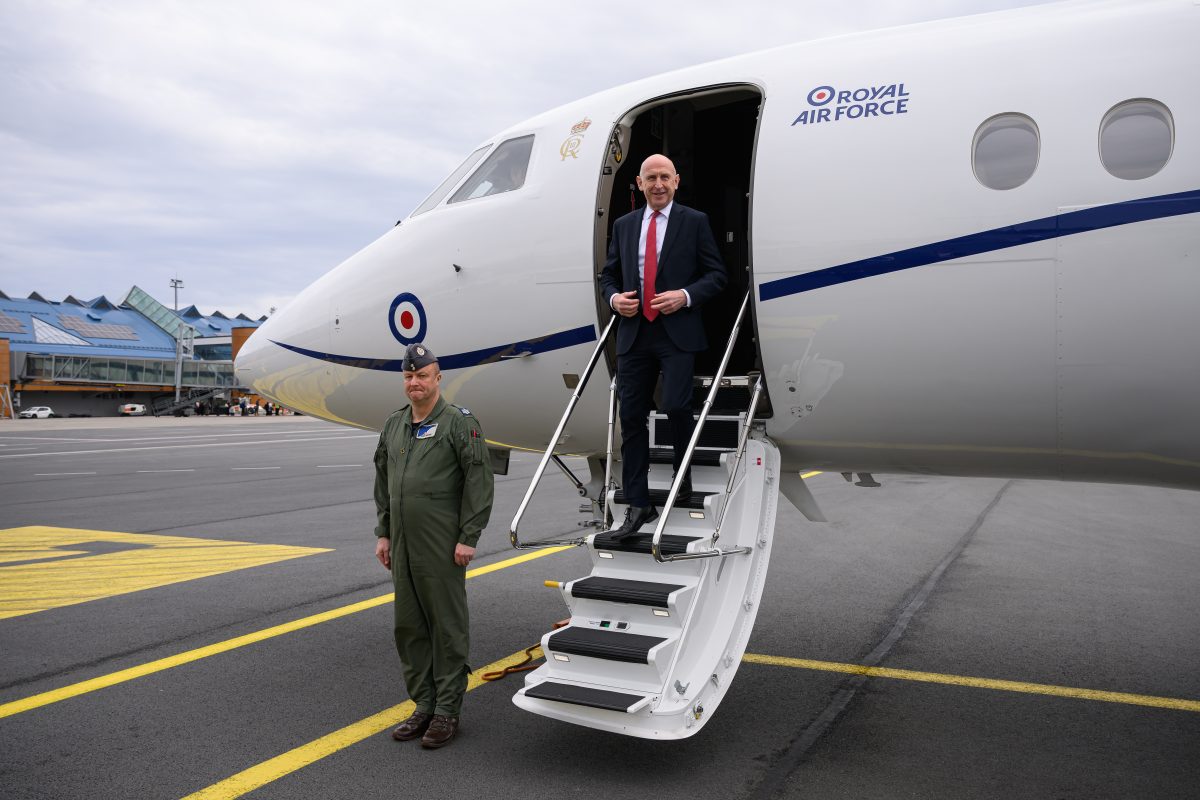
I was in Swindon, the UK’s Drone Hub, for what was meant to be the launch of the Defence Investment Plan (DIP) when the now-former defence secretary John Healey resigned. For the room full of CEOs facing cashflow constraints and ongoing delays, the spontaneity of his departure was another headscratcher they will now have to explain to investors questioning whether the UK can be taken as seriously as competitor markets like Germany or the United States.
The odd part is that defence is genuinely one of the UK’s strongest sectors right now, growing fast, commanding strong political support, attracting international investment and not yet subject to any sector-specific tax burden (famous last words).
By politicising the DIP and turning it into a poisoned chalice for his successor Dan Jarvi – who must now either sell sector spending cuts or lobby for higher taxes, or both – Healey may have positioned himself for a job in the next administration, but he has hurt the UK’s domestic industry. Even if there is less money for big projects, what businesses need most right now is certainty. Many of his strongest industry supporters simply wish he had published the plan so they could make decisions. With another delay, buyers already incentivised to stall, drive down prices and preserve cash may conclude it is cheaper to acquire a company than collaborate with one.
That dynamic matters most for Britain’s SMEs because the UK’s defence supply chain is dominated by small and medium-sized companies that are largely British-owned, often with the MoD as their sole customer and fragile revenue flows to match, which makes them acquisition targets. Meanwhile, the primes like Lockheed Martin, Rheinmetall, Thales are backed by home governments in the US, Germany and France, which are pressing ahead with spending, bolstering their corporate balance sheets.
#mc_embed_signup { background: #fff; clear: left; font: 14px Helvetica, Arial,sans-serif; width: 100%; max-width: 600px; margin: 20px 0; } #mc-embedded-subscribe-form { margin: 20px 0 !important; } .newsletter-form-flex { display: flex; gap: 0; align-items: center; margin-top: -10px; } .newsletter-form-flex input[type=”email”] { flex: 1; padding: 2px 10px; border: 1px solid rgb(18, 22, 23) !important; border-radius: 12px 0 0 12px !important; } .newsletter-form-flex input[type=”submit”] { padding: 4px 10px !important; margin: 0 !important; background-color: rgb(18, 22, 23) !important; color: rgb(255, 255, 255) !important; border: 1px solid rgb(18, 22, 23) !important; border-radius: 0 12px 12px 0 !important; } .newsletter-banner-content { margin-bottom: 15px; } .newsletter-banner-content h2 { margin: 0 0 10px 0; font-size: 18px; font-weight: 600; } .newsletter-banner-content p { margin: 0 0 10px 0; line-height: 1.5; } .newsletter-banner-content ul, .newsletter-banner-content ol { margin: 0 0 10px 20px; } .newsletter-banner-content a { color: #0073aa; text-decoration: none; } .newsletter-banner-content a:hover { text-decoration: underline; } .newsletter-banner-content img { max-width: 100%; height: auto; margin: 10px 0; } #mc_embed_signup #mce-success-response { color: #0356a5; display: none; margin: 0 0 10px; width: 100%; } #mc_embed_signup div#mce-responses { float: left; top: -1.4em; padding: 0; overflow: hidden; width: 100%; margin: 0; clear: both; }
So, although framing his choice as one of principle, Healey may have simply (and ironically) made British defence companies cheaper to buy and handed the upside to exactly the international players he spent months saying he wants UK plc to outcompete.
The World Cup should have an all-star game
Like many, I am in the throes of World Cup fever and so I think there’s a bit of space for innovation. Rather than dress advertising breaks up as hydration breaks, I think FIFA should let the world vote for two captains, who would then choose their starting eleven and duke it out while the world tunes in to something that has never happened before. I appreciate there will be insurance risks and contract technicalities and the like, but maybe we should let the athletes decide?
I miss Twitter word limits
Tony Blair’s recent intervention in the Labour Party leadership contest was a 20+ page policy document that prompted Andy Burnham to issue a holding tweet to say he must read the whole document before responding, which he then did with an essay of his own. Much of Twitter’s reactionariat then spilled untold amounts of pixels on whether Burnham would take the Labour Party even further left, but my main takeaway was that tweet word limits need a comeback. Some of the hot takes and responses were nearly as long as Blair’s tome itself.
At some point, the accumulation of bans under Starmer – connecting online with friends, vaping, underfloor heating – has started to feel less like governing and more like pestering. It has the same texture as lockdown, when each new variant brought a fresh announcement that some minor joy was now forbidden. The only difference now is that instead of awaiting a new Covid variant, we wait for the next Cabinet resignation to find out which small pleasure has been abruptly closed off.
Everyone should go to the summer degree shows at London’s art universities (132 words)
It is my favourite time of year: Summer degree show season! This is when all of London’s world-leading art universities open to the public for their students to display their works, most of which you can buy on the spot. This gives you the chance to find an up-and-coming artist and buy one of their works before they’re scooped up by a gallery (and their prices go up 60 per cent to cover the gallery fee). My personal favourites are Slade and the Royal College of Art, but Goldsmiths is great for avant-garde art and the Royal Academy if you want something a bit more traditional. Either way, June and July are the best times to spend an evening wandering through a campus-sized gallery before heading to the park for a pint and some sunshine.
Michael Martins is the founder of Overton Advisory
Read more Starmer clings on as defence spending plan in disarray after resignations
Similarly tagged content: Sections Categories People & Organisations