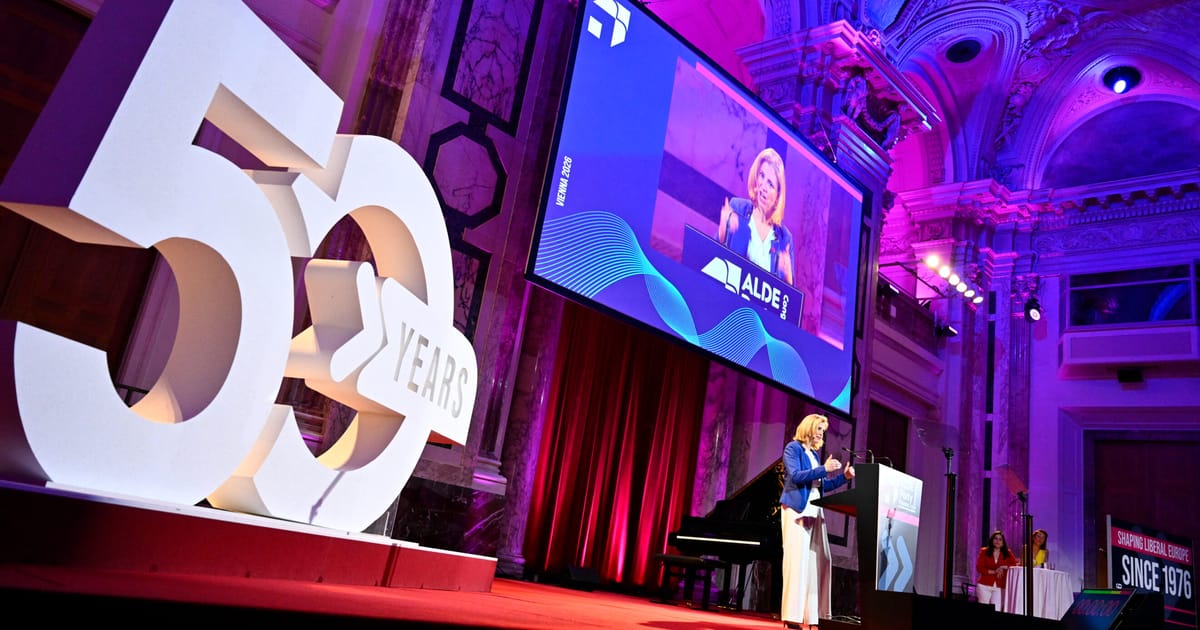
As the dust settles after the congress of Europe’s third-largest political family, POLITICO takes a look at the successes and failures.
 Max Griera



— Rob Jetten’s ego
Rob Jetten may not have made it to the congress because of political turmoil back home, but he was still its biggest talking point. Still riding high off D66’s sweeping election victory in October, the Dutch prime minister embodied the optimism Europe’s liberals had been searching for after years of electoral setbacks — earning him ALDE’s Liberal of the Year award.
His campaign against the far right, built around positive messaging and broad promises of a better future, became the dominant theme in Vienna. “We’re liberals because we believe change is possible,” Jetten said in a video message. “Authoritarians can sell fear, populists can sell anger, but we liberals, we can offer progress … the kind that makes people’s lives safer, freer and more prosperous.”
Jetten’s victory also strengthened the socially liberal camp, which sees liberalism as about more than free markets, placing equal emphasis on civil rights, climate action and progressive social policies. D66, the U.K. Liberal Democrats and Progressive Slovakia all won vice presidencies, while Belgium’s liberals, backed by the party’s more classic market-oriented wing, lost out. MEP Svenja Hahn was reelected ALDE president, but none of the adopted resolutions reflected the German FDP-led camp’s push for sweeping deregulation.
— The party’s donors
Amid dozens of side events at the congress, only a few were held behind closed doors and by invitation only, including two “stakeholder roundtables” bringing together senior party officials and liberal MEPs with executives from companies that also happen to be ALDE’s biggest corporate donors.