

For the next six months, Dublin will try to play neutral on defence and Middle East policy while simultaneously pushing for a contentious EU budget deal that many in Brussels still think could easily collapse.
 Elena Sánchez Nicolás



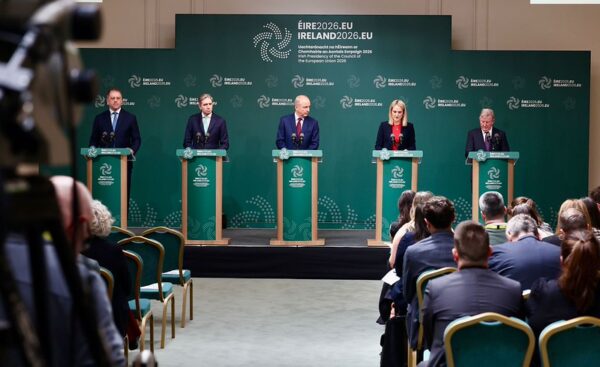
Ireland takes over the symbolic six-month EU Council presidency from Cyprus, for the eighth time since joining the bloc 53 years ago – with unions set to rally in Dublin on Wednesday (1 July) to demand better working conditions for essential workers.
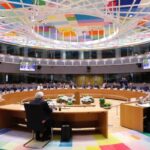
The Emerald Isle is expected to host 264 high-level meetings for ministers and EU leaders, including a European Political Community summit and an informal EU leaders’ summit in November. An international AI summit will also take place in October.
The whole EU presidency comes with a price tag. The government has allocated about €293m, according to public records recently published in what seems to be a transparency exercise that future countries hosting the EU Council presidency could well imitate.
Notably, this will be the first time Ireland holds the presidency with the Irish language fully-integrated as an operational working language of the Brussels machinery. A dream that came true only in 2022.
“Ní neart go cur le chéile,” is their motto, a traditional Irish proverb that means “strength with unity”.
To create that “unity”, every ounce of their famous diplomatic charm will be needed to manage 27 capitals who all have very different ideas of how things should move forward – be it on China, trade, defence spending, migration, energy security or the future of the EU as a whole.
You had one job
Above all, for the next six months, the Irish have one big job to do, which they have called their “overarching priority”: deliver an agreement by the end of the year on the EU’s next long-term budget for 2028-2034.
By October, Ireland is expected to present new (and more realistic) figures on the next EU budget, which will then be discussed among EU leaders during their traditional European Council in Brussels. The conversation will most likely be followed up by a special summit in November, paving the way for a possible agreement at the December summit.
A few months ago, many would have dismissed that as overly optimistic. But EU officials describe a changing dynamic, while diplomats say the chances are 50-50, and the Irish insist they are “confident” they can get it over the line.
Next in the list of difficult tasks under the competitiveness agenda will be breaking a long-standing deadlock on EU capital markets negotiations. Ireland is seeking an agreement by the end of 2026, balancing its cautious approach on centralised financial oversight and efforts to find common ground.
“People might have been sceptical about our historic commitment to the savings investment union, but … we believe there’s a capacity to get a consensus on this,” said Taoiseach Micheál Martin earlier in June. The comments came after the EU’s six largest economies formed an informal group to accelerate capital markets integration, as part of efforts to close the economic output gap with its competitors amid high trade tensions with both the US and China.
Neutrality
And at the time when the continent pushes for rearmament, Ireland’s neutrality will be both praised and criticised. Dublin’s military spending currently stands at around 0.2 percent of GDP.
On foreign affairs, becoming an “honest broker” and neutral mediator will also prove quite challenging when it comes to Israel. Ireland has been one of the leading voices in the EU, together with Spain, calling for the suspension of trade perks with Israel over the dire humanitarian situation in Gaza.
Dublin should “specifically, defend the human rights system, preserve independence and integrity of the International Criminal Court, prioritise human rights in all areas of EU foreign policy, and show EU leadership by ending Israel’s impunity for its crimes against Palestinians,” advocacy group Amnesty International said.

The Irish presidency begins just as EU foreign affairs ministers prepare to debate options for restricting trade with illegal settlements in mid-July, from tariffs and tighter export licensing to a potential EU ban.
In 2025, Ireland became the first EU country to ban imports of goods from Israeli settlements in the West Bank and East Jerusalem. But it is estimated that about 70 percent of Ireland’s trade with Israel is in services – managed by US tech giants based in Ireland.
Ireland is the European headquarters for many US tech and pharma giants (like Apple, Google, Meta, and Pfizer), often criticised as a tax haven for multinationals on which the Irish economy has become massively dependent.

That leaves Dublin walking a tightrope for the next six months. It will need to show the rest of Europe that it can both protect the interests of the public and keep its moral compass on international issues, even while hosting many of the world’s biggest US tech companies.