On his third try, Andy Burnham looks all but certain to become Labour leader. But what if he had taken the reins of the party eleven years earlier? Matt Kenyon imagines an alternative timeline… 2015 It’s a world that looks a lot like our own. There’s just one, seemingly minor,
 Matt Kenyon



Wednesday 24 June 2026 5:32 am | Updated: Tuesday 23 June 2026 4:45 pm
On his third try, Andy Burnham looks all but certain to become Labour leader. But what if he had taken the reins of the party eleven years earlier? Matt Kenyon imagines an alternative timeline…
2015
It’s a world that looks a lot like our own. There’s just one, seemingly minor, difference: A cluster of well-meaning but naive Labour MPs choose not to “broaden the debate” of the ongoing Labour leadership election. Veteran left-winger Jeremy Corbyn fails to make the ballot, so three (mostly) loyal Ed Miliband shadow ministers are put to the Labour membership.
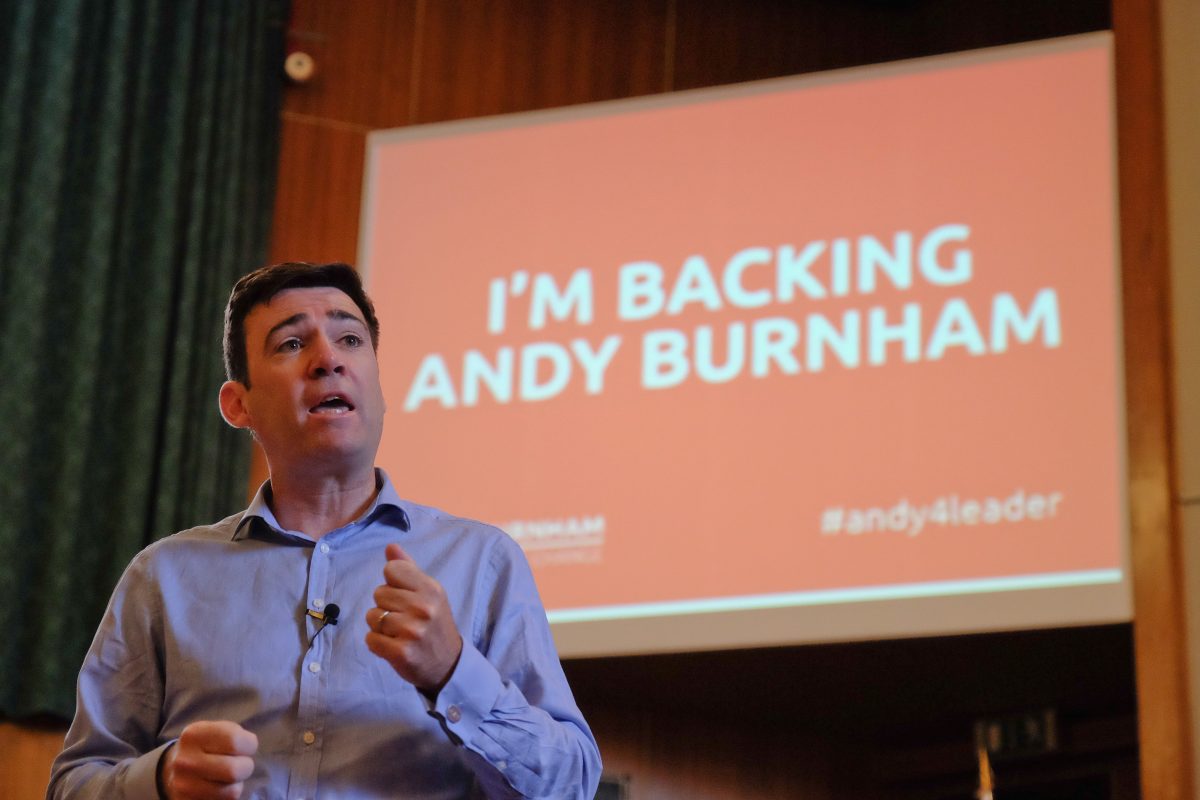
A new “one member, one vote” system has been introduced by the now ex-Labour leader. But the result isn’t anything particularly out of the ordinary, and the doe-eyed shadow health secretary wins. In his first speech to the Labour party conference in 2015, Andy Burnham promises to inject some northern soul into the party of Islington.
No one particularly believes the ex-Blair spad, who hasn’t spent a lot of time north of the Watford Gap since John Major was in Downing Street. Still, he feels like a mild improvement on his awkward predecessor.
The new leader faces off against the all-powerful David Cameron, emboldened by his recent and somewhat triumph at the recent general election in May. Labour has not been this marginal as an electoral entity since its doldrums opposing Thatcher.
#mc_embed_signup { background: #fff; clear: left; font: 14px Helvetica, Arial,sans-serif; width: 100%; max-width: 600px; margin: 20px 0; } #mc-embedded-subscribe-form { margin: 20px 0 !important; } .newsletter-form-flex { display: flex; gap: 0; align-items: center; margin-top: -10px; } .newsletter-form-flex input[type=”email”] { flex: 1; padding: 2px 10px; border: 1px solid rgb(18, 22, 23) !important; border-radius: 12px 0 0 12px !important; } .newsletter-form-flex input[type=”submit”] { padding: 4px 10px !important; margin: 0 !important; background-color: rgb(18, 22, 23) !important; color: rgb(255, 255, 255) !important; border: 1px solid rgb(18, 22, 23) !important; border-radius: 0 12px 12px 0 !important; } .newsletter-banner-content { margin-bottom: 15px; } .newsletter-banner-content h2 { margin: 0 0 10px 0; font-size: 18px; font-weight: 600; } .newsletter-banner-content p { margin: 0 0 10px 0; line-height: 1.5; } .newsletter-banner-content ul, .newsletter-banner-content ol { margin: 0 0 10px 20px; } .newsletter-banner-content a { color: #0073aa; text-decoration: none; } .newsletter-banner-content a:hover { text-decoration: underline; } .newsletter-banner-content img { max-width: 100%; height: auto; margin: 10px 0; } #mc_embed_signup #mce-success-response { color: #0356a5; display: none; margin: 0 0 10px; width: 100%; } #mc_embed_signup div#mce-responses { float: left; top: -1.4em; padding: 0; overflow: hidden; width: 100%; margin: 0; clear: both; } 2016
What Labour’s telegenic new leader really needs is a collapse in the Tory message. He badly wants an opponent who’s robotic, with a muddled message steeped in platitudes and cliche. Someone like the home secretary, Theresa May. The problem is that she will never be Conservative leader.
This is, in part, a problem of Burnham’s own making. He campaigns hard, and sincerely, alongside Cameron for Remain in the EU referendum. Manchester’s favourite son focuses his message particularly on the region that commentators are now calling the Red Wall. And, as Nigel Farage speaks to assembled reporters in the wee hours of the 24th June 2016, he correctly predicts that the UK will marginally opt to stay “in”.
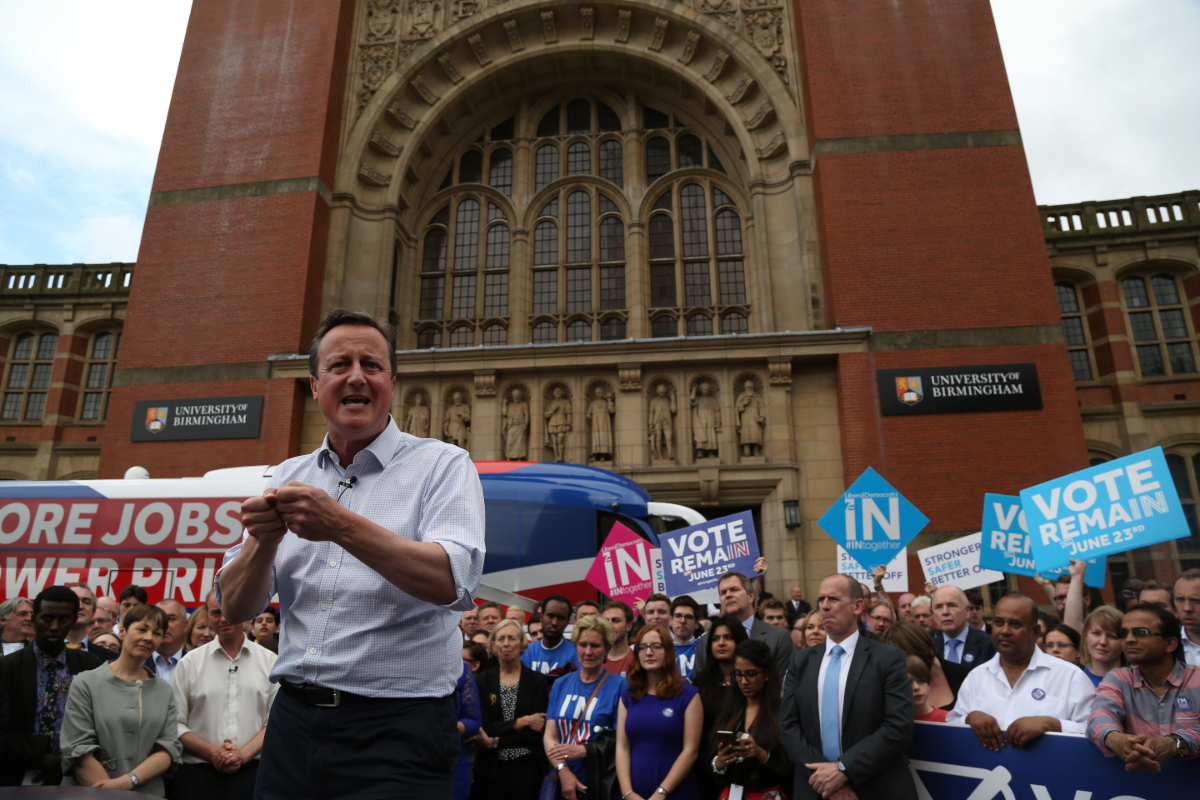 David Cameron campaigns for Remain, on the last day before the referendum. (Photo by Geoff Caddick – WPA Pool /Getty Images)
But the Brexit issue won’t go away, even though there cannot reasonably be another referendum for a generation. It is not yet a fully salient point in British politics, but frustration around immigration grows, even if no mainstream politician has yet to capitalise on it…
2018
And so the Cameron supremacy comes to a close. The Prime Minister, who promised in the most recent election campaign to not fight a third campaign – “Terms are like Shredded Wheat… Two are wonderful but three might just be too many” – makes good on his promise.
Burnham still lags in the polls, whilst the Conservative party is thrust into its first leadership election in 13 years. By now, Cameron has led the party for almost as long as Thatcher. Though revisionist takes later emerge, the consensus is that Cameron was a deeply effective, reforming PM.
Boris Johnson proves the PR power of the metro mayor – no tax, all spend – as he triumphs over the Cameron-anointed George Osborne. Osborne was swapped in as foreign secretary after the referendum to bolster his international credentials. It wasn’t enough, as the former mayor of London, fresh from a forgettable stint as defence secretary, forged an unbeatable coalition of metropolitan Tories and former Brexit backers.
2019
The situation couldn’t be much more miserable for Labour. Though Burnham’s team have shed the “Red Ed” slurs of the early-to-mid 2010s, they have not yet pinned down a winning campaign message.
Labour’s attempts to secure meetings with President Trump have floundered. Even the newly-formed Biden campaign doesn’t seem all that interested in meeting with them. And all the while, rumours of an early election are swirling.
Boris calls a snap general election with the slogan “Back Britain”. It’s vague, but this is what his campaign svengali Guto Harri recommends. The economy is booming, interest rates are still essentially zero. Andy Burnham launches his campaign in Liverpool, promising to end a decade of austerity.
Read more Starmer: I would make Andy Burnham a Cabinet minister
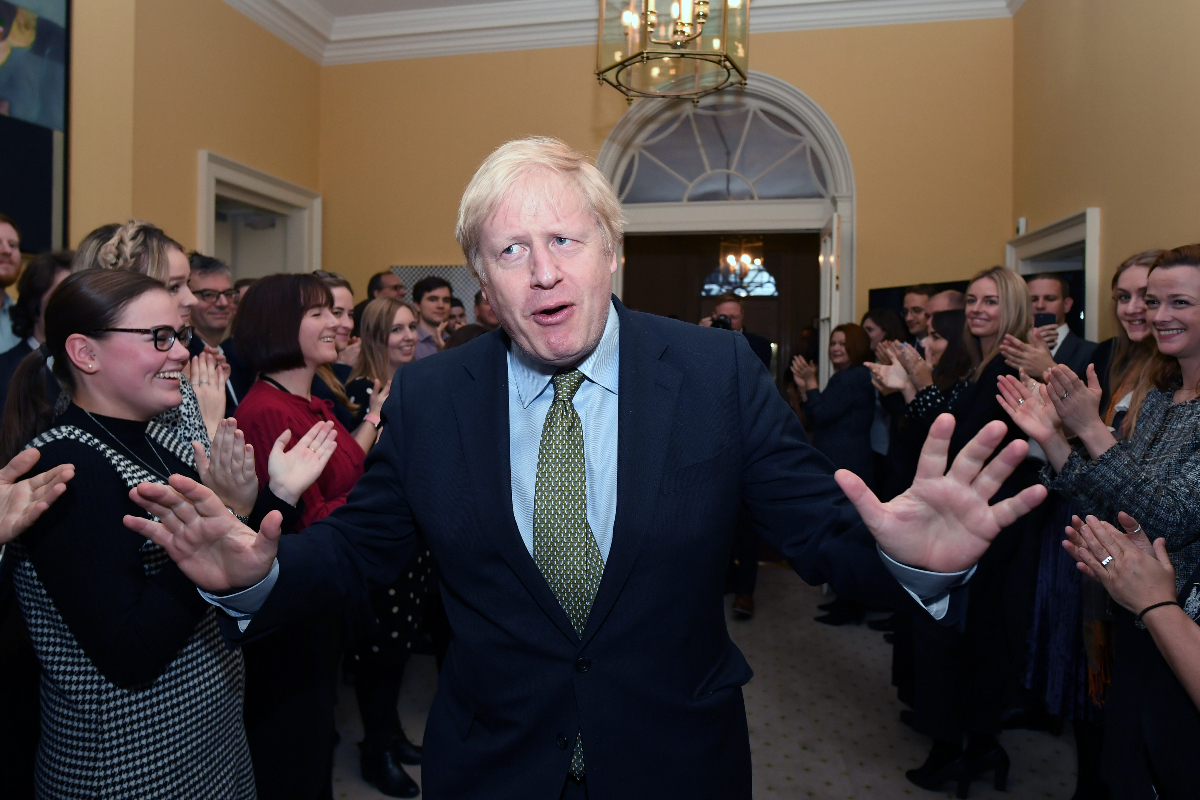 Boris Johnson wins the 2019 general election. (Photo by Stefan Rousseau – WPA Pool/Getty Images)
On election night, Johnson holds his majority and Labour loses. It’s not a disaster, and they have improved marginally on Miliband’s count in 2015, but Burnham knows that it’s time to bow out. Besides, he has half an eye on a new vacancy in Manchester: The metro mayoralty, up for grabs in 2021.
2020
Lounging on a beach in Mustique early in the new year, Boris Johnson raises half an eyebrow at reports of a mysterious virus emerging in Wuhan.
In April, broadcasting from two feet in front of his wardrobe, the shadow home secretary Sir Keir Starmer delivers his first speech as Labour leader. Like his predecessor Burnham, Starmer has triumphed over an all-woman shortlist to be Labour leader. Pundits question whether he really was more charismatic than Burnham’s shadow Chancellor Yvette Cooper.
But, even as the Covid 19 pandemic rips through the British economy, the new Labour leader has an electoral mountain to climb.
2022
Johnson is despondent. Just a year ago, pundits had been confidently predicting that he could have a decade in power. But he’s been battered over Christmas by reports of mid-lockdown parties in Downing Street. His efforts at mild EU reform have backfired: A new global visa introduced by his government has led to immigration from outside of the trading block outpacing even that from within.
It’s over as quickly as it began, and the Conservative party is set to have its third Prime Minister since Cameron. Home secretary Priti Patel makes a bid, but Johnson-era immigration policy has simply become too toxic. Liz Truss, the foreign secretary, wins out as a compromise candidate.
The bond markets convulse as Truss and her Chancellor, Kwasi Kwarteng, introduce their disastrous ‘Mini-Budget’. Almost unbelievably, the Conservatives are about to pick a fourth Prime Minister in a row. Next in line is Rishi Sunak, the bland but likeable business secretary.
2024
Sir Keir Starmer can’t quite believe his luck. The once all-conquering Conservatives are violently unpopular, and he looks set to squeak out a majority for Labour.
The beleaguered Rishi Sunak calls an election for May, having left it as late as he possibly can. As he announces outside Downing Street that Parliament has been dissolved, he quips: “At least it’s not raining!” Inwardly, he also notes: Thank God Nigel Farage moved to the US full-time. He’s not sure he could have handled a threat from the right as well as the left.
Labour wins a narrow majority of 12; they were never quite able to convince the Tory shires. Nor were the Lib Dems, who have practically ceased to exist since 2015. No issue ever animated them, and even their last remaining councils are beginning to flicker blue.
2026
A miserable Starmer steps out in front of Number 10 Downing Street. He knew that being Prime Minister wouldn’t be easy, but had never imagined that he could be ousted by his own predecessor. But since 2021, Andy Burnham has been winning almost North Korean poll ratings in Greater Manchester. And he’s untainted by a wildly unpopular Labour government.
The party seems to have forgotten his entirely forgettable run as opposition leader. Starmer says to close advisors, through gritted teeth: “It’s like he thinks he’s the third Gallagher brother…”
All the while, the former mayor of Manchester prepares for a coronation. There are a lot of problems in his in-tray – a floundering economy, war in Iran, a fresh Farage-led campaign for a new EU referendum. But still, Burnham feels bullish on Burnham.
Read more ‘No authority’: Starmer under pressure to quit after Burnham wins in Makerfield
Similarly tagged content: Sections Categories People & Organisations