US businessmen are returning to Putin’s St Petersburg business fair despite the Ukraine war, but the ‘SPIEF 2026’ guest list – or lack of it – still highlights Russia’s toxic image.
 Andrew Rettman



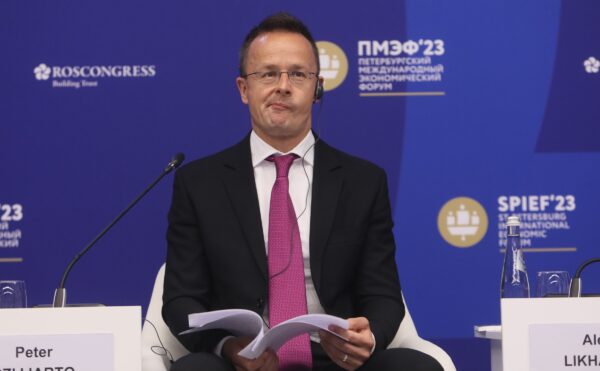
The US has shown it wants to make money with Russian president Vladimir Putin, but his flagship business fair in St Petersburg is another PR failure, while investing in Russia has been condemned as a triumph of greed over sound management.
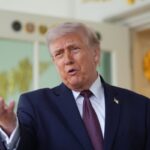
President Donald Trump is sending Rodney Mims Cook, the head of the US federal Commission of Fine Arts, along with a small group of unnamed CEOs, to attend the St Petersburg International Economic Forum (SPIEF), a three-day event starting on Wednesday (3 June), according to Robert Agee, president of the American Chamber of Commerce in Russia.
The Western guest list also includes a handful of minor, far-right EU politicians: Luxembourgish and Romanian MEPs Fernand Kartheiser and Diana Iovanovici-Sosoacă, as well as three members of Germany’s hard-right Alternative for Germany (AfD) party – Markus Frohnmaier, Steffen Kotré, and Jörg Urban.
Vittorio Torrembini, the president of the Association of Italian Entrepreneurs in Russia, told RIA Novosti he and some 15 Italian businessmen were going.
Tadzio Schilling, the Swiss director of the Association of European Businesses in Russia, said other unnamed European business executives were also to attend.
But the largest group of Western visitors are cultural personalities, such as US podcasters Candace Owens and Scott Ritter, German pianist Justus Frantz, and Italian singer Umberto Tozzi, as well as less famous people, such as German media figures Hans-Joachim Frey, Hubert Seipel, Holger Friedrich, and Daniil Bisslinger.
British ‘manosphere’ influencer Andrew Tate and former German chancellor Gerhard Schröder were also seen by media in Moscow on Wednesday, indicating they would attend the St Petersburg fair.
The SPIEF was a “showcase of normalisation”, meant to display that “Russia is not isolated – even if real Western corporate capital is not returning to Russia, some kind of activity is still taking place there,” said Margarita Zavadskaya, from the Finnish Institute of International Affairs in Helsinki.
Alexander Gabuev, director of the Carnegie Russia Eurasia Center in Berlin, said it was designed to be “a demonstration of the regime’s economic resilience”.
It was also meant to show that “a new reality is emerging – in this new reality, the West is supposedly preparing to lift sanctions and allow companies to re-enter the Russian market and legalise their presence there.”
“The message is: Foreigners, hurry up, you have a window of opportunity”, he said.